The Motor Skills Gap: Why Sonic Technology is Essential for Pediatric Oral Care
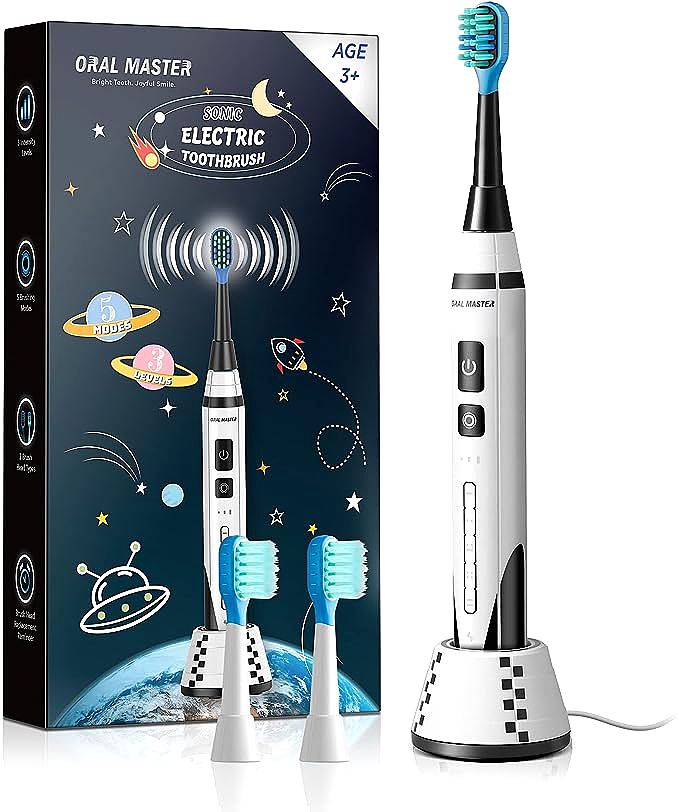
ORAL MASTER Kids Sonic Electric Toothbrush
There is a fundamental biological mismatch in pediatric oral hygiene. Dentists demand that children perform a modified Bass technique—angling bristles at 45 degrees and vibrating them gently—yet the fine motor skills required to execute this complex movement do not fully develop until age 8 or 9. We are essentially asking a child to play a piano concerto before they can tie their shoelaces.
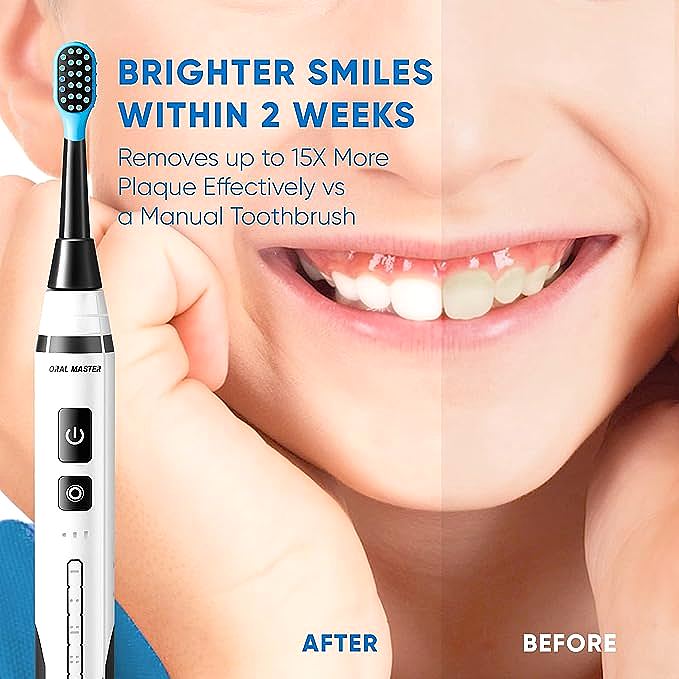
The result is "scrubbing": a crude, horizontal motion that abrades the gums but fails to clean the interdental spaces where cavities form. The ORAL MASTER Kids Sonic Electric Toothbrush addresses this physiological gap not by teaching the child to brush better, but by automating the stroke itself. With a Maglev Motor generating 36,000 vibrations per minute, it replaces human dexterity with machine precision.
The Physics of Non-Contact Cleaning (Fluid Dynamics)
Unlike traditional rotating brushes that rely on mechanical friction (scrubbing), a sonic electric toothbrush utilizes a secondary cleaning mechanism known as Fluid Dynamics.
1. The Cavitation Effect
When the bristles vibrate at sonic frequencies (36,000 VPM), they create intense turbulence in the mixture of saliva, water, and toothpaste. * Microbubbles: This turbulence generates millions of microscopic bubbles. * Shockwaves: As these bubbles collapse, they create tiny shockwaves that project fluid deep into the tight gaps between teeth and below the gumline—areas that a child’s manual brushing inevitably misses. * The Result: The fluid acts as a "liquid floss," disrupting plaque biofilm up to 3-4 millimeters beyond the tips of the physical bristles. For a child who lacks the patience to floss, this hydrodynamic action is a critical safety net.
2. Maglev Tech: Stability in Motion
The ORAL MASTER utilizes Magnetic Levitation (Maglev) technology. Unlike older motors that use physical gears and friction (which create loud noise and hand-numbing vibration), the Maglev shaft floats in a magnetic field. * Energy Transfer: This delivers the vibrational energy directly to the brush head, not the handle. * Sensory Friendly: For children with sensory processing sensitivities, the smooth, quiet hum of a Maglev motor is far less intimidating than the mechanical "rattle" of traditional gear-driven electric toothbrushes.
The DuPont Defense: Bristle Engineering
Power without control is dangerous, especially for tender gums. The efficacy of the sonic motor is modulated by the DuPont Round-End Bristles. Under a microscope, cheap nylon bristles look like jagged saws. DuPont bristles are polished to a smooth dome.
When combined with the high-frequency vibration, these rounded tips glide over the enamel and gingiva. They polish the surface rather than scratching it. This allows parents to utilize the High Intensity settings for plaque removal without fear of causing gingival abrasion or recession.
By outsourcing the mechanical labor to a high-frequency engine, we bridge the gap between a child's limited ability and the strict requirements of dental health.