Frictionless Hygiene: Analyzing Maglev Motors and Anchor-Free Tufting in Oral Care
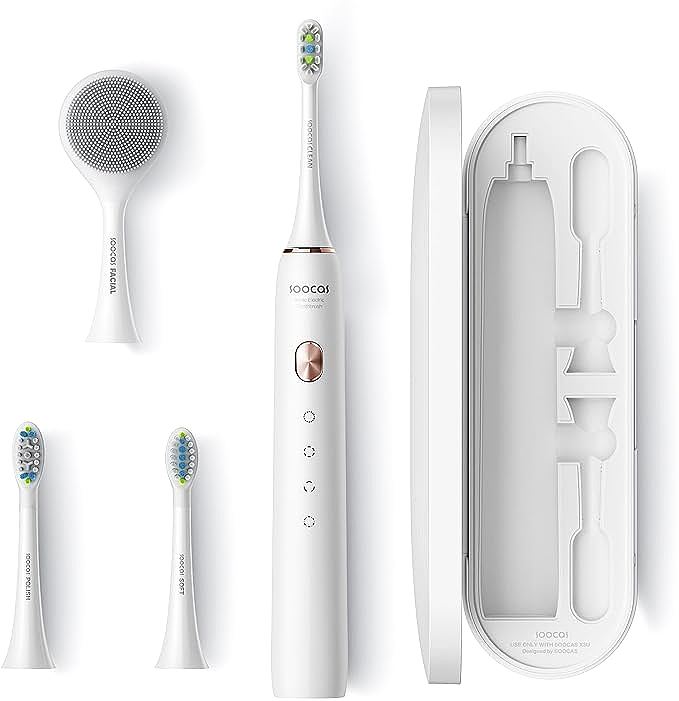
SOOCAS X3U Electric Toothbrush
In the competitive landscape of oral care technology, "power" is often the headline. Manufacturers race to advertise higher vibrations per minute (VPM), assuming that speed equates to superiority. However, a more nuanced examination of device engineering reveals that how power is generated and how bristles are anchored are far more critical to the user experience and hygiene than raw speed alone. The SOOCAS X3U serves as a compelling case study in this "quality over quantity" approach, distinguishing itself through two specific engineering choices: magnetic levitation (maglev) propulsion and anchor-free tufting.
To understand the significance of these features, we must look beyond the spec sheet and into the physics of friction and the microbiology of brush heads.
The Physics of Propulsion: Maglev vs. Mechanical
Most standard electric toothbrushes rely on a mechanical cam-and-gear system to convert rotary motion into vibration. While effective, this mechanism introduces physical friction. Friction generates noise, heat, and wear, leading to the familiar "rattling" sound and a gradual loss of power efficiency over time.
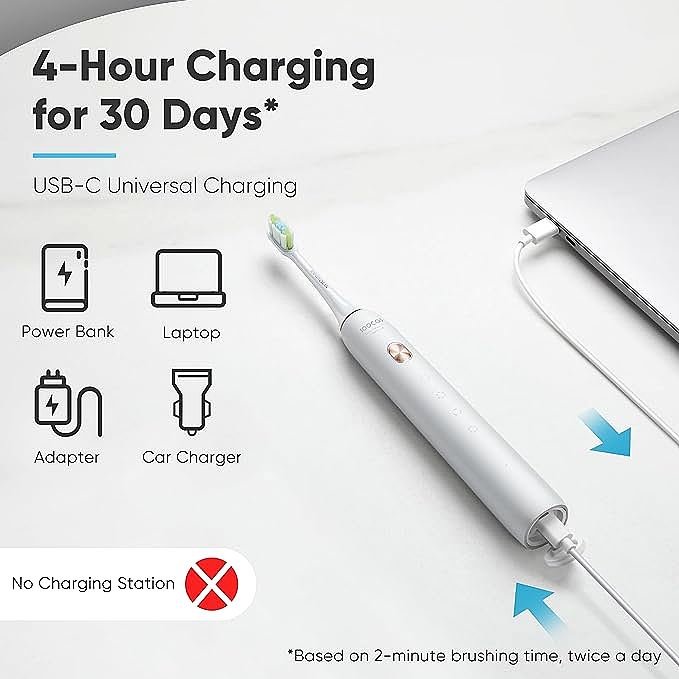
The SOOCAS X3U employs a Maglev Sonic Motor. Borrowing principles from high-speed trains, this motor uses magnetic fields to suspend and drive the internal oscillating shaft. * Frictionless Efficiency: By eliminating physical contact points in the drive train, energy loss is minimized. This efficiency directly correlates to the device's impressive 30-day battery life from a mere 4-hour charge. The energy goes into moving the bristles, not fighting internal resistance. * Acoustic Signature: The absence of mechanical grinding results in a quieter operation (<65dB). This is not just a luxury; it is an acoustic engineering feat that reduces the sensory fatigue often associated with high-powered devices. * Stable Amplitude: Maglev systems offer superior stability. Even at the peak frequency of 39,600 vibrations per minute, the output remains consistent. This stability is crucial for maintaining the specific frequency required to generate hydrodynamic shear stress—the fluid force that disrupts biofilm beyond the reach of the bristles.
The Micro-Ecology of the Brush Head: Why "Copper-Free" Matters
Perhaps the most overlooked component of a toothbrush is the tufting anchor. In traditional manufacturing, bristle tufts are folded in half and stapled into the brush head hole using a small metal piece, typically made of nickel-silver or copper.
While functional, these metal anchors present two microscopic problems:
1. Oxidation: Over time, exposure to water and toothpaste can cause metal anchors to corrode or rust, potentially leaching oxides into the mouth.
2. Bacterial Harboring: The tiny gaps required to insert the staple create "dead zones" where moisture, toothpaste residue, and bacteria can accumulate, protected from rinsing.
The X3U utilizes Anchor-Free (Copper-Free) Tufting Technology. Instead of staples, the bristles are fused directly into the head using a thermal melting process. * Hygienic Integrity: Without metal anchors, there is zero risk of rust. More importantly, the fusion process seals the base of the bristles, eliminating the crevices where bacteria thrive. This creates a brush head that is fundamentally more hygienic and easier to keep clean. * High-Density Packing: Anchor-free technology allows for up to 40% higher bristle density compared to stapled heads. Denser bristles mean more surface area contact with the tooth, enhancing the mechanical removal of plaque without requiring a larger brush head.
Functional Refinements: IPX7 and USB-C
The engineering philosophy of "removing friction" extends to usability. The device achieves an IPX7 waterproof rating, meaning the internal electronics are sealed against immersion in water up to 1 meter. This robustness is essential for a device used in the humid, wet environment of a bathroom.
Furthermore, the adoption of USB-C charging is a nod to universal compatibility. Proprietary charging cradles, while common, add to electronic waste and travel bulk. By using the same standard as modern laptops and phones, the X3U integrates seamlessly into the existing tech ecosystem of the user.
Conclusion: Engineering for Health
The SOOCAS X3U demonstrates that the next leap in oral care isn't about adding more buttons or apps; it's about refining the core mechanics. By replacing mechanical friction with magnetic fields and metal staples with thermal fusion, it offers a cleaner, quieter, and more efficient tool.
For the consumer, understanding these details shifts the purchasing decision from "which brush vibrates faster?" to "which brush is engineered better?". In the case of the X3U, the answer lies in the invisible advantages of maglev physics and anchor-free hygiene.