The Ecosystem of Comfort: Ergonomics, Multipoint Connectivity, and User Agency
Update on Jan. 13, 2026, 8:29 a.m.
In the wearable technology sector, “friction” is the enemy. Friction isn’t just the physical rubbing of a material against skin; it’s the cognitive load of pairing a device, the frustration of switching between a laptop and a phone, and the physical fatigue of wearing a headset for hours. A truly successful device minimizes friction in all these dimensions.
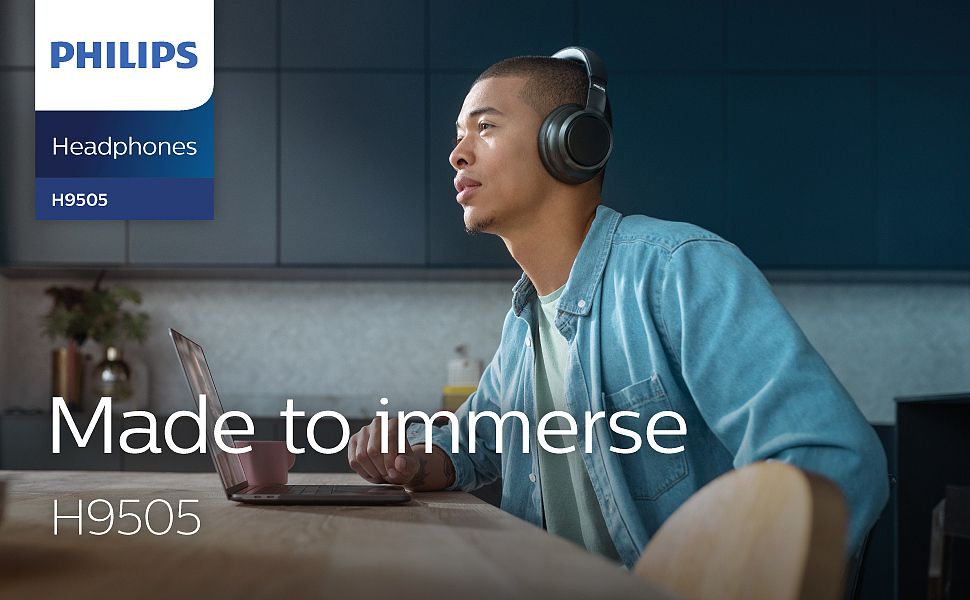
The PHILIPS H9505 ANC Wireless Headphones are designed not just as acoustic transducers, but as low-friction tools for the digital lifestyle. From the viscoelastic properties of their ear cushions to the protocol logic of Google Fast Pair and Multipoint connection, every feature targets a specific pain point in the user experience. This article explores the biomechanics of long-term wearability, the network engineering of seamless connectivity, and the psychological importance of user agency through customizable controls.
The Architecture of Comfort: Biomechanics and Thermodynamics
Comfort is a physics problem. It involves the distribution of force (pressure) and the management of heat (thermodynamics). Headphones that feel light initially can become instruments of torture after two hours if these vectors are not managed.
Viscoelasticity and Pressure Mapping
The H9505 utilizes Memory Foam ear-cup cushions. Memory foam is a viscoelastic material.
* Viscous: It flows like a thick fluid, conforming to the microscopic irregularities of the user’s head shape (jawline, glasses frames).
* Elastic: It returns to its original shape when pressure is removed.
This dual nature allows the foam to increase the Contact Surface Area.
$$P = F / A$$ (Pressure = Force / Area)
By maximizing the Area ($A$), the memory foam minimizes the Pressure ($P$) exerted by the headband’s clamping force ($F$). This prevents the formation of “hot spots”—points of high pressure that cut off capillary blood flow and cause pain.
The Thermal Challenge
A perfect acoustic seal, required for ANC, also traps heat. The human ear is a radiator. To mitigate “ear fatigue” caused by heat buildup, the geometry of the “Rounded over-ear design” is critical. It creates a sufficiently large air volume around the pinna to allow for some thermal buffering. While closed-back headphones will always be warmer than open-back ones, the specific density and breathability of the protein leather covering on the H9505 aim to balance acoustic isolation with thermal regulation.
The Logic of Connectivity: Multipoint and Fast Pair
In a multi-device world, we are constantly switching contexts. We listen to music on a phone, take a video call on a laptop, and then switch back. The friction of un-pairing and re-pairing Bluetooth devices is a major cognitive interruption.
Bluetooth Multipoint: The Time-Division Solution
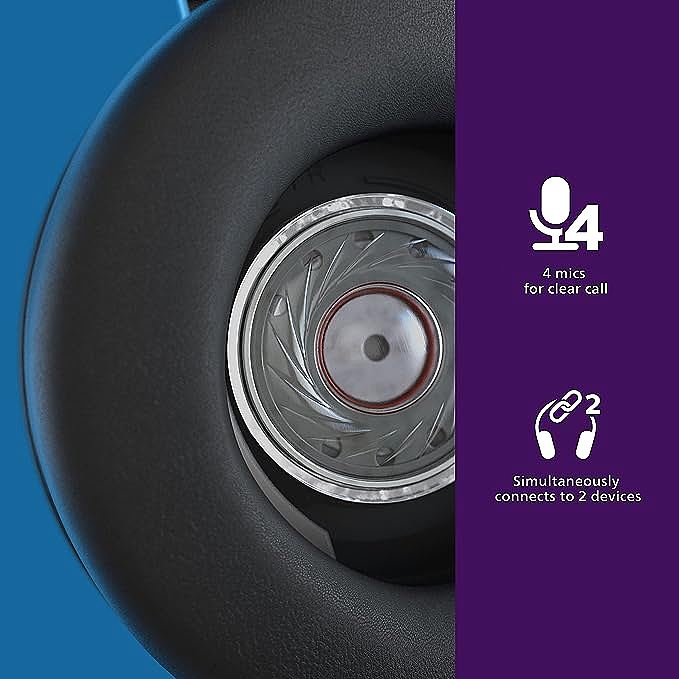
The H9505 features Multipoint Bluetooth Connection. This allows the headphones to maintain active links with two devices simultaneously.
* Protocol Logic: The Bluetooth radio essentially maintains two “state machines.” It monitors the audio streams from both devices.
* Priority Interrupt: The system is programmed with a priority logic. A standard audio stream (music) from Device A can be interrupted by a High-Priority event (incoming call profile - HFP) from Device B.
This automation removes the user from the loop. You don’t have to “tell” the headphones to switch; the protocol handles the handshake instantly. This preserves the user’s Flow State, allowing seamless transitions between work and leisure.
Google Fast Pair: Ecosystem Integration
For Android users, the H9505 supports Google Fast Pair. This utilizes Bluetooth Low Energy (BLE) to broadcast a “discovery packet.” When the headphones are brought near an Android phone, the phone detects this packet and pops up a pairing request automatically.
This links the device to the user’s Google account, not just the specific phone. It represents a shift from “device-centric” pairing to “user-centric” pairing, reducing the setup friction to a single tap.
User Agency: The Philips Headphones App and Touch Controls
Hardware is static; software is dynamic. The Philips Headphones App gives the user agency over the device’s behavior.
Psychoacoustics of EQ
The app allows for Custom Sound Control via an Equalizer (EQ). * Subjectivity of Sound: Human hearing is not linear (Fletcher-Munson curves), and personal preference varies wildly. One user’s “deep bass” is another’s “muddy mess.” * Digital Shaping: The App sends instructions to the headphone’s onboard DSP to alter the frequency response curve. “Enhance the bass” or “Tone down the treble” are not just volume changes; they are digital filters applied to specific frequency bands. This allows the user to tune the instrument to their unique hearing profile and musical taste.
The Interface of Touch
The right ear cup features a Touch Control surface. * Gestural Interaction: Swiping up/down for volume, forward/back for tracks. This relies on Proprioception—the body’s ability to sense its own position. Unlike finding a small button, a broad swipe is a gross motor skill that is easier to perform without looking. * Latency and Feedback: Successful touch interfaces require instant feedback (usually an auditory tone) to confirm the command was registered. This loop closes the interaction, giving the user confidence in the control system.
Conclusion: The Balanced Equation
The PHILIPS H9505 succeeds not by maximizing a single spec, but by balancing the equation of user experience.
It balances the physical clamping force with viscoelastic cushioning for comfort. It balances the isolation of ANC with the awareness of Transparency Mode. It balances the freedom of wireless with the fidelity of wired Hi-Res. And it balances the complexity of multiple devices with the logic of Multipoint connectivity.
In the ecosystem of personal technology, the best devices are those that respect the user’s body, time, and attention. By engineering for comfort and seamless connection, the H9505 positions itself as a frictionless companion for the modern digital nomad.