The Polarity of Plaque: Decoding the Electrostatic Science of Ionic Toothbrushes

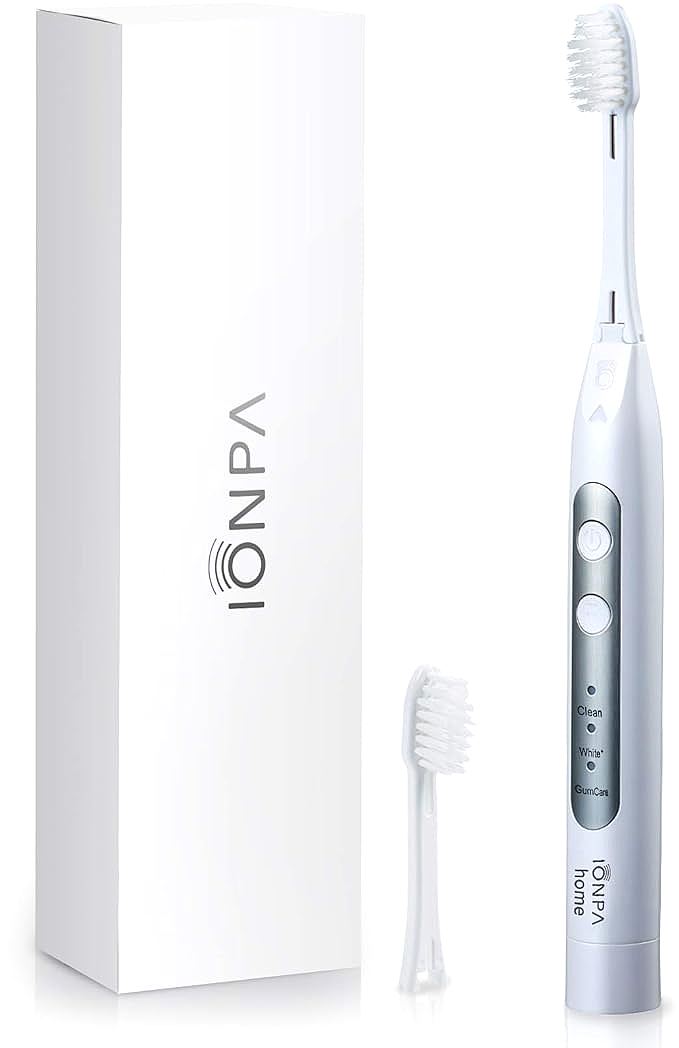
IONPA DP-111PW DP Pearl White Home Premium USB Rechargeable Ionic Power Electric Toothbrush
In the traditional narrative of oral hygiene, the battle against plaque is framed as a mechanical one. We are taught that plaque is a substance to be scrubbed away, and consequently, we assume that more friction—stiffer bristles, faster motors—equals a cleaner mouth. However, this mechanical perspective ignores a fundamental truth about the microscopic world: adhesion is often electrical.
The IONPA DP-111PW Ionic Electric Toothbrush challenges the "scrub harder" dogma by introducing a variable from physics: electrostatics. It proposes that the most effective way to remove biofilm is not just to batter it with bristles, but to disrupt the invisible magnetic forces that hold it in place.
The Physics of Adhesion: Why Plaque Sticks
To understand ionic technology, we must look at the Zeta Potential of the oral environment.
1. The Surface: Ideally, the enamel of our teeth carries a negative charge.
2. The Bacteria: The bacteria that form plaque also typically carry a negative charge.
3. The Bridge: In physics, like charges repel. So why do bacteria stick to teeth? The answer lies in saliva. Saliva is rich in Calcium ions (Ca++), which are positively charged. These ions act as a "molecular bridge," bonding the negative bacteria to the negative tooth surface.
Conventional toothbrushes rely on shear force to mechanically break this bridge. It works, but it requires physical aggression that can sometimes damage gums or enamel if not controlled.
The Ionic Solution: Depolarization
The IONPA device operates on a principle of Polarity Reversal. The handle contains a conductive metal plate (the "ground"), and the brush head contains a titanium rod. When the user holds the handle and wets their hand, a closed circuit is formed between the body and the brush.
The device generates a flow of negative ions from the bristles. * Disrupting the Bridge: These negative ions flood the oral cavity. They compete with the bacteria for the binding sites on the Calcium ions. * The Release: By neutralizing the electrostatic "glue," the bond between the plaque and the tooth is weakened. The bacteria are effectively "depolarized," causing them to repel from the tooth surface rather than cling to it.
This explains why users frequently report a "slippery smooth" feeling after use. That sensation is the tactile absence of the microscopic biofilm layer that usually creates surface drag.

Hybrid Dynamics: Why 26,000 Strokes is Enough
A close look at the specs of the IONPA DP-111PW reveals a vibration frequency of 22,000 to 26,000 strokes per minute. In an industry where competitors boast 40,000 or even 60,000 movements, this might seem underpowered.
However, in the context of ionic cleaning, this is a feature, not a bug. * The Logic of Synergy: Because the ionic field has already chemically loosened the plaque's grip, the mechanical force required to sweep it away is significantly reduced. * Tissue Preservation: The lower oscillation frequency reduces the risk of gingival abrasion and enamel wear. It allows for a cleaning action that is efficient yet gentle, relying on "smart" physics rather than "brute" force.
This hybrid approach—Chemical Loosening + Mechanical Sweeping—represents a sophisticated evolution in oral care engineering.
The "No Toothpaste" Paradigm
One of the most radical implications of ionic technology is the capability to brush without toothpaste. Toothpaste traditionally serves two roles: providing an abrasive (like silica) to scrub plaque and delivering fluoride.
Because the ionic action handles the "loosening" function that abrasives usually perform, the IONPA can effectively clean using only water. * Travel Utility: This makes the device exceptionally useful for travelers, campers, or office workers who may not have easy access to a full toiletry kit. * Chemical Sensitivity: For individuals sensitive to common toothpaste ingredients like SLS (Sodium Lauryl Sulfate) or strong flavorings, this offers a viable, hygienic alternative.
However, it is important to note that while ions remove plaque, they do not remineralize teeth. Users who rely on fluoride for cavity prevention should still incorporate it into their routine, even if the abrasive component of toothpaste is no longer strictly necessary for cleanliness.

Conclusion: A Smarter Bond
The IONPA DP-111PW is not simply an electric toothbrush; it is an electrochemical device. It shifts the paradigm of cleaning from a battle of friction to a manipulation of forces.
By addressing the root cause of plaque adhesion—the electrostatic bond—it allows for a cleaning experience that is physically gentler yet microscopically more thorough. For the user, this means achieving a level of oral hygiene that feels professionally maintained, achieved not by brushing harder, but by understanding the science of what holds dirt in place.
IONPA DP-111PW DP Pearl White Home Premium USB Rechargeable Ionic Power Electric Toothbrush
Related Essays
The Science of Unbinding: Electrostatics, Sonic Waves, and the IONIC KISS Approach