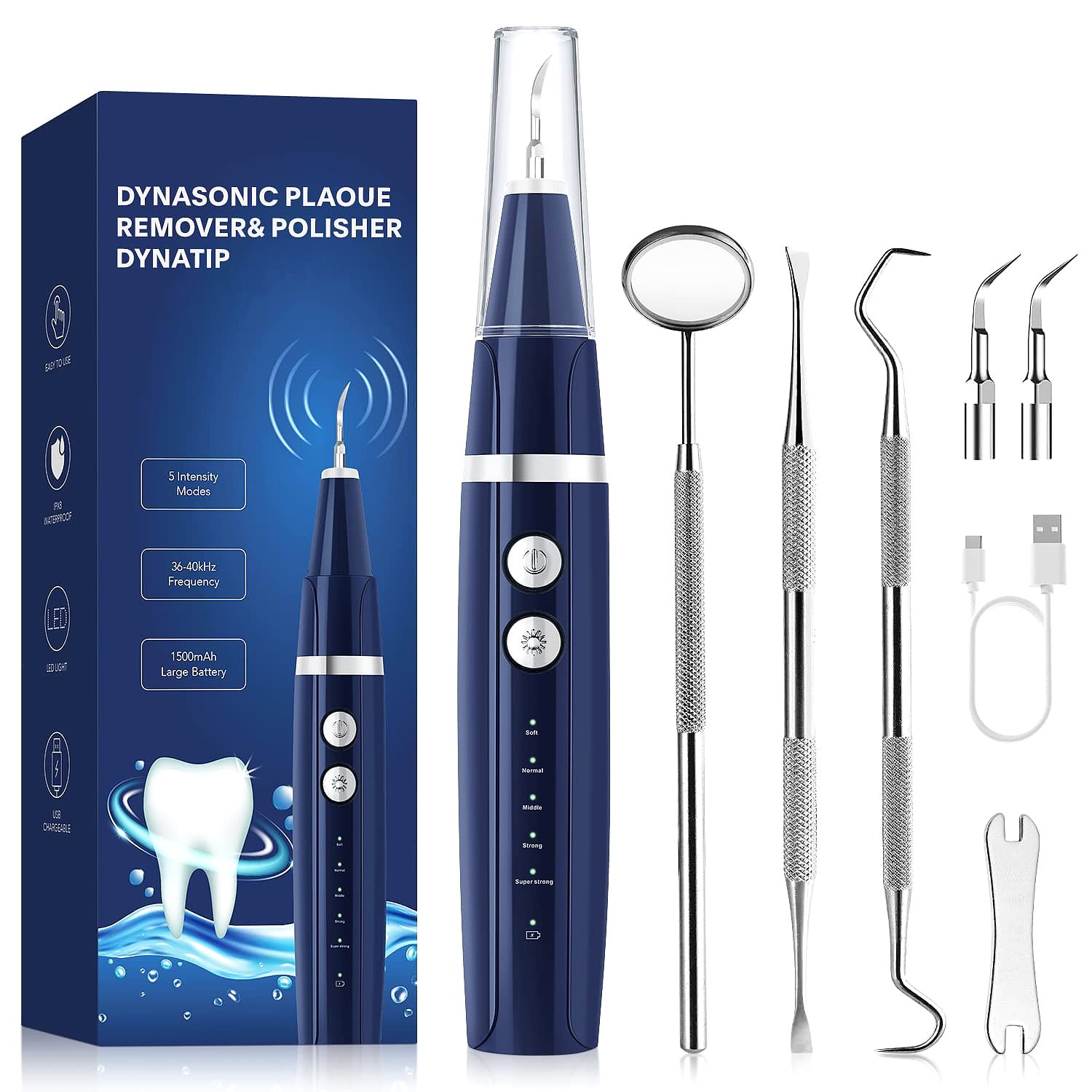
The Frequency of Clean: Decoding Ultrasonic Tartar Removal Technology for Home Use
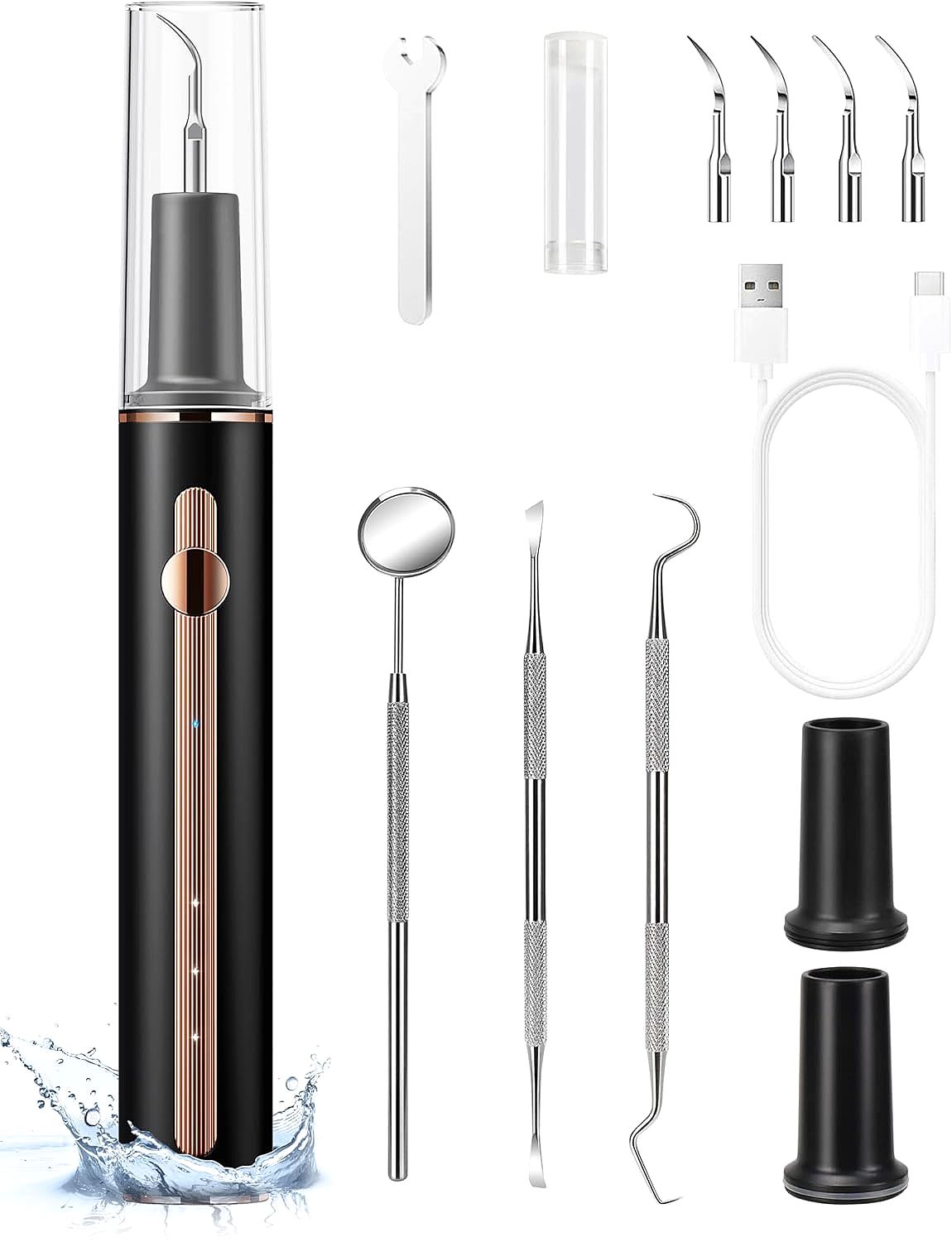
TANAVE Plaque Remover for Teeth
In the hierarchy of oral hygiene challenges, there is a distinct line drawn between the soft and the hard. Soft plaque, a sticky film of bacteria, is the domain of the daily toothbrush. But once that biofilm absorbs calcium from saliva and mineralizes into tartar (calculus), it crosses a threshold. It becomes a geological formation on a biological landscape, fused to the enamel with a bond strength that defies nylon bristles and waxed floss.
For generations, breaking this bond required the brute force of a steel curette in the hands of a professional—a method of scraping and chipping that, while effective, is often uncomfortable. However, the democratization of dental technology has introduced a new category of tools to the consumer market: the Ultrasonic Plaque Remover. Devices like the TANAVE model represent a shift from mechanical scraping to acoustic disruption, utilizing the laws of physics to shatter calcification without the need for force.
The Physics of Disruption: Resonance vs. Abrasion
To understand why these devices are distinct from electric toothbrushes, one must look at the mechanism of action. A toothbrush cleans by friction; it wipes the surface. An ultrasonic scaler, however, cleans by resonance.
The core technology involves a transducer that converts electrical energy into high-frequency mechanical vibrations. While marketing materials often throw around buzzwords like "2.4 GHz" (likely referring to the processor speed or wireless frequency), the functional reality of ultrasonic scaling typically occurs in the 30-40 kHz range—tens of thousands of vibrations per second.
When the metal tip of the scaler contacts the hard, brittle surface of tartar, these micro-vibrations transfer energy directly into the crystal structure of the deposit. The tartar, being rigid, cannot absorb this energy and instead shatters, much like a glass breaking when an opera singer hits the perfect resonant pitch. Importantly, this process breaks the adhesive bond between the tartar and the tooth, allowing the debris to flake off.
The Safety Paradox: Why It Doesn't Cut Your Gums
The most common apprehension regarding DIY dental scaling is the fear of injury. "Will I slice my gums?" is a reasonable question when holding a sharp metal tool. Here, the physics of the device provides an elegant safety net, often marketed as "Soft Tissue Recognition" or "Smart Safety."
This isn't AI; it's mechanical impedance. The ultrasonic vibrations require a hard, resonant surface to propagate effectively. Tooth enamel and tartar are hard surfaces that reflect this energy, sustaining the vibration. Soft tissue, like gums or the tongue, is damping. When the vibrating tip touches soft tissue, the energy is absorbed rather than reflected, and the vibration instantaneously dampens or stops.
In practice, this means the device effectively "turns off" the moment it slips from the tooth to the gum. It creates a fail-safe mechanism where the tool works aggressively on the target (tartar) but becomes inert on the surrounding sensitive areas. This differentiation is crucial for home users who lack the dexterity of a trained hygienist.
Tactical Application: The "Scaling" Protocol
Owning the tool is one thing; using it effectively is another. The transition from brushing to scaling requires a change in mindset. This is precision work, not a general scrub.
1. The Setup is Crucial:
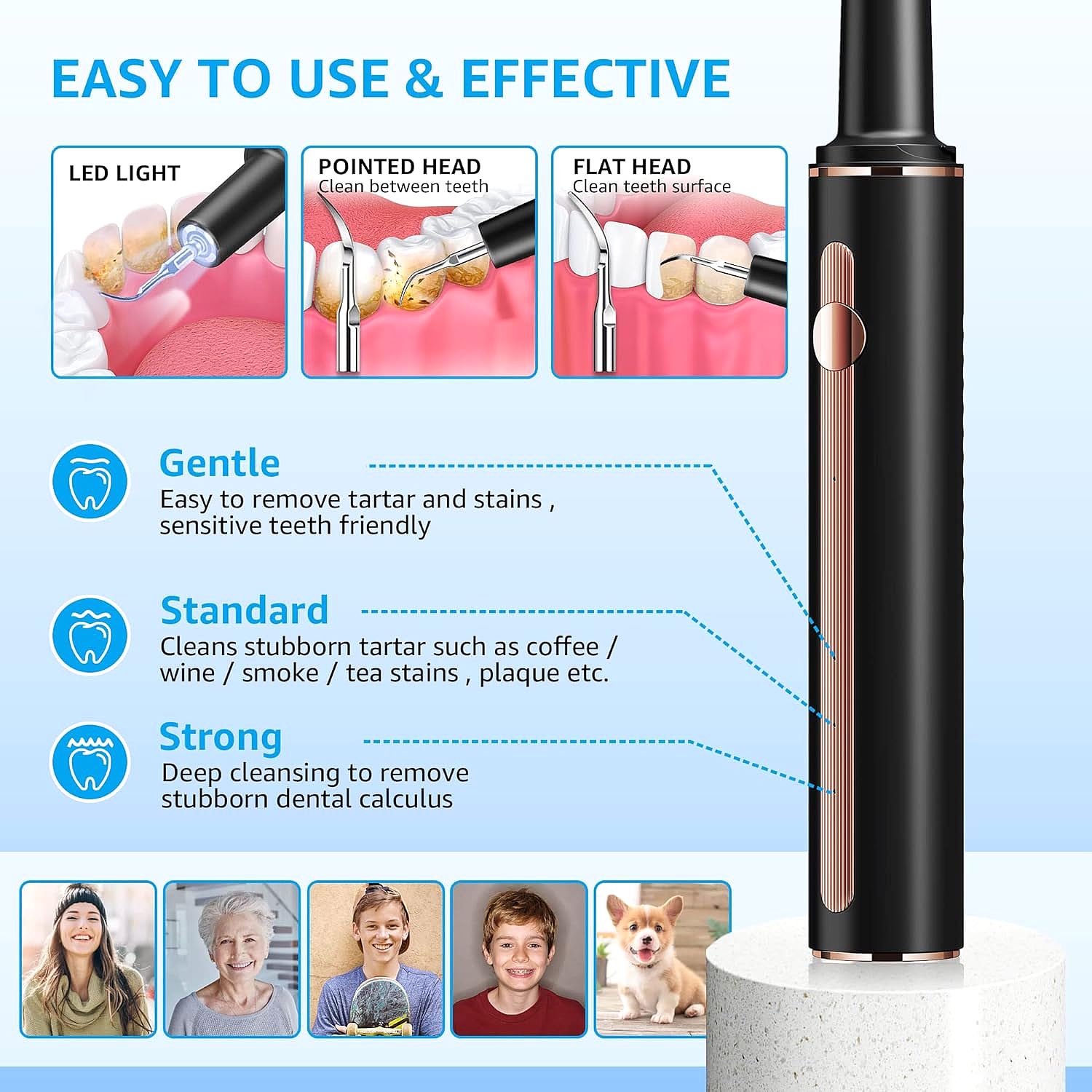
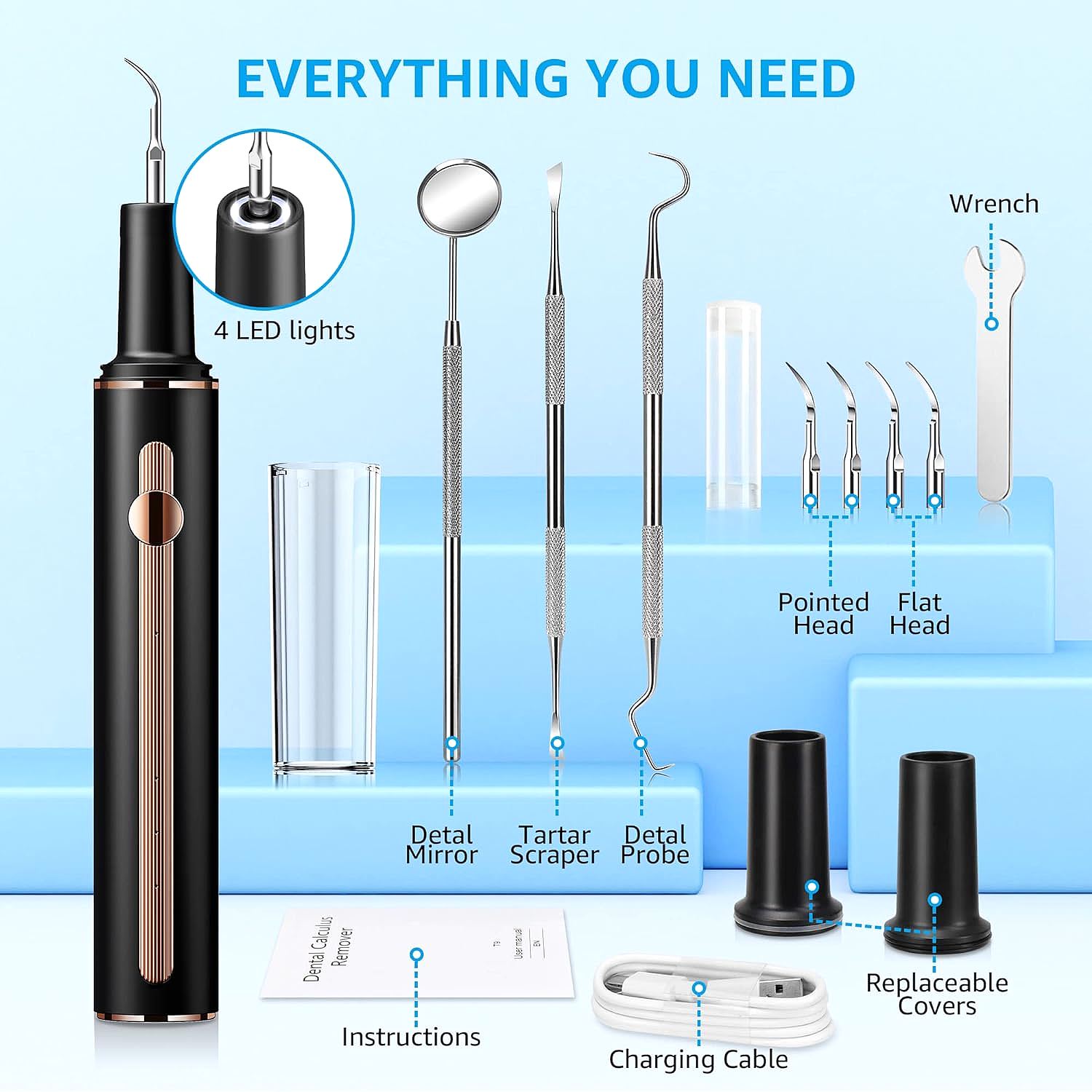
Unlike a toothbrush, the cleaning heads on these devices (often a flat head for surfaces and a pointed head for interdental spaces) must be rigidly secured. User experience suggests that using the provided wrench to tighten the head is non-negotiable. A loose tip dissipates the ultrasonic energy, rendering the device noisy but ineffective.
2. Visualization:
You cannot clean what you cannot see. The inclusion of auxiliary tools like a dental mirror and the device's built-in LED spotlight is not for show. Tartar often hides on the lingual (tongue-side) surfaces of the lower front teeth. Successful removal requires angling the mirror to reflect the light, exposing the hidden "fortresses" of calculus.
3. The "Hover and Touch" Technique:
The goal is not to scrape hard, but to let the vibrations do the work. The tip should be held at a roughly 45-degree angle to the tooth surface, gently touching the edge of the tartar deposit. Patience is key; holding the tip in place for a few seconds allows the resonance to initiate the fracture lines in the calculus.
The Role of Home Maintenance in Oral Health
It is vital to contextualize where this technology fits. The TANAVE Plaque Remover is not a replacement for professional dental check-ups. It cannot detect cavities, diagnose gum disease, or polish teeth to the microscopic smoothness achieved in a clinic.
However, for specific demographics, it is a game-changer. * The Rapid Builders: Some people's saliva chemistry leads to rapid tartar buildup, necessitating cleanings every 3 months rather than 6. This tool bridges that gap. * The Access-Challenged: For elderly individuals or those with mobility issues who struggle with manual dexterity, the mechanized action can make hygiene maintenance more achievable. * The Stain-Prone: Coffee and tobacco users often face surface staining that chemical whiteners can't touch but physical scaling can remove.
Conclusion: Empowerment Through Technology
The availability of ultrasonic scalers for home use represents a shift in the "patient-provider" dynamic. It empowers individuals to take an active, interventionist role in their oral health, moving beyond simple prevention (brushing) to active remediation (scaling). While it requires a steady hand and a respect for the tool's power, the ability to safely shatter calcified deposits at home is a profound advancement in personal hygiene technology. It turns the battle against tartar from a biannual skirmish into a manageable, ongoing campaign.

TANAVE Plaque Remover for Teeth
Related Essays