Hydro-Kinetic Precision: Mastering Oral Biofilm Control with Visualized Pressure
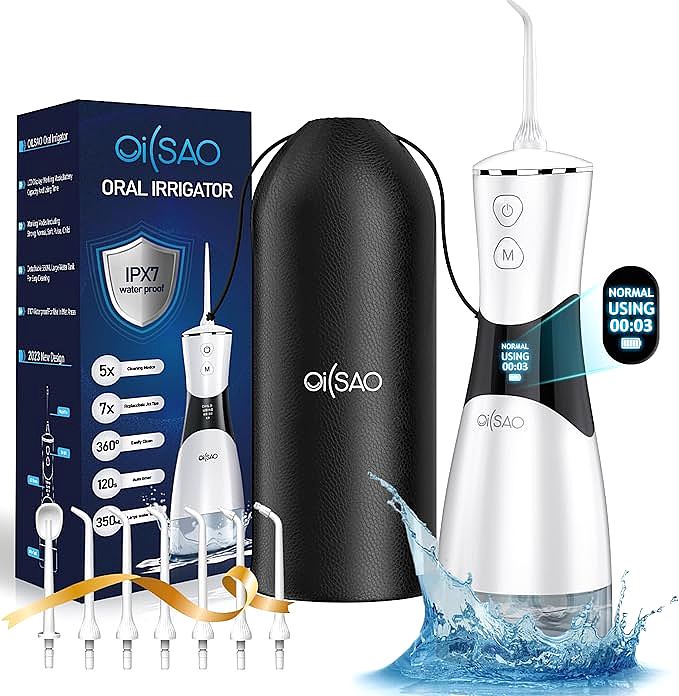
OILSAO AOW09 Cordless Water Flosser
The evolution of personal oral hygiene has shifted rapidly from passive maintenance to active, technology-driven intervention. While the mechanical friction of a toothbrush remains the gold standard for surface cleaning, the interdental spaces—the "contact points" where gum disease often originates—require a different approach. This is the domain of hydro-kinetic therapy, commonly known as water flossing.
However, simply squirting water between teeth is a crude simplification of the science involved. To effectively disrupt the sticky, complex structure of dental plaque (biofilm) without damaging delicate gingival tissue requires a precise balance of pressure, pulsation, and control. Advanced devices, such as the OILSAO AOW09 Cordless Water Flosser, are moving the needle by introducing a concept often missing in home dental tools: visualization and quantifiable customization.
The Physics of the Pulse: Why PSI Matters
To understand why high-performance irrigators exist, we must first understand the adversary: plaque. Plaque acts as a biofilm, a resilient matrix of bacteria that adheres tenaciously to enamel. A continuous stream of water often slides right over this matrix.
Effective removal relies on two forces working in tandem: Shear Force and Micro-Pulsation.
- Shear Force (PSI): This is the pressure of the water jet. It needs to be strong enough to peel the biofilm away from the tooth surface.
- Pulsation: By interrupting the stream thousands of times per minute (in the case of the AOW09, between 2200 and 3000 pulses per minute), the water creates a compression-decompression effect. This physical agitation fatigues the plaque structure, causing it to break apart more effectively than a static stream.
The Spectrum of Pressure
One of the most critical features in a modern irrigator is the dynamic range of pressure. A "one-size-fits-all" pressure setting is logically flawed because the oral landscape varies wildly.
- The Gentle Zone (50-80 PSI): This range is crucial for users with gingivitis, sensitive gums, or children. At this level, the goal is stimulating blood flow and flushing out loose debris without triggering a pain response. The "Kids" and "Gentle" modes on adaptable devices cater to this need.
- The Disruption Zone (110-150 PSI): For healthy gums, tightly spaced teeth, or bridges, higher pressure is necessary to penetrate deep into interdental spaces. A setting of 150 PSI, found in "Strong" modes, delivers the necessary kinetic energy to dislodge stubborn food impacts and entrenched plaque.
The ability to span this wide range—from a delicate 50 PSI up to a robust 150 PSI—transforms a device from a simple rinser into a versatile therapeutic tool capable of evolving with your oral health needs.
Visual Feedback: Ending the "Blind Floss"
A common frustration with early generations of cordless flossers was the lack of user feedback. Users often cycled through buttons blindly, unsure of the active mode until the water hit their gums—sometimes with unpleasant intensity.
The integration of LCD interfaces represents a significant leap in usability engineering. By visualizing the operational parameters, users regain control.
- Mode Confirmation: Knowing exactly which pressure profile (Strong, Normal, Gentle, Pulse, or Kids) is active before activation prevents accidental gum trauma.
- Resource Monitoring: Battery life and run-time indicators help in planning the hygiene routine, ensuring the device doesn't power down mid-session.
- Environmental Data: Some advanced units, like the AOW09, even display water temperature and PPM (Parts Per Million) estimates. While not diagnostic tools, these sensors add a layer of awareness to the quality of the water being introduced into the oral cavity.
This trend towards "quantified cleaning" encourages consistency. When a user can clearly see their settings and battery status, the friction of daily use decreases, leading to better long-term habits.
Anatomy-Specific Targeting
Just as a carpenter wouldn't use a hammer for every task, a comprehensive oral care routine requires specialized tools for different anatomical challenges. The generic "jet tip" is effective for general use, but specific conditions require engineered solutions.
- Orthodontics: Brackets and wires create physical barriers that shred traditional floss. Orthodontic tips typically feature a tapered brush head that allows for mechanical scrubbing of the bracket while the water jet flushes away the debris.
- Periodontal Pockets: For those managing gum disease, a Periodontal tip is essential. These are often designed with a soft rubber tip to gently guide water (or antimicrobial rinses) below the gumline at lower pressures, targeting anaerobic bacteria in the pockets.
- Tongue Hygiene: The dorsal surface of the tongue is a primary source of halitosis (bad breath). Tongue cleaning tips use a scraper-like action combined with water flow to remove the bacterial coating more effectively than brushing alone.
A device that includes these varied tips out of the box offers a complete ecosystem for oral health, rather than just a single-function tool.
Mobility and Maintenance in the Modern Era
The transition from countertop units to cordless handhelds has been driven by the need for mobility. However, this shift presents engineering challenges: battery life and water capacity.
Modern lithium-ion battery technology has largely solved the endurance issue. A standard expectation for a high-quality cordless unit is now roughly 30 days of use on a single charge. The move to universal USB Type-C charging further simplifies travel, allowing users to charge their dental tools with the same cable used for their phones or laptops.
Water capacity remains a balancing act between ergonomics and utility. A 350ml (approx. 12oz) tank is widely considered the "sweet spot"—providing enough volume for a thorough 60-to-90-second clean without making the device too heavy or bulky to maneuver comfortably. Furthermore, an IPX7 waterproof rating is non-negotiable for cordless units, allowing for safe use in the shower, which creates a seamless workflow for many users.
Conclusion: Empowering the Daily Ritual
The goal of utilizing advanced tools like the OILSAO AOW09 is not to complicate the daily routine, but to optimize it. By understanding the dynamics of water pressure and selecting the appropriate mode for your specific oral condition, you transform a passive chore into an active health intervention.
Whether managing complex dental work like implants and braces, or simply striving for a deeper level of hygiene, the combination of high-frequency pulsation, adjustable shear force, and visualized control offers a scientifically sound method to maintain a healthy oral microbiome. It is precision engineering, applied to the smile.
OILSAO AOW09 Cordless Water Flosser
Related Essays
Fluid Dynamics in Orthodontics: Mastering Non-Contact Cleaning with Precision Irrigation

Hydrodynamic Hygiene: Mastering Oral Biofilm Control with Portable Precision
Fluid Dynamics & Oral Health: The Engineering of Cordless Irrigation
The Physics of a Better Smile: Democratizing Sonic Cleaning Technology
Hydrodynamics in Your Hand: The Science of Pulsed Water and Periodontal Health

The Nomadic Standard: Maintaining Clinical Oral Hygiene Without the Counter Space