The Materials of Isolation: Memory Foam, Polymer Dynamics, and Battery Chemistry
Update on Jan. 13, 2026, 9:21 a.m.
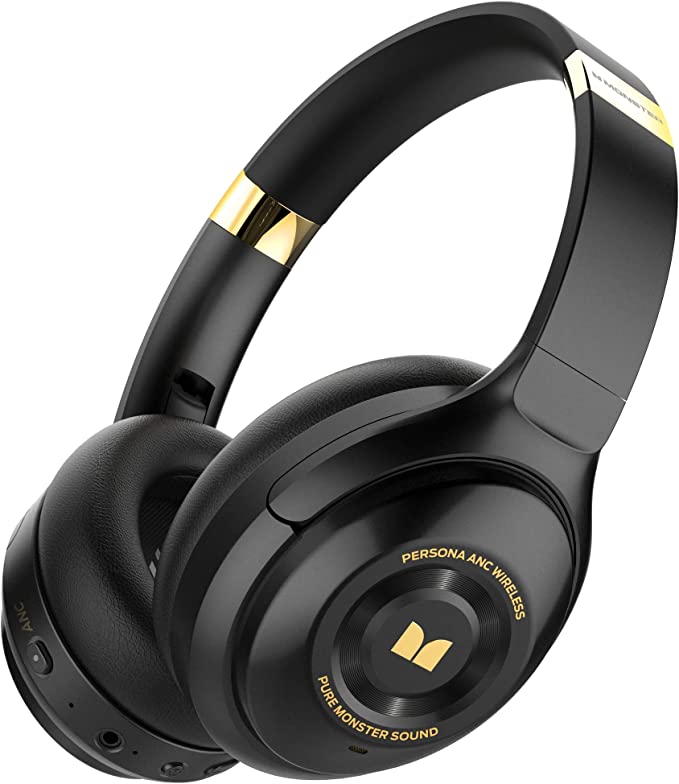
A headphone is a wearable interface. It sits on the skin, seals against the skull, and draws power from a chemical reservoir. The Monster MH31902 Persona excels not just because of its drivers, but because of its materials: the Memory Foam that creates the seal and the Lithium-Ion cells that power the silence.
This article shifts focus from the airwaves to the hardware. We will explore the polymer physics of viscoelastic foams, the structural engineering of foldable hinges, and the electrochemistry behind the “Quick Charge” technology that keeps the music playing.
The Physics of Foam: Viscoelasticity and the Acoustic Seal
The ear cups of the Persona are lined with Memory Foam. This is not just a comfort feature; it is an acoustic component. Memory foam is a viscoelastic polyurethane. * Viscous Behavior: Like honey, it resists flow but eventually deforms to match the applied force. This allows it to “melt” around the irregular contours of the human jaw and glasses frames. * Elastic Behavior: Like a spring, it returns to its original shape.
The Hermetic Seal
The primary goal of the ear pad is to create a hermetic (airtight) seal. * Passive Isolation: A perfect seal blocks high-frequency noise physically. If there is a gap as wide as a human hair, high-frequency waves (shorter than the gap) will leak in. The viscoelastic nature of memory foam minimizes these gaps, enhancing the passive isolation that supports the ANC system. * Bass Retention: As discussed previously, bass requires a pressurized chamber. The seal prevents the low-frequency pressure wave from escaping. The “Cloud-like” comfort mentioned in reviews is actually the sensation of equalized pressure distribution, which biologically allows for longer wear times without ischemia (loss of blood flow) to the ear cartilage.
The Electrochemistry of Speed: Quick Charge Technology
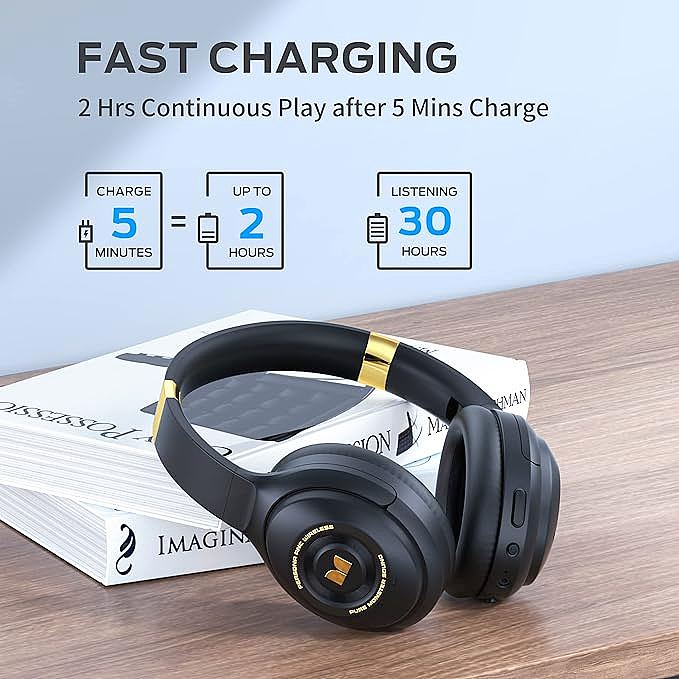
The Persona boasts a 30-Hour Playtime and a Quick Charge feature (5 minutes = 2.5 hours). This performance is governed by the laws of electrochemistry in Lithium-Ion batteries.
Energy Density and Efficiency
Achieving 30 hours in a lightweight chassis requires high Gravimetric Energy Density. * Cathode Chemistry: Modern cells often use Nickel-Manganese-Cobalt (NMC) cathodes to store more lithium ions per gram. * System Efficiency: The Bluetooth 5.0 chipset operates on low voltage, and the Class-D amplifier driving the speakers is highly efficient (90%+), converting battery power to sound with minimal heat loss.
The Physics of Fast Charging
How can 5 minutes of charging provide 2.5 hours of use? * Constant Current (CC) Phase: When a battery is low (empty), it can accept a massive influx of ions without voltage spiking. The charging circuit pumps maximum current (Amps) into the cell. The lithium ions rush from the charger, through the electrolyte, and intercalate (embed) themselves into the graphite anode. * Thermal Management: The limit to charging speed is heat. Internal resistance ($R$) generates heat ($I^2R$). The Persona’s battery management system (BMS) carefully monitors temperature to allow this high-current burst without damaging the delicate separator in the battery cell. This feature changes the user’s relationship with power—from “charging overnight” to “topping up before a run.”
Structural Mechanics: The Foldable Chassis
Portability requires moving parts. The Persona features a Foldable Design. * Hinge Mechanics: The hinge is a stress point. It must withstand the torque of leverage every time the headphones are put on or packed away. Using high-grade polymers or metal reinforcement at the pivot point ensures Fatigue Resistance. * Clamping Force: The headband acts as a leaf spring. It must exert enough force to compress the memory foam for a seal, but not so much that it causes headaches. This force vector is carefully calculated based on average human head width anthropometry.
Conclusion: The Hardware of Lifestyle
The Monster MH31902 Persona is a triumph of material application. By understanding the flow properties of Memory Foam, engineers created a seal that locks in bass and locks out noise. By mastering the charge curves of Lithium-Ion, they created a device that is always ready.
It demonstrates that a headphone is a system of systems—acoustic, mechanical, chemical, and electrical—all working in concert to deliver a seamless experience.