The Kinetic Threshold: Why Manual Brushing Fails the Biofilm Test
Oral-B Pro-Health Clinical Electric Toothbrush
The human hand is an evolutionary masterpiece of dexterity, capable of playing concertos and performing microsurgery. Yet, when it comes to oral hygiene, it is biologically inadequate. The average person, manual toothbrush in hand, achieves a frequency of approximately 300 strokes per minute. While this removes macroscopic food debris, it often fails to breach the Kinetic Threshold required to disrupt the microscopic structure of organized plaque.
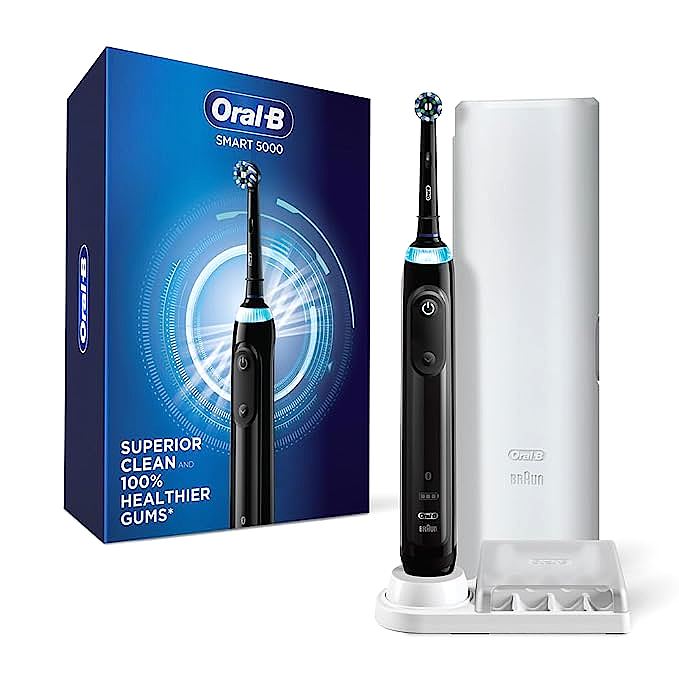
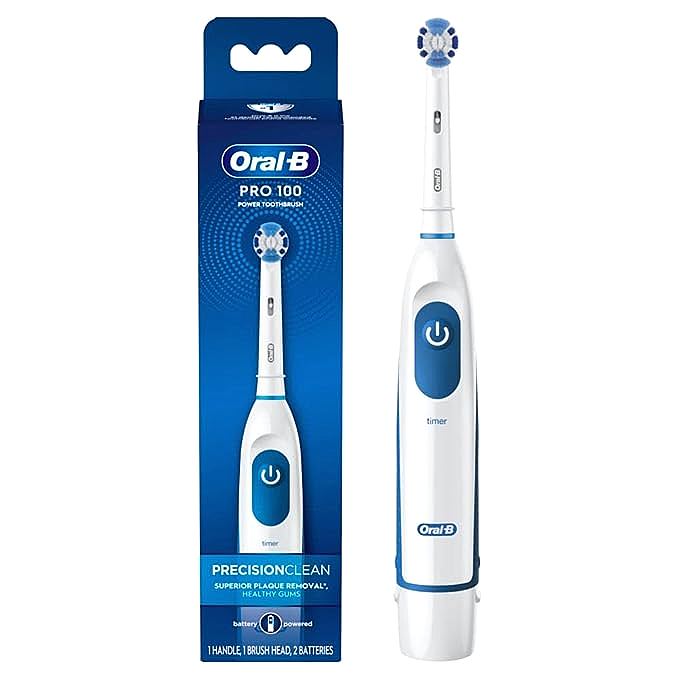
The Oral-B Pro-Health Clinical Electric Toothbrush serves as a case study in mechanical augmentation. It is not merely a "battery-operated" version of a manual brush; it is a fundamental shift in cleaning physics. By substituting human muscle memory with consistent mechanical oscillation, it eliminates the variable of "user fatigue" and delivers a clinically predictable outcome.
The Physics of 2D Oscillation: Shear Force vs. Friction
To understand the superiority of the oral b electric toothbrush platform, one must distinguish between two physical forces: Friction and Shear.
1. The Manual Limitation (Friction)
Manual brushing relies primarily on Friction. You press the bristles against the tooth and drag them back and forth. * The Flaw: Friction is directional. If you brush horizontally, you miss the vertical interdental spaces. If you brush vertically, you risk gingival recession. * The Result: Plaque colonies in the "shadow zones" (between teeth and along the gumline) remain undisturbed.
2. The Mechanical Advantage (Shear Force)
The Oral-B Pro-Health utilizes 2D Oscillating-Rotating Technology. The brush head spins clockwise and counter-clockwise at high speed. * The Mechanism: This rapid reversal of direction creates Shear Force within the fluids (saliva and toothpaste) surrounding the teeth. * The Effect: Even if the bristles do not directly touch a specific micron of enamel, the turbulent fluid dynamics generated by the oscillation can tear the adhesive bonds of the biofilm matrix. This is why clinical studies consistently show that oscillating-rotating brushes remove significantly more plaque than manual counterparts, regardless of the user's technique.
(Insert Image A: A diagram contrasting the linear motion of a manual brush vs. the arc motion of the Oral-B round head, highlighting the coverage of the gumline.)
The Geometry of Access: Why "Round" Matters
The second critical innovation is anatomical, not electrical. Most manual toothbrushes are rectangular, a shape inherited from the days of mass manufacturing convenience. However, the human dental arch is a parabola, and individual teeth are curved cylinders.
The Precision Clean head included with the Pro-Health Clinical is engineered with Circular Geometry. * The Cup Effect: The round head is designed to cup each tooth individually. This forces the user to adopt a "tooth-by-tooth" cleaning behavior rather than the broad, sweeping strokes used with manual brushes. * The Retromolar Pad: The most difficult area to clean is the distal surface of the last molar (the back of the back teeth). A rectangular manual brush is often too long to maneuver into this tight space without triggering the gag reflex. The compact, round head of the Oral-B fits effortlessly into this posterior niche, ensuring that the "forgotten surfaces" receive equal cleaning attention.
By combining High-Frequency Oscillation with Anatomical Geometry, the device removes the reliance on human skill. The user simply positions the tool; the physics does the work.
Oral-B Pro-Health Clinical Electric Toothbrush
Related Essays