The Physics of a Perfect Shave: How Light, Not a Blade, Can Banish Unwanted Hair

SmoothSkin Pure Adapt Green IPL Hair Removal Device
It’s not magic, it’s a fascinating dance between biology and physics happening in your own home. Let's break down the science of at-home IPL hair removal.
The bathroom counter often looks like a modern battlefield. It’s littered with the tools of a relentless, cyclical war against our own biology: disposable razors, messy waxes, and foul-smelling depilatory creams. It’s a Sisyphean task; the moment we declare victory, the enemy begins its slow, stubborn regrowth. For decades, the only true path to a lasting truce was through expensive, clinical laser treatments.
But in recent years, a new contender has entered the fray—a sleek, handheld device that promises to end the fight not with a sharp edge, but with a quiet flash of light. This technology, known as Intense Pulsed Light (IPL), has migrated from the dermatologist's office to our own homes.
But how, exactly, can something as ethereal as light defeat something as tenacious as a strand of hair? The answer isn't a marketing gimmick; it's an elegant physics principle put to work, a story of targeted energy, biological timing, and some very clever engineering.
The Secret Weapon: A Sunbeam Turned Sniper
To understand how IPL works, you first need to forget everything you know about cutting or pulling. Instead, think about absorption. Imagine wearing a black t-shirt on a sunny day versus a white one. The black shirt gets significantly hotter because its dark pigment absorbs far more light energy, converting it into heat.
This is the exact principle behind a Nobel-prize-worthy concept called Selective Photothermolysis. At its core, IPL technology is a highly controlled heat-delivery system. The device emits a very bright, broad-spectrum pulse of light—think of it as a supercharged camera flash. When this light hits your skin, it goes looking for a target, or what scientists call a chromophore. In the case of hair removal, the perfect target is melanin, the pigment that gives hair its dark color.
The melanin in the hair shaft and, more importantly, in the follicle, greedily absorbs this intense light energy. In a fraction of a second, that light energy is converted to thermal energy, heating the follicle to a critical temperature (around 70°C or 158°F). This thermal shock effectively damages key areas of the follicle responsible for growth, putting it into a state of prolonged dormancy. The surrounding skin, being lighter in color and containing less melanin, remains unharmed. It’s a microscopic, precision-guided heat strike.
Now, you may have heard IPL and laser used interchangeably, but they are fundamentally different. A laser is a sniper rifle, firing a single, coherent wavelength of light. IPL is more like a shotgun, firing a broad range of wavelengths simultaneously. This wider spectrum allows it to be effective for various hair depths and types, making it an incredibly versatile tool for at-home use.

The Biological Clock: Why Patience is a Scientific Necessity
So, if the technology is so effective, why don’t you get perfectly smooth skin after a single use? The answer lies not in the device, but in the intricate, hidden cycles of our own hair.
Your hair doesn't grow continuously. Every single follicle operates on its own three-phase schedule:
- Anagen (The Growth Phase): This is the active phase where the hair is physically connected to the follicle's base (the papilla), receiving nutrients and growing.
- Catagen (The Transition Phase): The hair detaches from the papilla and stops growing.
- Telogen (The Resting Phase): The old hair sits dormant in the follicle before eventually falling out, and the follicle waits to begin a new cycle.
IPL is only effective during the Anagen phase. This is the only time the hair is directly linked to the growth structures, creating a perfect thermal bridge to deliver the destructive heat. At any given time, only a fraction (around 20-30%) of the hairs on your body are in this active growth phase.
This is why the treatment regimen for any light-based hair removal is a marathon, not a sprint. The weekly sessions recommended for the first couple of months are designed to systematically catch every single follicle as it enters its vulnerable Anagen phase. It’s a game of patience, dictated entirely by our own biology.
Taming the Light: The Engineering That Makes It Safe
Bringing a technology powerful enough to cook a hair follicle into an unregulated home environment is an immense engineering challenge. The line between an effective treatment and a burn is incredibly fine, and it’s a line determined almost entirely by one thing: the amount of melanin in your skin.
This is where brilliant design comes in, transforming a powerful principle into a safe-to-use tool. The first and most critical innovation is the automatic skin tone sensor. High-quality devices, such as the SmoothSkin Pure Adapt, have this feature built-in. Before every single flash, a sensor reads the melanin content of your skin, referencing it against the Fitzpatrick Scale, a dermatological standard for classifying skin types. If your skin tone is within the safe range (typically types I to IV), the device selects the optimal energy level. If it detects a skin tone that is too dark (types V or VI), where the light could be dangerously absorbed by the skin itself, it will simply refuse to flash.
This single feature is the gatekeeper of safety and also explains the technology's primary limitation. Because the system relies on the contrast between dark hair and lighter skin, it's ineffective on very light blonde, red, or grey hair (not enough melanin target) and unsafe for very dark skin (not enough contrast for the device to differentiate).
The second engineering marvel is in the ergonomics. A flat, rigid window on a device struggles to make full, firm contact with the curved surfaces of our bodies, like knees, shins, or the bikini line. Poor contact means energy is lost and the safety sensors might not engage properly. To solve this, some advanced models incorporate an adaptive head. This small, flexible element allows the treatment window to pivot and mould to the body’s contours, ensuring that every pulse of light is delivered directly to the skin for maximum effect and safety. It's a subtle but crucial detail that separates a frustrating experience from a seamless one.

The Real-World Equation: Effort, Sensation, and The Bottom Line
When you bring this piece of applied physics into your life, what should you actually expect? The sensation is most often described as a quick, warm snap against the skin, like a rubber band. For those with more sensitive skin, devices often include a "gentle mode," which is simply an engineering term for a setting that reduces the energy output, or fluence (measured in Joules/cm²), of each flash.
The results are gradual and rewarding. After a few weeks, you’ll notice hair growing back slower and finer. Soon, small, hair-free patches will appear and begin to connect. After a full 12-week initial treatment cycle, most users see a dramatic and long-lasting reduction in hair. It's important to understand this as "permanent reduction," not "permanent removal." You will likely need occasional touch-up sessions every month or two to keep any stubborn, dormant follicles in check.
This convenience comes with a trade-off. A quality IPL device is an investment, often costing several hundred dollars. Yet, when compared to the endless cost of razors and waxes, or the thousands required for a full course of clinical treatments, the long-term financial equation often comes out favorably. But the biggest investment isn't money; it's consistency. The technology works, but only if you adhere to the schedule dictated by your hair's growth cycle.
Knowledge is Power (and Smoother Skin)
At-home IPL is not a miracle. It is the beautiful result of a scientific principle, meticulously translated through decades of research and clever engineering, into a tool we can hold in our hands. It’s a testament to our ability to harness a fundamental force of nature—light—to solve a mundane but deeply human problem.
Understanding this science does something powerful. It lifts the veil of marketing and allows you to see the technology for what it is: a specific tool for a specific job, with clear rules and boundaries. It empowers you to know, based on your own skin and hair, whether you are a good candidate. The most compelling feature of any piece of technology isn't just what it does, but the elegant science that makes it possible.
SmoothSkin Pure Adapt Green IPL Hair Removal Device
Related Essays

The Science of a Facial Workout: Can a Tiny Electrical Current Really Defy Gravity?

The Pricey Gel Your High-Tech Facial Wand Can't Live Without: A Scientific Explanation
IHealthia Water Flosser: A Portable Waterproof Design for Deep Teeth Cleaning
PERBOL US-D12-antique Sonic Electric Toothbrush: Unleash the Power of Sonic Cleaning for a Healthier Smile
RexCodar Kids Electric Toothbrush: Making Brushing Fun and Effective for Little Smiles

Oral-B D305.523.1 Pro Limited: Your Gateway to a Healthier Smile
TOVENDOR F5020D Water Flosser: Your Portable Solution for a Healthier Smile

Waterpik WP-582 Cordless Advanced 2.0: Achieve Superior Gum Health
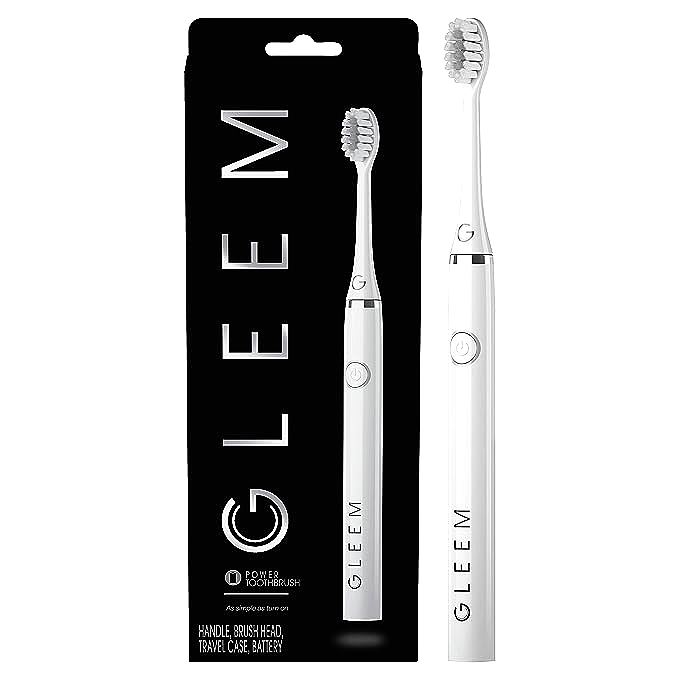
Gleem Battery Powered Electric Toothbrush: Gentle & Effective Cleaning
