The Feedback Loop: How Smart Sensors and Sonic Tech Decode Oral Health
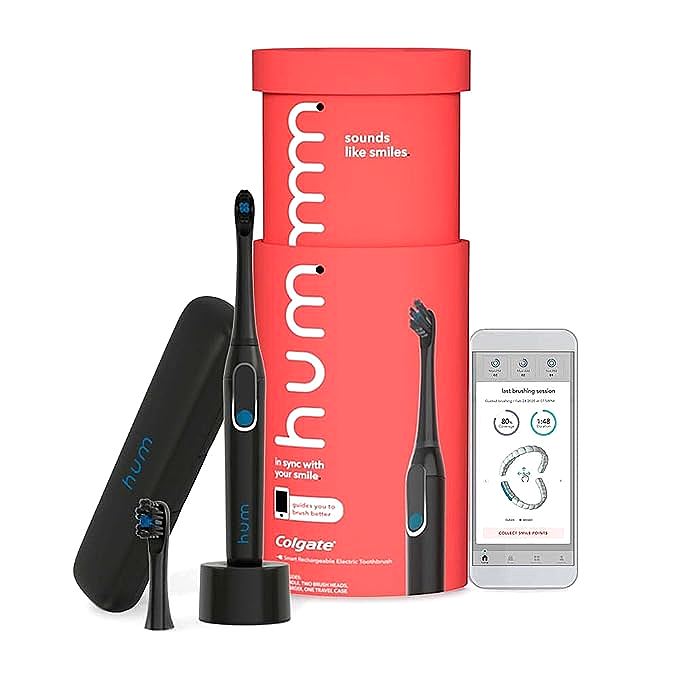
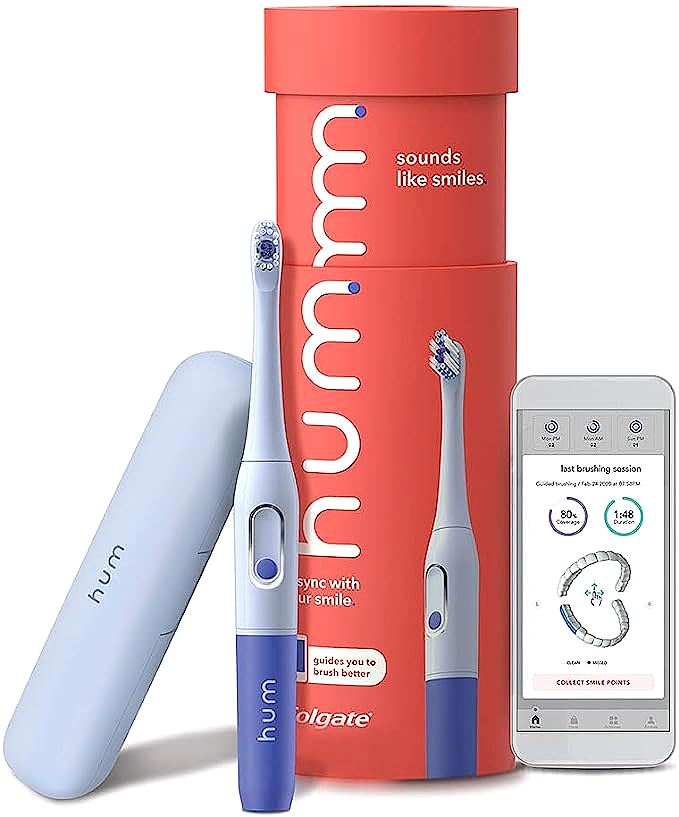
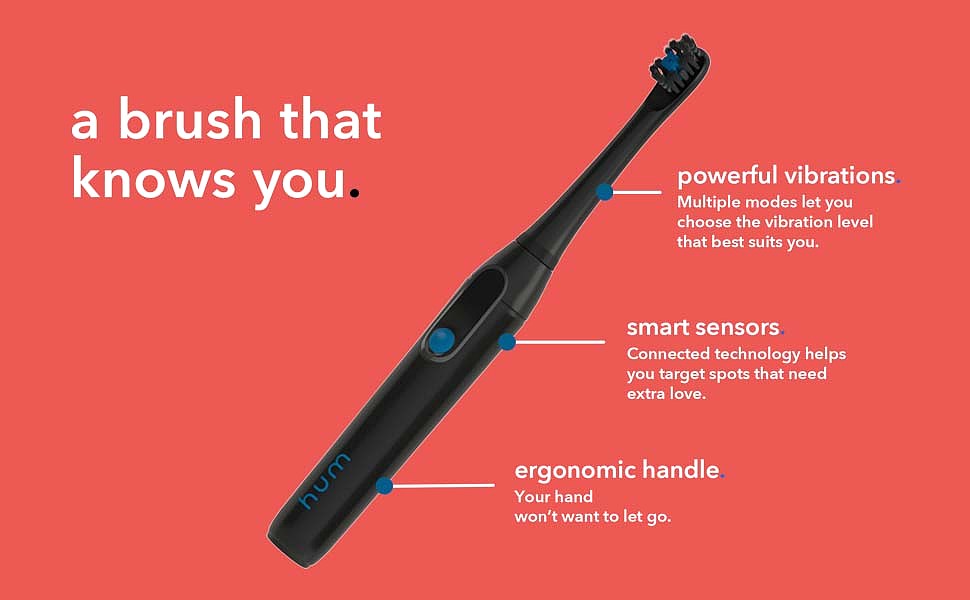
Colgate hum Black Electric Toothbrush
In the landscape of daily rituals, brushing one's teeth is perhaps the most practiced yet least perfected habit. We stand before the mirror, brush in hand, and engage in what we believe is a thorough cleaning. However, dental professionals often observe a stark disconnect between a patient's perception of their brushing and the clinical reality of plaque accumulation.
This discrepancy is not necessarily due to laziness; it is a failure of proprioception—our body's ability to sense its position in space. Inside the complex topography of the mouth, without visual guidance, our "spatial map" is often flawed. We fall into "autopilot," repeatedly scrubbing the same easy-to-reach surfaces while neglecting difficult angles. This is where the integration of smart technology and sonic engineering, exemplified by devices like the Colgate hum Black Electric Toothbrush, marks a significant evolution. It shifts the paradigm from simple mechanical cleaning to data-driven behavioral modification.
The Hardware: Acoustic Microstreaming and Cavitation
Before delving into the software, we must understand the physical mechanism of modern sonic cleaning. Unlike the rotary friction of traditional electric brushes, sonic technology relies on high-frequency vibration.
When a brush head oscillates at sonic speeds (often tens of thousands of strokes per minute), it generates two distinct cleaning forces:
1. Mechanical Scrubbing: The physical contact of bristles removing debris.
2. Acoustic Microstreaming: This is the differentiating factor. The rapid vibration creates vigorous turbulence in the mixture of saliva, water, and toothpaste. This fluid dynamic extends beyond the tips of the bristles, forcing fluid into interdental spaces (between teeth) and along the gumline.
Simultaneously, a phenomenon called cavitation occurs, where microscopic bubbles form and implode, creating tiny shockwaves that disrupt the sticky biofilm (plaque) matrix. The Colgate hum utilizes this sonic architecture, offering modes like "Deep Clean" to maximize this fluid activity, or "Sensitive" to reduce amplitude for delicate tissue. This foundational technology ensures that if the brush is in the right place, the cleaning is exponentially more effective than manual scrubbing.
The Software: Closing the Proprioception Gap
However, the most powerful engine is useless if it isn't directed correctly. This brings us to the "smart" aspect of modern oral care.
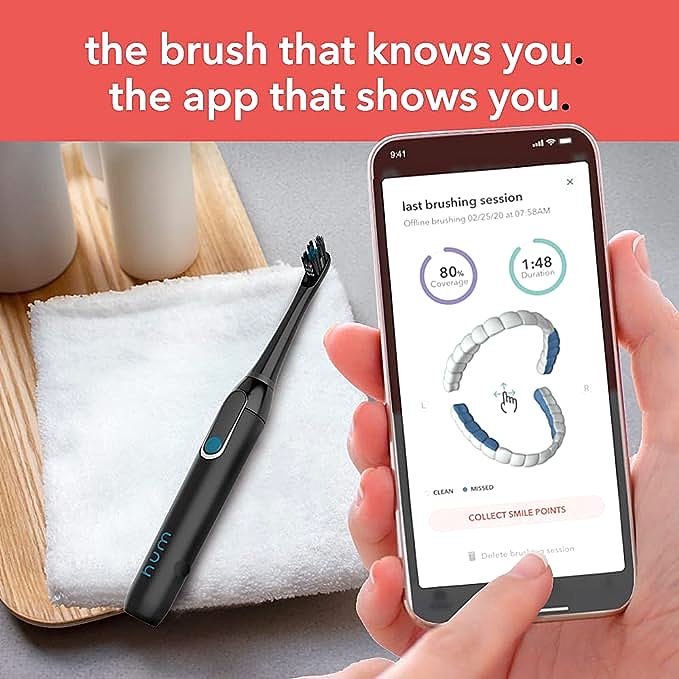
The Colgate hum contains embedded sensors—likely accelerometers and gyroscopes—that track the handle's position, orientation, and movement in real-time. By syncing this data via Bluetooth to a smartphone app, the device creates a biofeedback loop.
Normally, the feedback loop for brushing is delayed by months: you don't know you missed a spot until your dentist finds a cavity six months later. Smart connectivity shortens this loop to milliseconds. * Coverage Mapping: As you brush, the app visualizes your mouth, turning sectors from "dirty" to "clean" on the screen. This visual aid acts as a prosthetic for your proprioception, forcing you to acknowledge and address the blind spots (often the lingual surfaces of the molars) that your muscle memory ignores. * Temporal Guidance: A built-in pacer pulse every 30 seconds disrupts the "autopilot" trance, signaling the user to move to the next quadrant. This ensures that the two-minute session is democratically distributed across all teeth, rather than spent entirely on the front six.
The Psychology of Gamification
Why do we struggle to maintain these habits? Because hygiene is a maintenance task with no immediate dopamine reward. Smart brushing platforms leverage gamification psychology to hack this behavioral hurdle.
By assigning "points" for coverage and consistency, devices like the Colgate hum transform a chore into a challenge. This is not merely for entertainment; it utilizes the Hawthorne Effect, where individuals modify an aspect of their behavior in response to their awareness of being observed (even if the observer is an algorithm). The desire to maintain a "streak" or achieve a "perfect score" provides the immediate gratification necessary to cement a long-term neuro-association with proper hygiene.
Beyond the Bathroom Counter
The effectiveness of any health tool is also contingent on its integration into a lifestyle. Factors such as battery density and portability play a subtle but crucial role in consistency. A toothbrush that dies mid-trip or is cumbersome to pack disrupts the routine.
The Colgate hum addresses this with a form factor designed for mobility—compact, with a travel case and a 10-day battery life. While these may seem like standard specifications, in the context of habit formation, they are "friction reducers." By minimizing the barriers to usage (e.g., not needing to bring a charger for a weekend trip), the technology supports the user's commitment to the regimen.
Conclusion: The Quantified Smile
The transition from analog to digital oral care is not just about adding Bluetooth to a handle; it is about adding awareness to a routine. The Colgate hum Black Electric Toothbrush serves as a prime example of how hardware (sonic vibration) and software (data tracking) converge to solve a biological problem.
By outsourcing the monitoring of our brushing technique to smart sensors, we overcome our natural cognitive biases and physical limitations. The result is not just a feeling of freshness, but a scientifically verifiable standard of cleanliness. In the era of the quantified self, a smarter smile is simply a matter of better data.
Colgate hum Black Electric Toothbrush
Related Essays

The Quantified Smile: Decoding Maglev Physics and Smart Sensors in Modern Dental Care
The Science of Hydrokinetic Hygiene: Decoding Pulsation, Pressure, and Periodontal Health
The Cybernetics of a Smile: Fluid Dynamics and Sensor-Guided Oral Health

The Quantified Smile: How AI and Biofeedback Are Redefining Oral Hygiene