The Hidden Science in Your Child's Toothbrush: How Physics and Psychology Win the Brushing Battle

FUMEIKANG Kids Electric Toothbrush
In the quiet theater of countless homes, a familiar one-act play unfolds each morning and night. The setting is the bathroom. The antagonists: a determined parent and a reluctant child. The subject of their standoff is a toothbrush. This scene is played out with such regularity that we can almost forget to ask a fundamental question: does it have to be this way? According to the Centers for Disease Control and Prevention (CDC), dental caries (cavities) remain one of the most common chronic diseases of childhood. This isn't just a battle of wills; it's a critical front line for our children's long-term health. What if the tool itself could change the rules of the game? What if, hidden within a simple-looking device, lay the combined wisdom of physics, psychology, and material science, all aimed at turning friction into fascination? Let's place one such tool, the FUMEIKANG FS12 Kids Electric Toothbrush, under our scientific microscope to find out.

The Weapon of Choice: More Than Just a Motor
At first glance, an electric toothbrush for a child might seem like a miniaturized version of an adult's. But to dismiss it as such is to overlook a masterpiece of specialized engineering. An exceptional children's toothbrush isn't merely a brush with a motor; it's an integrated system designed to solve a complex set of problems. It must be powerful enough to eradicate a formidable, microscopic enemy, yet gentle enough for a mouth where the dental fortress is still under construction. It must be simple enough for a child to use, yet sophisticated enough to teach them skills that will last a lifetime. This is the promise we seek to investigate—a promise that a device can be more than an object, but a partner in building health.
The Physics of Plaque Removal: An Invisible, Hydrodynamic Assault
Before we can appreciate the weapon, we must understand the enemy. What we call plaque isn’t merely leftover food; it’s a biofilm. Think of it as a fortress, a sticky, sprawling city of bacteria, meticulously organized. Attacking this fortress with the brute force of manual brushing is often an inefficient siege, especially for small hands still developing fine motor control. This is where the science of sonic technology enters the scene, and it's far more elegant than simple scrubbing.
When you see a number like 39,600 vibrations per minute, it’s natural to imagine a tiny, aggressive jackhammer. But the reality is far more nuanced. The physics at play are closer to the wings of a hummingbird—an incredibly high frequency married to a very small, precise amplitude. This high-frequency hum creates a phenomenon called Dynamic Fluid Action, the secret weapon of elite sonic toothbrushes. The toothbrush itself doesn’t need to physically touch every single surface to clean it. Instead, it agitates the water and toothpaste in the mouth into a state of controlled turbulence, creating waves of energy and micro-bubbles. These invisible, powerful currents act like a microscopic pressure washer, flowing into the tight spaces between teeth and below the gumline, disrupting and flushing away the bacterial fortress far more effectively than bristles alone. This is the scientific principle that underpins the claim of removing significantly more plaque than a manual brush. It’s not just scrubbing; it’s a strategic, hydrodynamic assault.

The Psychology of Persistence: Engineering a Lifelong Habit
So, we have a powerful weapon capable of a sophisticated, hydrodynamic assault on plaque. But the most advanced weapon is useless if the soldier refuses to wield it for the full duration of the battle. The American Dental Association (ADA) authoritatively recommends a brushing time of two minutes to effectively remove plaque from all tooth surfaces. For a child, that can feel like an eternity. This is where remarkable physics gives way to astute psychology.
The FUMEIKANG toothbrush, like many top-tier models, doesn't just time the two minutes; it conducts it. The built-in timer is the length of the symphony, but the 30-second interval pacer is the conductor’s baton. This simple feature is a masterclass in applied behavioral science, directly tapping into what author Charles Duhigg famously termed the “Habit Loop”:
- The Cue: A slight, gentle pause in the vibration every 30 seconds. This is the trigger for a specific action.
- The Routine: The child moves the brush to the next quadrant of their mouth (e.g., from upper right to upper left). This is the action itself.
- The Reward: A sense of accomplishment from completing a segment, the eventual feeling of a clean mouth, and the praise from a parent. This reinforces the loop for the next time.
This digital nudge transforms an amorphous, daunting two-minute task into four manageable, bite-sized missions. It systematically builds a mental map for thorough cleaning, turning a chore that requires constant parental supervision into an internalized, automatic skill. The toothbrush ceases to be a passive tool and becomes an active coach, embedding a world-class dental habit directly into a child's daily routine.

The Engineering of Safety: A Fortress for a Developing Mouth
By embedding a behavioral coach into the device, we can guide the what and how long of brushing. But for a child, the how safe is paramount. The enamel on their new permanent teeth is still hardening, making it softer and more vulnerable than an adult’s. Their gums are more delicate. The dental fortress is still under construction, and it requires a weapon engineered with profound gentleness.
This is where material science and thoughtful design become critically important. The choice of bristles, for example, is a decision of microscopic consequence. This toothbrush uses super-soft 0.127mm DuPont™ bristles, a material trusted for its unique ability to be both flexible enough to clean effectively and exceptionally gentle on delicate gums and maturing enamel. The design goes a step further by wrapping the entire back of the brush head in soft, food-grade silicone. This is a profound, if subtle, safety feature. It acts as a protective bumper, preventing the hard plastic from jarring against teeth or gums during an uncoordinated or overly enthusiastic brushing session.
This meticulous engineering extends to the product's entire lifecycle. It carries an IPX7 waterproof rating, a designation defined by the International Electrotechnical Commission (IEC 60529) standard. This isn't just a marketing claim for being "splash-proof"; it certifies that the device can be fully submerged in up to one meter of water for 30 minutes without harm. It’s engineered to survive the chaotic, splash-filled reality of a child’s bathroom, making it both durable and easy to clean thoroughly. Coupled with features like wireless charging that removes fussy ports and a long-lasting battery, the design anticipates and solves the low-level, recurring hassles that can derail a parent's best intentions.
Conclusion: From Chore to Curiosity
When you pull back the curtain, what appears to be a simple child's toothbrush reveals itself to be a convergence of remarkable science. It's a tangible demonstration of high-frequency physics, a real-world application of behavioral psychology, and a case study in thoughtful material engineering. Every time your child switches it on, they are holding more than a tool for cleaning. They are holding an instrument that harnesses the power of hydrodynamic forces. They are participating in a behavioral loop designed to build a healthy habit that could save them from pain and expense for the rest of their lives.
Choosing the right tool is an investment in your child's health, certainly. But perhaps more profoundly, it’s an opportunity to plant a seed of curiosity. It’s a chance to transform the dreaded parental command of “brush your teeth” into an inquisitive invitation: “can you feel the science at work?” By understanding the deep thought embedded in such a device, we empower ourselves to make informed choices for our families. We learn to look beyond the colorful packaging and assess the physics, the psychology, and the engineering that truly matter. And in doing so, we give our children not just a cleaner smile, but perhaps their very first lesson in how human ingenuity can solve everyday problems.
FUMEIKANG Kids Electric Toothbrush
Related Essays
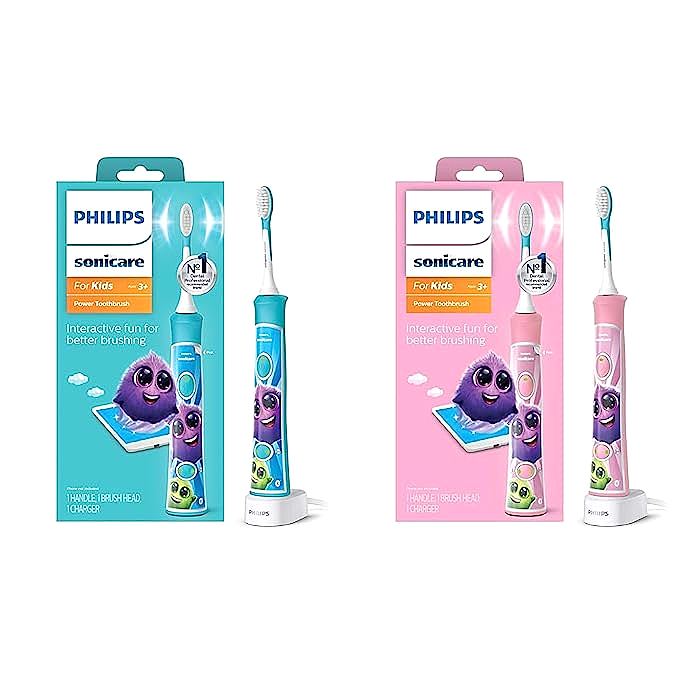
Philips Sonicare for Kids Toothbrush: Making Brushing Fun & Effective

The Enduring Power of Simplicity: Why the Philips Sonicare Essence Still Matters
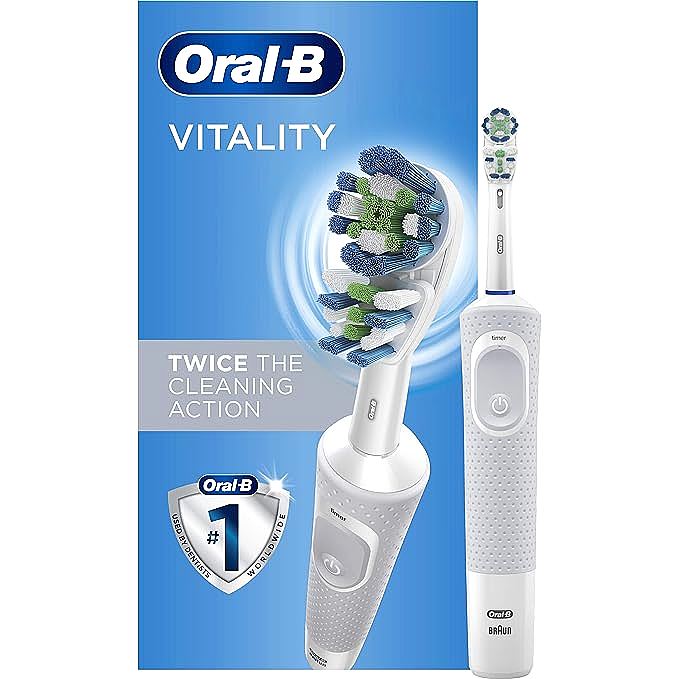
Oral-B Vitality Dual Clean Electric Toothbrush : A Sparkling Smile on a Budget

Oral-B Smart Clean 360 Review: Superior Cleaning for Healthier Gums
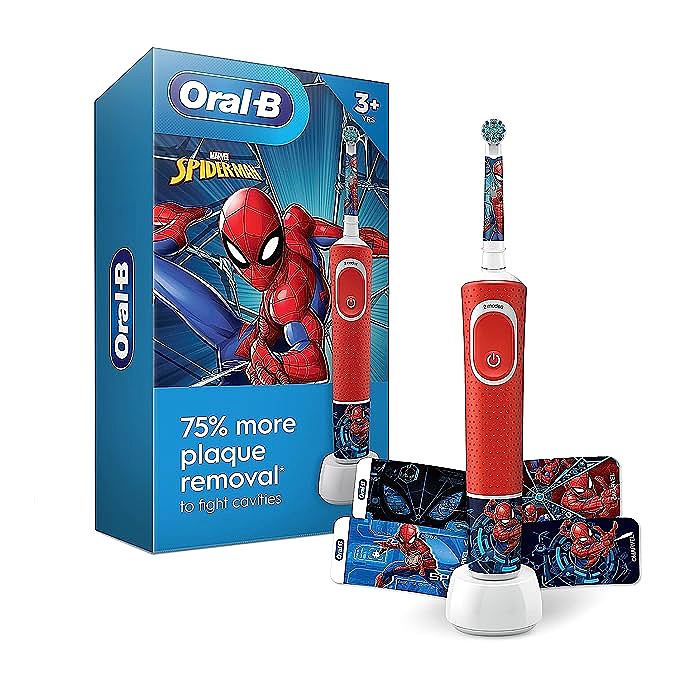
Oral-B Kids Electric Toothbrush Featuring Marvel's Spiderman: Making Brushing Fun and Effective!
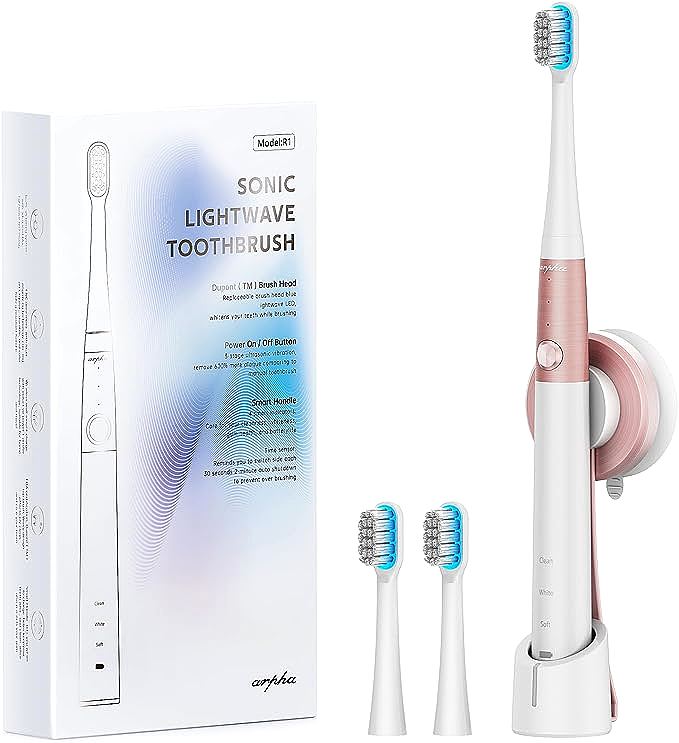
The ARPHA R1 Sonic Electric Toothbrush: A Deep Dive into the Science of a Healthier Smile
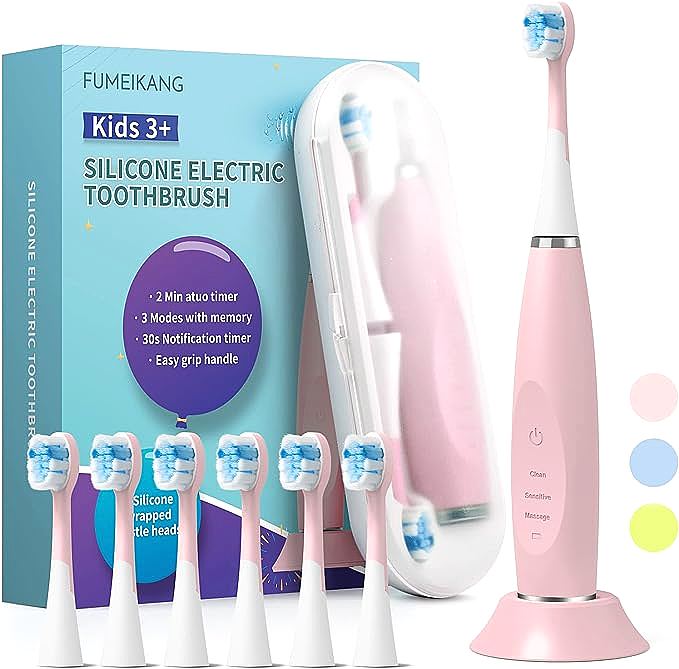
FUMEIKANG FS12 Kids Electric Toothbrush - A Fun and Effective Way to Improve Your Child's Oral Health
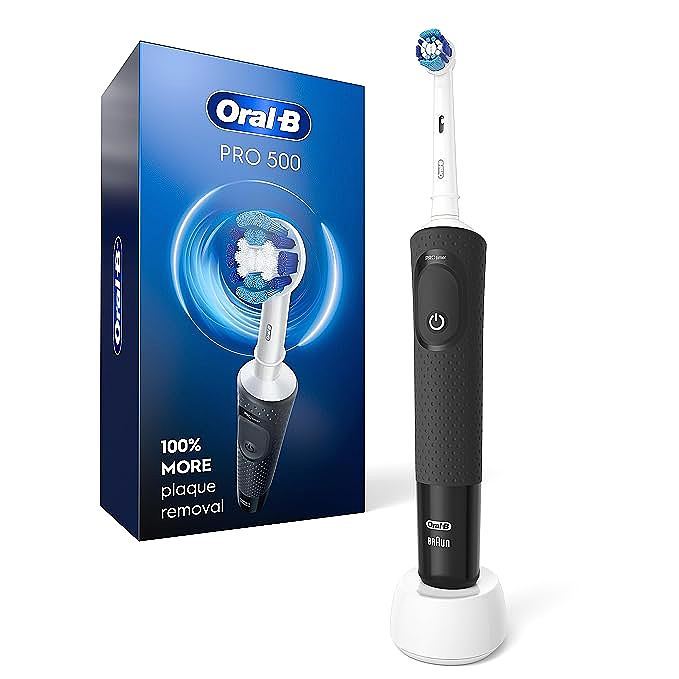
Oral-B Pro 500 Electric Toothbrush: Gentle, Effective Cleaning for a Healthier Smile

Philips Sonicare 3100 HX3675/15: A Dynamic Duo for Optimal Oral Health
