The Chemistry of Flow: Analyzing the Infuser Technology in Waterpik's WF-06

Waterpik WF-06 Whitening Water Flosser
In the quest for a brighter smile, consumers are often forced to choose between "mechanical cleaning" (brushing/flossing) and "chemical bleaching" (strips/trays). The former removes debris but leaves stains; the latter removes stains but can cause sensitivity.
The Waterpik WF-06 Whitening Water Flosser represents a convergence of these two modalities. By integrating a chemical delivery system directly into a hydrodynamic engine, it pioneers a category we can call "Chemo-Mechanical Debridement." Understanding how this works requires looking at the physics of the Infuser and the chemistry of Stain Solubilization.
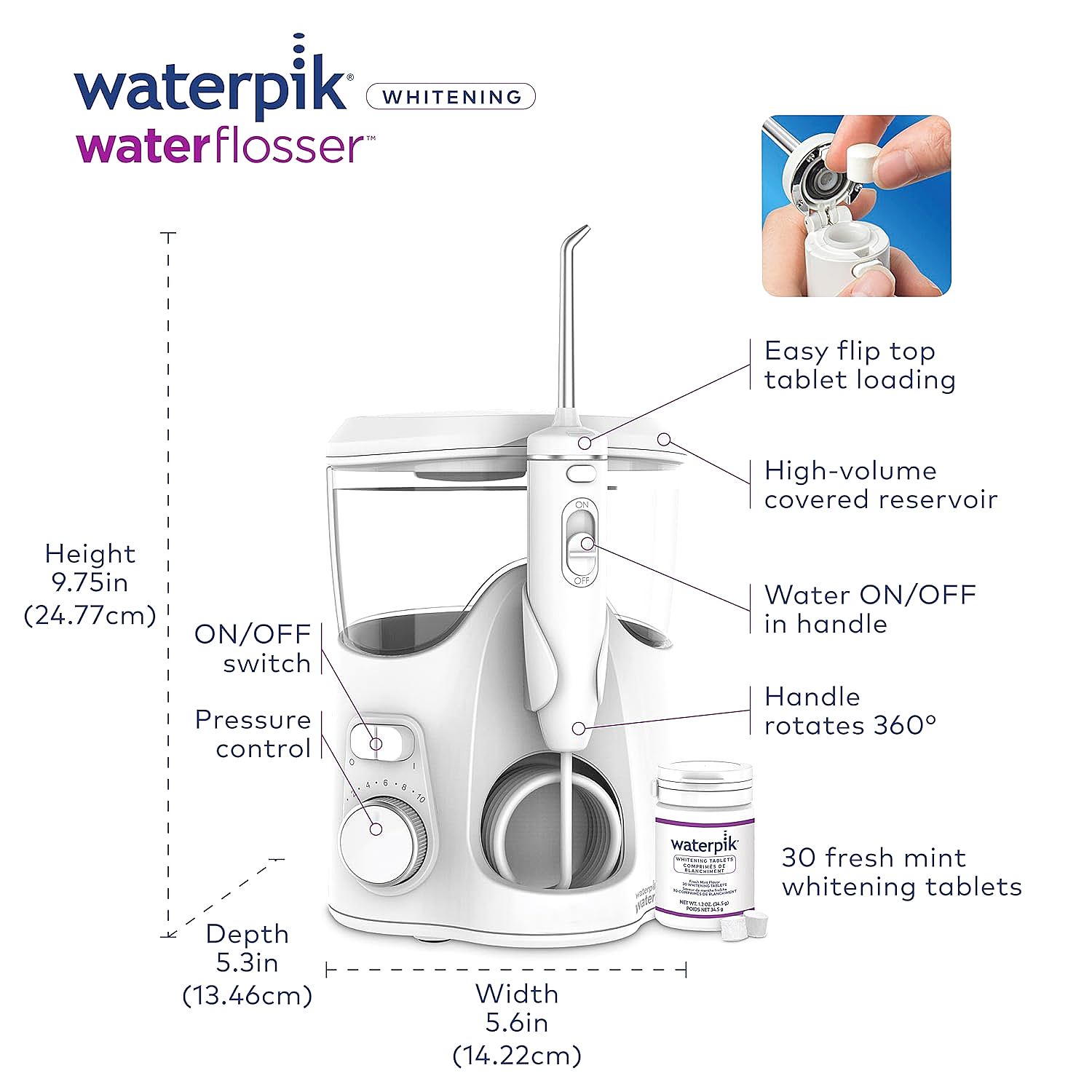
The Physics of the Infuser: Precision Mixing
Standard water flossers are simple pumps. The WF-06 introduces a patented Whitening Infuser Technology built into the handle. This is not just a slot for a pill; it is a mixing chamber.
- Controlled Dissolution: As water flows from the reservoir through the handle, it passes over the whitening tablet. The chamber geometry ensures the tablet dissolves at a consistent rate, creating a uniform solution rather than a concentrated burst followed by plain water.
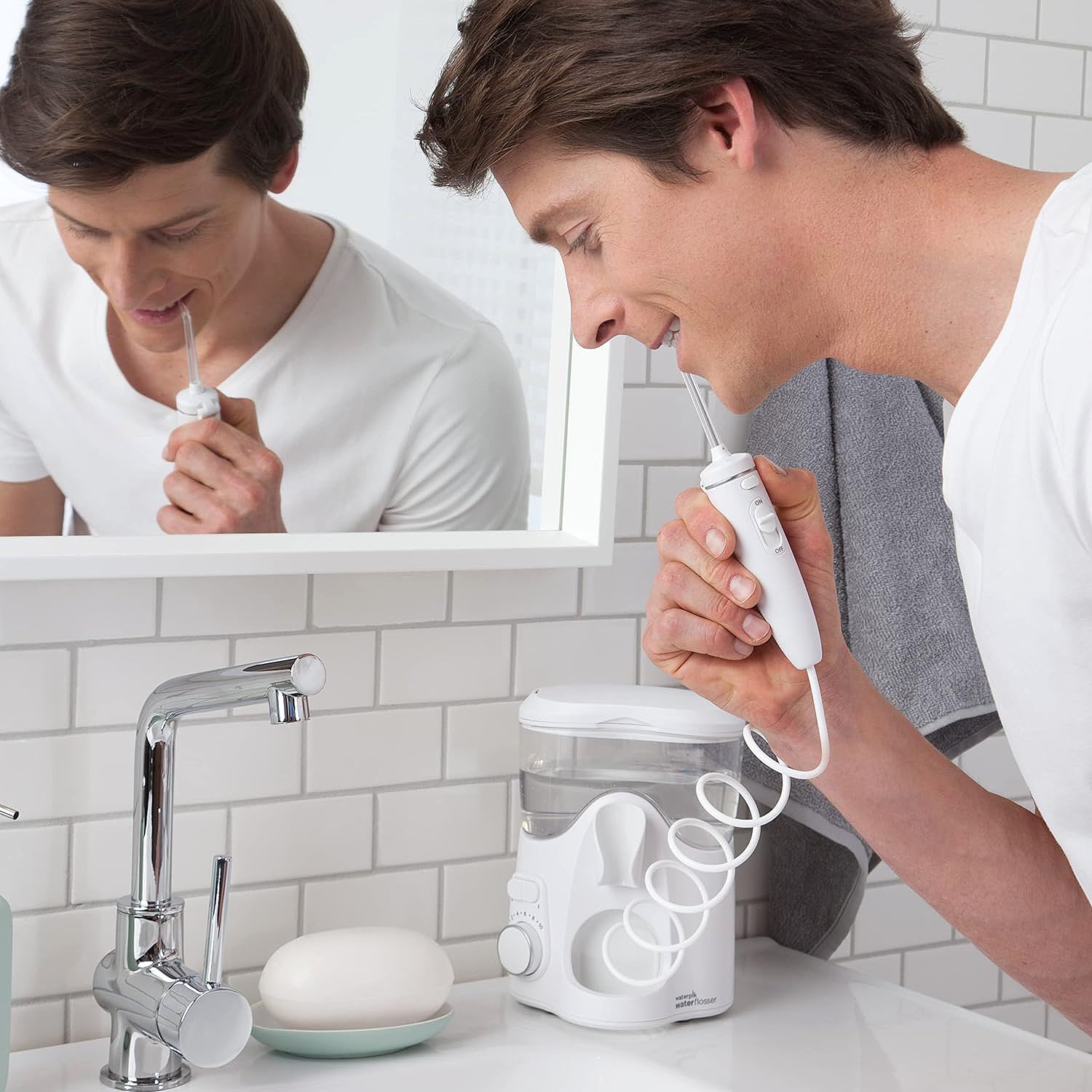
- Targeted Delivery: Unlike mouthwash, which is swished passively, this solution is accelerated to high velocity. The "infused water" is delivered directly to the interproximal spaces (between teeth) and the gingival margin. These are the precise areas where coffee and tea tannins accumulate most heavily because toothbrush bristles cannot reach them to scrub them away.
The Chemistry: Mild Oxidation vs. Harsh Bleaching
The term "whitening" often implies high-concentration Hydrogen Peroxide (bleach). However, the Waterpik tablets utilize a different approach, typically relying on mild oxidizing agents (like glycine or sodium percarbonate equivalents) combined with surfactants.
- Extrinsic Stain Attack: The chemistry targets the chemical bonds of chromogens (stain molecules) sitting on the enamel lattice, rather than penetrating deep into the dentin.
- Safety Profile: Because the agent is milder and delivered in a pulsed stream, it minimizes the risk of dentin hypersensitivity—a common side effect of bleaching strips. It restores the tooth's natural brightness by removing the veil of stain, rather than chemically altering the tooth's intrinsic color. This distinction is crucial for users with sensitive teeth.
Hydrodynamic Synergy: The "Double Tap"
The effectiveness of the WF-06 comes from the synergy between the chemical agent and the physical force.
1. Chemical Loosening: The infused solution lowers the surface tension and chemically weakens the bond between the stain molecule and the enamel.
2. Mechanical Removal: The 1,400 pulses per minute water jet provides the physical shear force to blast the loosened stain particles away.
This "Double Tap" mechanism explains why the device is clinically proven to remove 25% more stains than brushing alone. Brushing provides friction, but lacks the fluid penetration; standard flossing penetrates, but lacks the chemical solvent. The WF-06 provides both.
Structural Considerations: The Complexity Cost
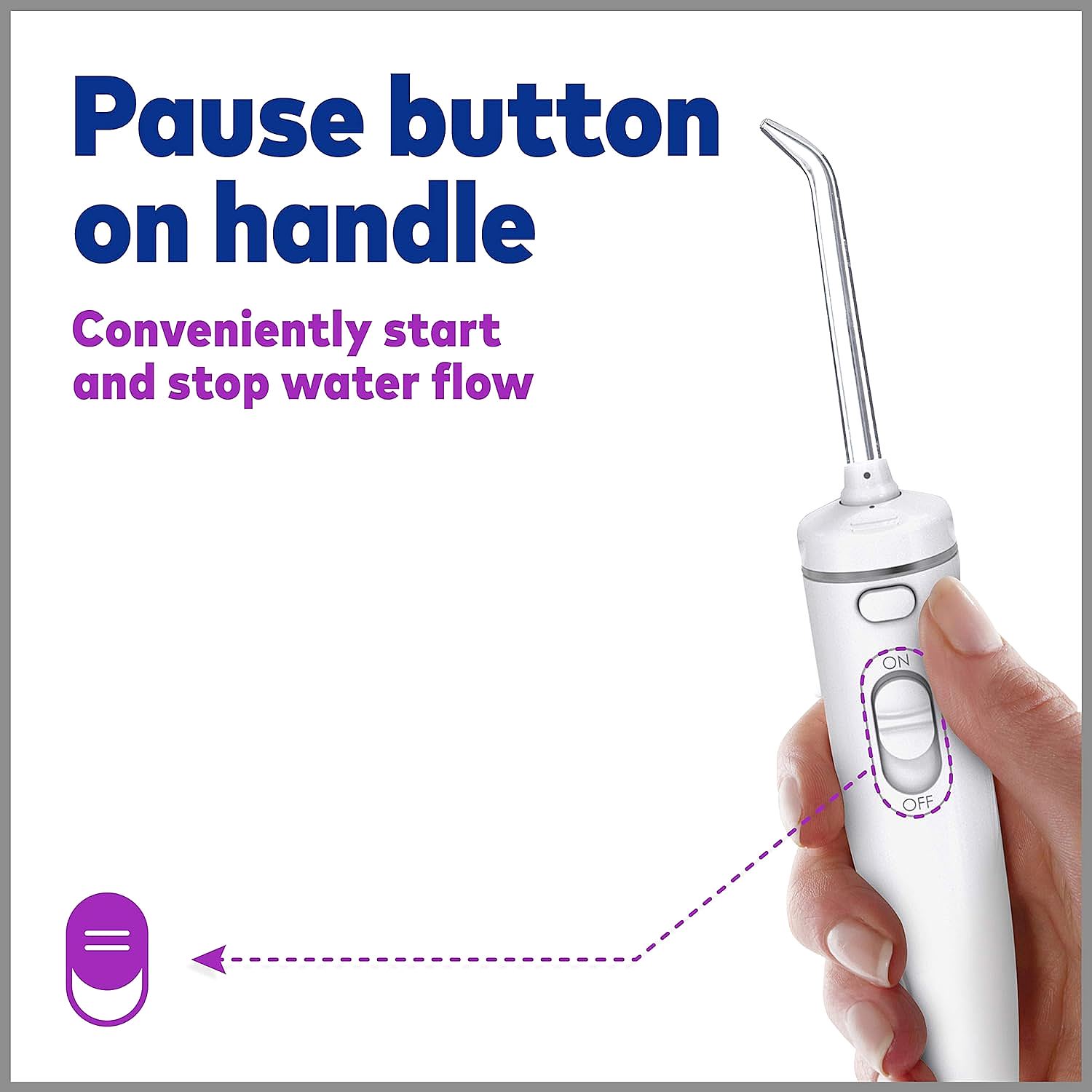
Adding an infuser mechanism introduces complexity. As noted in user feedback, additional seals and chambers create more potential failure points (e.g., leaking handles). It turns a simple hydraulic loop into a complex chemical processing station. * Maintenance is Key: Residue from dissolved tablets can crystallize if left to dry. To maintain the "Infuser" integrity, running a cycle of plain water after the tablet is fully dissolved is a prudent engineering best practice to flush the internal valves.
Conclusion: A Balanced Protocol
The Waterpik WF-06 validates the idea that whitening doesn't have to be a separate, painful chore. By embedding a mild chemical agent into the daily routine of hydrodynamic cleaning, it offers a sustainable path to a brighter smile.
It is the ideal tool for the "maintenance whitener"—the coffee lover or red wine enthusiast who wants to combat daily staining without subjecting their enamel to the harshness of monthly bleaching trays.
Waterpik WF-06 Whitening Water Flosser
Related Essays
