Silence and Science: Analyzing the Ergonomics of the Waterpik WF-13 Cordless Pearl
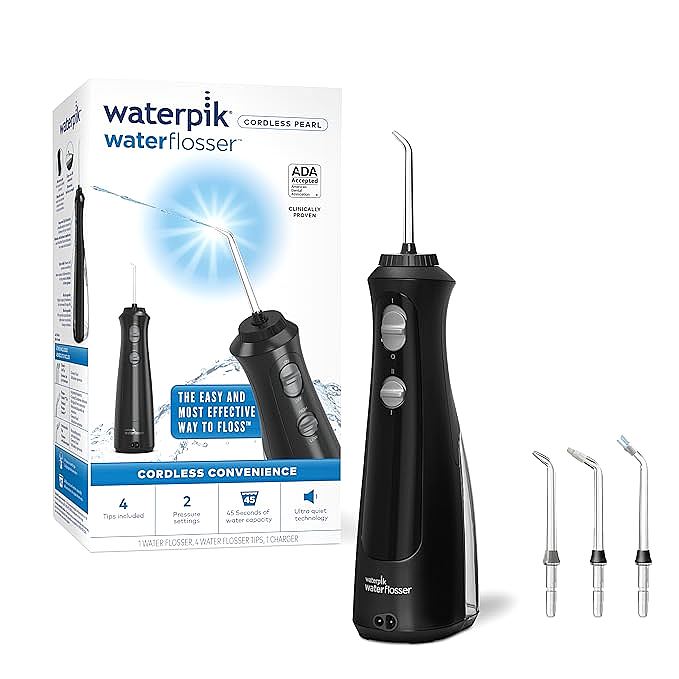
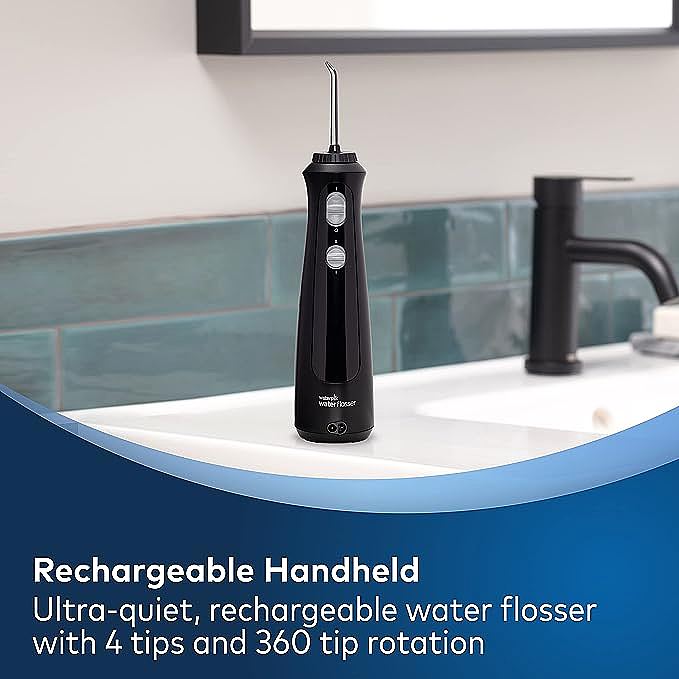
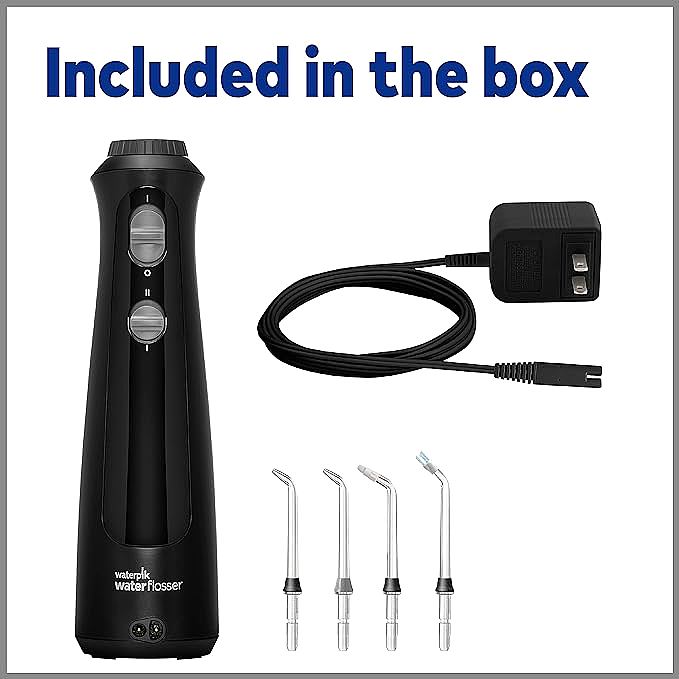
Waterpik WF-13 Cordless Pearl Water Flosser
In the crowded aisle of oral hygiene appliances, the race for "more" often dominates: more pressure, more pulses, more modes. However, the Waterpik WF-13 Cordless Pearl suggests a different design philosophy: "less." Less noise, less bulk, and less intrusion into your daily routine.
While competitors chase spec-sheet supremacy, the WF-13 focuses on the subtleties of human-device interaction. It is an engineering study in acoustic dampening and ergonomic refinement. But to truly appreciate this device, we must look past the marketing claims of "quiet technology" and understand the physics of sound, the biology of grip, and the controversial choice of battery chemistry.
The Physics of Silence: Damping the Decibels
Traditional water flossers are notoriously loud. The mechanical action of a piston pump generating 45-75 PSI creates significant vibration. In a hollow plastic casing, this vibration amplifies, resulting in the familiar "jackhammer" rattle.
The "Cordless Pearl" distinguishes itself through acoustic engineering. Waterpik has redesigned the internal mounting of the pump assembly. By utilizing advanced suspension materials and optimizing the internal airflow channels, the device minimizes structural resonance. It doesn't just muffle the sound; it reduces the transmission of vibration from the motor to the shell.
This matters not just for comfort, but for compliance. A quieter device is less jarring to use early in the morning or late at night, removing a subtle psychological barrier to daily flossing. It transforms a noisy chore into a discreet ritual.
Ergonomics: The Science of the Grip
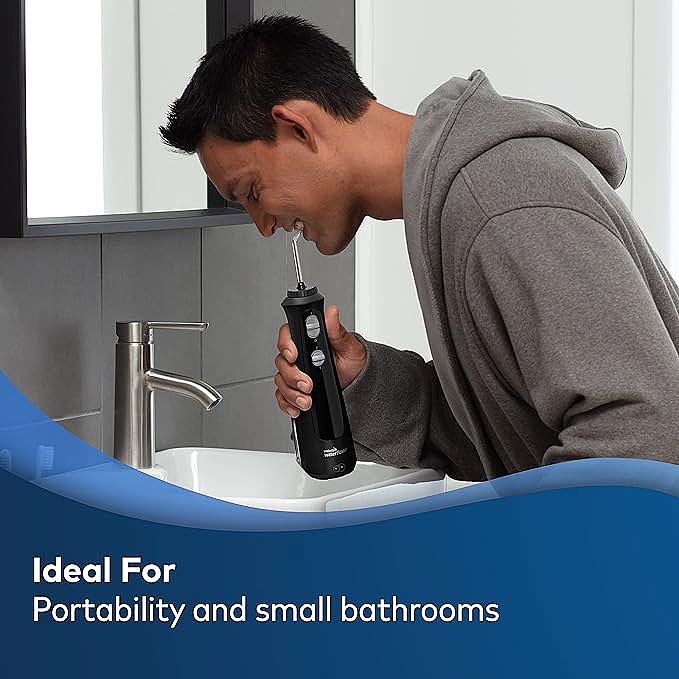
The effectiveness of a water flosser is limited by the user's ability to maneuver it. Reaching the lingual (tongue-side) surfaces of the back molars requires complex wrist angulation. A bulky handle makes this biomechanically difficult, leading to missed spots.
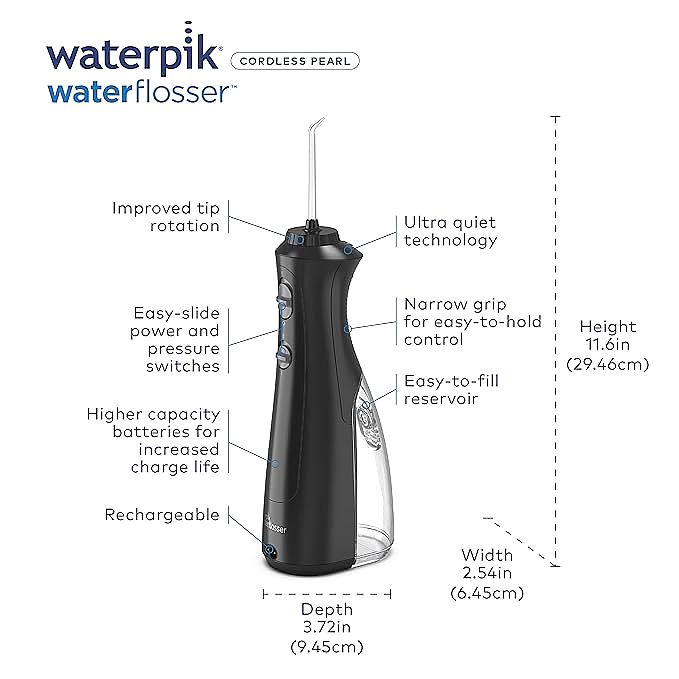
The WF-13 features a narrowed grip profile. In ergonomic terms, this accommodates a "power grip" that reduces strain on the thenar eminence (the muscle base of the thumb). Combined with the 360-degree rotating tip, this design allows the user to maintain a neutral wrist position while directing the water jet.
For users with limited dexterity—such as those with arthritis or carpal tunnel syndrome—this reduction in handle circumference is a critical functional feature, turning an unwieldy tool into a manageable instrument.
The Battery Controversy: NiMH vs. Li-ion
A point of contention for tech-savvy users is the use of a Nickel-Metal Hydride (NiMH) battery instead of the ubiquitous Lithium-Ion (Li-ion). In 2024, this seems like anachronism. Why use older tech?
From an engineering perspective, the choice may reflect specific trade-offs:
1. Safety in Humidity: NiMH batteries are generally more robust against thermal runaway and are less sensitive to the moisture-rich environment of a bathroom compared to high-density Li-ion cells.
2. Environmental Impact: NiMH batteries are free of toxic cadmium and are generally considered more environmentally benign and easier to recycle than Li-ion batteries, which involve complex cobalt extraction issues.
3. Cost-Efficiency: Using mature battery technology allows Waterpik to allocate budget towards the pump mechanics and acoustic dampening without inflating the price point.
While it lacks the rapid-charge capabilities of lithium, modern NiMH cells have improved significantly in charge retention. The trade-off is a longer charging cycle (often overnight) for a safer, more stable power source.
Hydrodynamics: The Pulsation Standard
Despite the focus on quietness and comfort, the core function remains hydrodynamic shear stress. The device operates at a frequency designed to compress and decompress gingival tissue gently.
The pulsation mechanism creates a scouring action that disrupts the biofilm matrix. It is this kinetic energy, rather than just pressure, that flushes out the stagnation zones in periodontal pockets. The two pressure settings (45 PSI and 75 PSI) offer a binary but effective choice: a lower setting for stimulating blood flow and a higher setting for mechanical debridement of food debris.
Conclusion: Refinement Over Revolution
The Waterpik WF-13 Cordless Pearl is not a revolutionary reinvention of the water flosser; it is a refinement. It addresses the sensory friction points—noise and handling—that often prevent users from adopting the habit.
By prioritizing acoustic comfort and ergonomic handling, it respects the user's experience. And by sticking with NiMH technology, it offers a stable, proven power source. It is a device designed not just to work, but to be lived with.
Waterpik WF-13 Cordless Pearl Water Flosser
Related Essays
Silence and Science: Analyzing the Ergonomics of the Waterpik WF-13 Cordless Pearl
The Hydrodynamics of Biofilm Disruption: 1800 PPM Mechanics - Case Study: Nicwell W01