The Engineering of Essentials: Torque, Geometry, and the 360° Pressure Sensor
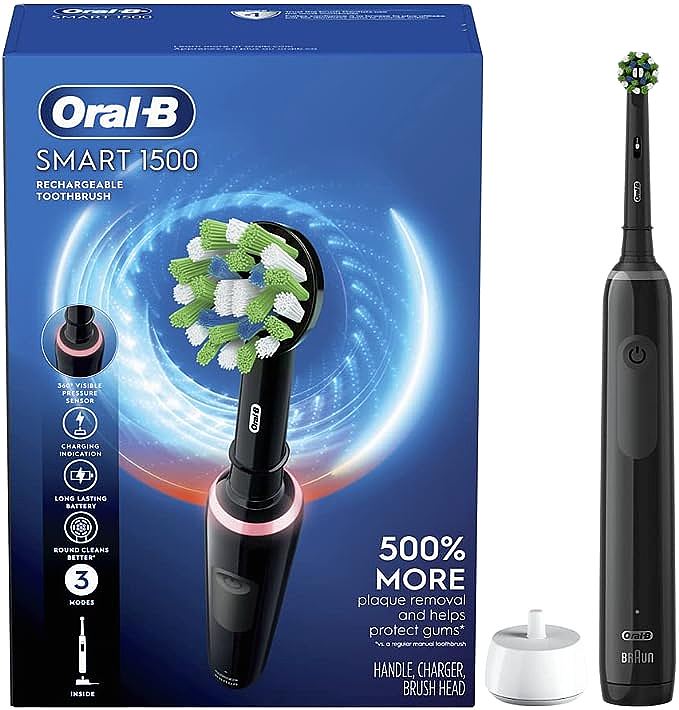
Oral-B Smart 1500 Electric Toothbrush
In the landscape of consumer technology, there is often a divergence between "features" and "utility." While the market chases connectivity and AI, a quiet revolution has occurred in the "Mid-Range" sector of oral care. This segment is defined not by what is added, but by what is refined.
The Oral-B Smart 1500 Electric Toothbrush serves as a prime case study of this "Essentialist Engineering." It strips away the digital dashboard of flagship models while retaining the core engine components. By focusing on Torque Consistency via Lithium-Ion power and Behavioral Correction via visual feedback, it argues that the most effective technology is often the most direct.
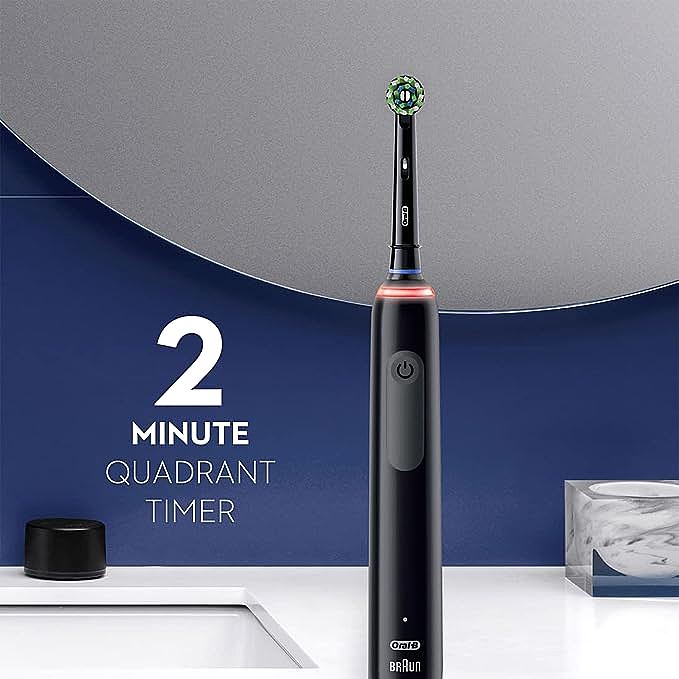
The Mechanics of the "Cup": Why Geometry Matters
The defining characteristic of the Oral-B ecosystem is the Round Brush Head. This is not an aesthetic choice; it is an anatomical one. * The Geometry of Isolation: Unlike the elongated heads of sonic brushes (which mimic manual brushing), a small round head is designed to cup a single tooth. This allows for "Tooth-by-Tooth" isolation. * The Gingival Scallop: The gumline is not straight; it is scalloped. A round head naturally follows this parabolic curve, allowing bristles to enter the interproximal spaces (between teeth) and the gingival sulcus without the user needing to execute complex wrist angles.
This geometry is powered by 3D Cleaning Action: a combination of Pulsation (in-and-out movement to break calcifying plaque) and Oscillation-Rotation (side-to-side movement to sweep it away). It is a mechanical brute force approach, distinct from the fluid dynamics of sonic brushes, relying on direct bristle contact to physically shear biofilm from the enamel.
The Lithium-Ion Upgrade: The Science of Torque Consistency
For years, entry-level electric toothbrushes relied on Nickel-Metal Hydride (NiMH) batteries. These batteries suffer from a linear discharge curve—as the battery drains, the motor's voltage drops, and the brush becomes weaker. By day 5 or 6, the "cleaning power" is significantly compromised, even if the brush is still running.
The Smart 1500's shift to a Lithium-Ion (Li-Ion) battery is a fundamental engineering upgrade. * Flat Discharge Curve: Li-Ion batteries maintain a steady voltage output until they are almost completely depleted. This ensures Torque Consistency. The scrubbing force applied on Day 13 is virtually identical to Day 1. * Clinical Implication: Consistent torque is crucial for breaking the adhesive bonds of plaque. A brush that slows down under load (drag) or due to low battery fails to generate the necessary shear force, turning a powered session into a manual one. The Li-Ion powertrain ensures that the mechanical promise of the device is kept every single session.
The Red Light: A Primitive but Perfect Biofeedback Loop
The most common failure mode in home oral care is not lack of brushing, but abrasion. Users, attempting to clean better, press harder. This crushes the bristles (rendering them ineffective) and strips away the gum tissue (causing recession).
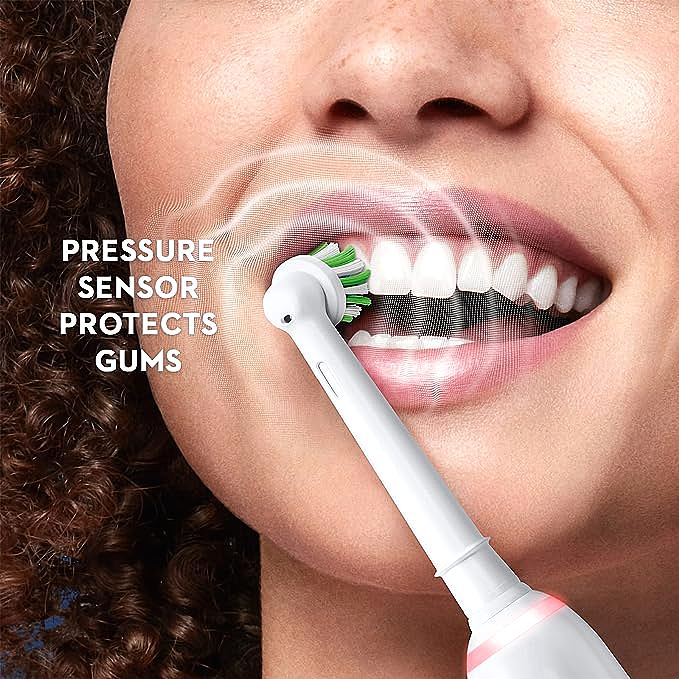
The 360° Visible Pressure Sensor on the Smart 1500 is a masterclass in Visual Biofeedback. * The Trigger: When pressure exceeds the safety threshold, the ring lights up red. * The Response: The brain processes visual stimuli faster than tactile changes. The sudden red flare triggers an immediate "stop" reflex. * The Mechanical Override: Simultaneously, the motor automatically slows down the pulsation speed. This is a cybernetic intervention—the machine actively altering its behavior to protect the biological host.
Unlike app-based notifications which you review after brushing, this real-time loop corrects the behavior during the act, effectively retraining the user's proprioception (sense of force) over time.

The "Sweet Spot" of Complexity
In engineering, every added feature introduces a potential point of failure or friction. The Smart 1500 occupies the "Sweet Spot" of complexity. It includes 3 Cleaning Modes (Daily Clean, Sensitive, Whitening), providing necessary adaptability for inflamed gums or staining, but eschews the Bluetooth mapping and OLED screens of the iO series.
For the vast majority of users, this reduction is a feature, not a bug. It removes the cognitive load of connecting a phone or navigating menus. It returns the toothbrush to its primary function: a robust, reliable tool for mechanical decontamination.
Conclusion: The Rational Choice
The Oral-B Smart 1500 proves that advancement isn't always about adding more. Sometimes, it's about optimizing the core. By combining the anatomical advantages of the round head with the consistent power of Lithium-Ion and the safety of a visible pressure sensor, it delivers a clinical-grade clean without the digital distraction.
It is the rational choice for the user who understands that in the war against plaque, consistent mechanics and proper pressure outweigh the novelty of an app.
Oral-B Smart 1500 Electric Toothbrush
Related Essays

The Logic of the Loop: Oscillating Mechanics and Biofeedback in Smart Oral Care
