Energy Independence and Acoustic Physics: The Engineering of "More"
Update on Jan. 3, 2026, 9:24 a.m.
In consumer electronics, there is often a race to the bottom in terms of size—making everything smaller, lighter, and more discreet. However, in the realms of acoustics and energy storage, physics dictates that “more” is often better. Larger batteries store more energy; larger drivers move more air.
The Ltinist BX29 represents a counter-argument to the trend of miniaturization. By embracing a slightly larger form factor (the over-ear hook style), it accommodates a massive energy reservoir and oversized acoustic drivers. This engineering choice yields two significant benefits: true energy independence and a richer acoustic profile.
The Mathematics of 90-Hour Endurance
Battery anxiety is a modern psychological stressor. Most “true wireless” earbuds offer 20-30 hours of total playtime, requiring a charging ritual every few days. The leap to 90 hours of total playtime fundamentally shifts this paradigm.
This endurance is achieved through a 650mAh capacity charging case combined with energy-efficient Bluetooth 5.3 protocols. * The Weekly Cycle: With 15 hours of continuous playback in the buds alone, a user can effectively work a full 12-hour shift or complete an ultramarathon on a single charge. * The Monthly Cycle: The 90-hour total means that for an average user exercising an hour a day, the device needs to be plugged into a wall outlet only once every three months.
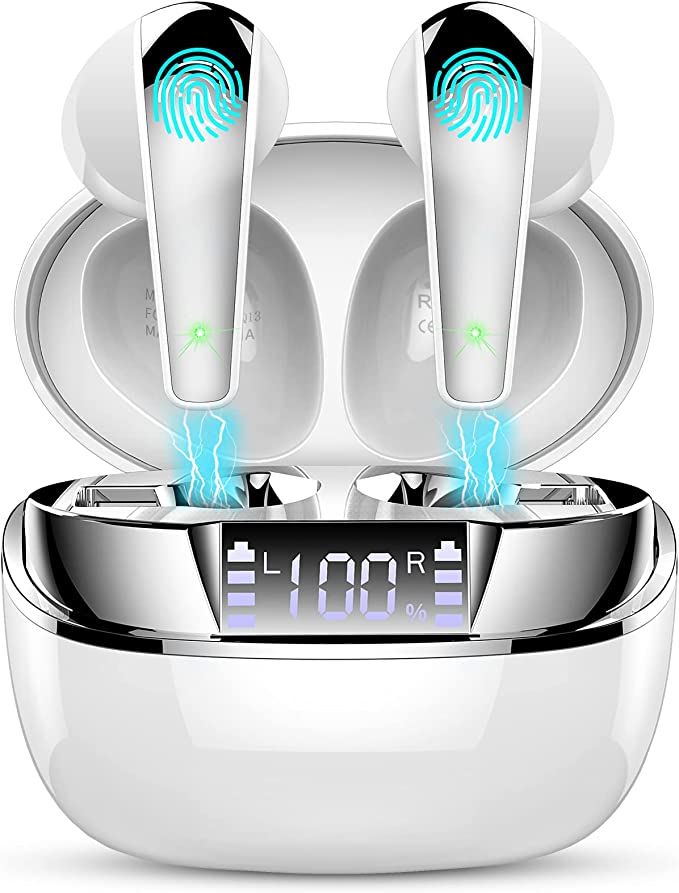
This creates a state of “energy independence,” where the device feels perpetually ready. The inclusion of a digital LED display reinforces this by providing precise data. Unlike a vague blinking light, a percentage readout (1% to 100%) allows for accurate energy management, removing the guesswork and the fear of a dead battery.
The Physics of 14.2mm Drivers
Sound is created by moving air. The component responsible for this is the dynamic driver. In the world of earbuds, drivers typically range from 6mm to 10mm due to space constraints. The Ltinist BX29 utilizes a 14.2mm vibrating diaphragm.
The area of a circle increases with the square of its radius. A 14.2mm driver has nearly double the surface area of a standard 10mm driver. * Bass Response: Larger drivers can move a greater volume of air with less excursion (movement). This allows for deep, resonant bass that feels effortless rather than strained or distorted. * Soundstage: The increased surface area often correlates with a wider “wall of sound,” creating a more immersive stereo image that mimics the experience of larger over-ear headphones. * Efficiency: Larger diaphragms can be more efficient at converting electrical signals into acoustic energy, contributing to the extended battery life.
Clarifying the Silence: ANC vs. ENC
A common point of confusion in the audio market is the term “Noise Cancellation.” It is crucial to distinguish between two distinct technologies:
1. ANC (Active Noise Cancellation): Uses microphones to listen to the environment and generates “anti-noise” to cancel out sound for the listener.
2. ENC (Environmental Noise Cancellation): Uses microphones to isolate the speaker’s voice and suppress background noise for the person on the other end of the call.
The Ltinist BX29 features ENC technology with a 4-mic array. This system uses beamforming algorithms to identify the user’s voice and subtract steady-state background noises (like wind or traffic) from the outgoing signal. It ensures that communication remains clear, even if the user is running down a windy trail. It does not silence the world for the runner—a safety feature that maintains situational awareness—but it ensures the runner is heard clearly by others.
Conclusion: The Engineering of Abundance
When we stop trying to make technology invisible, we gain the space to make it powerful. By accepting a larger form factor, engineers can integrate batteries that last for weeks and drivers that move serious air. The Ltinist BX29 demonstrates that in the trade-off between “tiny” and “capable,” choosing capability offers a liberating user experience defined by acoustic depth and power abundance.