Energy Autonomy: The Silent Revolution of the Tether-Free Existence
Update on Jan. 3, 2026, 9:22 a.m.
In the hierarchy of modern needs, situated somewhere comfortably above “Wi-Fi” and just below “Water,” lies “Battery Life.” We live in an era defined by the length of our tethers. For decades, the mobility of our technology was an illusion, strictly limited by the frantic search for a wall outlet. The fear of the red battery icon—a phenomenon psychologists have termed “Low Battery Anxiety” or “Nomophobia” (NO MObile PHone PhoBIA)—has fundamentally shaped our behavior, our travel patterns, and even our social interactions.
However, a silent revolution has taken place. It wasn’t marked by a single keynote speech or a flashy product launch, but by the incremental, relentless optimization of electrochemistry and silicon efficiency. We have entered the age of Energy Autonomy.
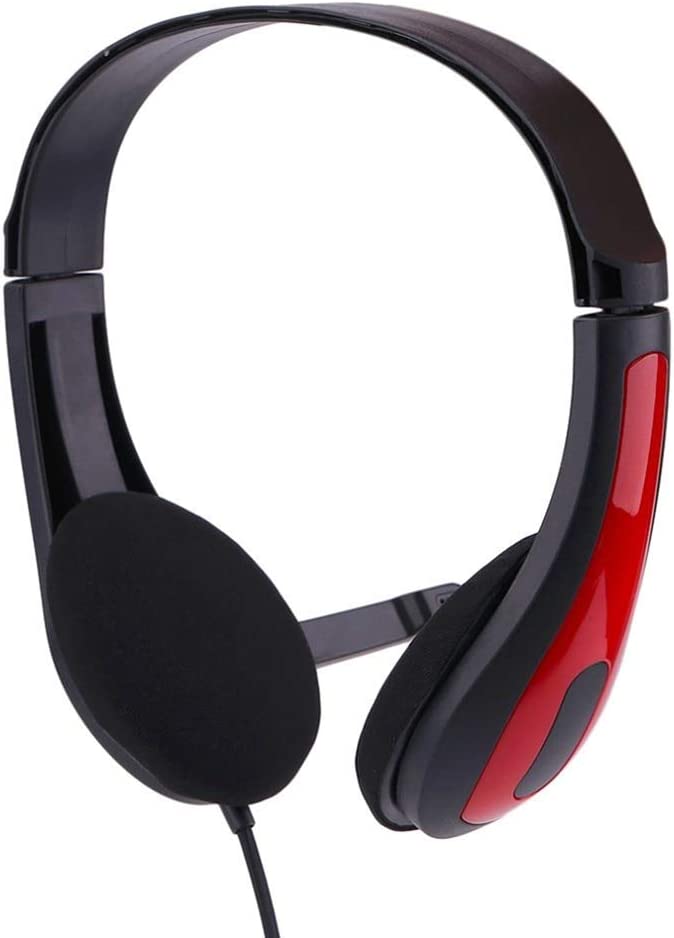
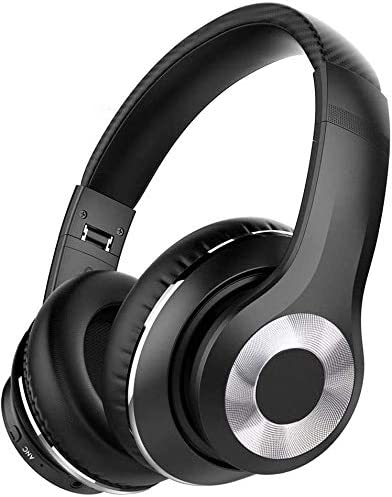
When a consumer audio device, such as the LORELEI B-C6 Wireless Over-Ear Headphones, arrives on the market boasting 50 hours of playtime, it signals a paradigm shift. It suggests that we have crossed a threshold where the device’s endurance exceeds the user’s operational cycle by a factor of three or four. This article explores the deep science behind this liberation: from the migration of lithium ions in polymer matrices to the microscopic power-gating of Bluetooth 5.3, and finally, to the sociological impact of truly untethered living.

The Electrochemistry of Endurance: Inside the 500mAh Cell
To understand how 50 hours of continuous audio is extracted from a compact chassis, we must dive into the microscopic world of the Lithium Polymer (Li-Po) battery. The “500mAh” specification listed for the B-C6 is a measure of electric charge, but the magic lies in how that charge is stored and released.
The Intercalation Dance
At the heart of every Li-Po cell is a process called “intercalation.” Imagine the battery’s anode (usually graphite) and cathode (lithium metal oxide) as two multi-story parking garages. The lithium ions are the cars. When you charge the headphones via the Type-C port, you are forcing these ions to drive from the cathode garage to the anode garage. They park themselves between the layers of graphite. This is a high-energy, unstable state—like compressing a spring.
When you press play, the process reverses. The ions naturally want to return to the cathode. As they migrate back through the electrolyte, they force electrons to travel through the external circuit—powering your headphones.
The major breakthrough in modern Li-Po technology, enabling devices like the B-C6 to remain lightweight (11.1 oz) yet energy-dense, is the use of a solid polymer electrolyte instead of a liquid one. This allows the battery to be shaped into thin, flat pouches that fit perfectly inside an ear cup, maximizing volume efficiency. Furthermore, improvements in electrode materials have increased the “energy density”—the amount of energy stored per unit of weight. Just two decades ago, a 500mAh battery would have been twice the size and weight.
The Voltage Curve and Cutoff
Endurance isn’t just about capacity; it’s about management. A battery isn’t a bucket that empties linearly. Its voltage drops as it discharges. The internal power management integrated circuit (PMIC) of the headphones plays a crucial role here. It must be efficient enough to boost the declining voltage of the battery to the steady 3.3V or 1.8V needed by the Bluetooth chip, squeezing every last drop of usable energy before hitting the “cutoff voltage” (usually around 3.0V) to prevent cell damage. The 50-hour figure is a testament to the extreme efficiency of this DC-DC conversion process.
Bluetooth 5.3: The Art of Sipping Energy
A massive fuel tank is useless if the engine is a gas guzzler. In the equation of battery life, the “engine” is the wireless communication protocol. The LORELEI B-C6 utilizes Bluetooth 5.3, a standard that represents the culmination of twenty years of focus on “Low Energy” (LE) architecture.
The Evolution from Classic to LE
In the early days of Bluetooth (v2.0, v3.0), the radio was “always on,” broadcasting and listening constantly. It was a power hog. Bluetooth 4.0 introduced BLE (Bluetooth Low Energy), which allowed devices to sleep and wake up rapidly. Bluetooth 5.3 refines this even further with features like Subrating Connection Updates.
Imagine a conversation between your phone and your headphones. In older versions, the headphones had to check in with the phone very frequently to see if there was audio data, even during silence. With Bluetooth 5.3, the devices can negotiate a “lower duty cycle.” If you are listening to a podcast with pauses, or if the music stops, the radio checks in less frequently, spending more time in a deep sleep state. This happens in milliseconds, invisible to the user, but cumulatively, it saves massive amounts of power.
Spectral Efficiency and Stability
The “High Stability” mentioned in the B-C6’s profile also contributes to battery life. When a wireless signal is weak or interfered with (by Wi-Fi or other devices), the headphones have to request re-transmission of data packets. Retrying takes energy. Bluetooth 5.3 improves Channel Classification, allowing the headphones to better detect which radio channels are crowded and hop to a clear one instantly. By getting the data right the first time, the radio can turn off sooner. This synergy between the protocol and the hardware is what allows a modest 500mAh battery to deliver a week’s worth of listening.
The Sociology of the Untethered: From Anxiety to Autonomy
What happens to human behavior when energy constraints are removed? The shift from “8 hours of battery” to “50 hours of battery” is not just a quantitative change; it is qualitative. It changes our relationship with the device and the world.
The Death of “Range Anxiety”
For years, digital nomads and travelers lived with a background hum of anxiety: “Where is the next outlet?” We carried power banks, dongles, and tangled webs of cables. We planned our layovers based on the availability of charging stations.
A 50-hour device like the B-C6 breaks this psychological chain. 50 hours is enough to fly from New York to Singapore and back—twice. It covers a full work week of 8-hour shifts plus commutes, with room to spare. When the battery life exceeds the “planning horizon” of the user, the device becomes truly transparent. We stop thinking about it as an electronic gadget that needs feeding and start treating it like a piece of clothing—always ready, always available.
The “Always-On” Availability
This autonomy facilitates a new kind of social availability. With the built-in microphone and reliable endurance, the headphones become a permanent extension of the self. We can transition from a deep work session to a phone call, to a podcast, to a gaming session, without ever interrupting the flow to “juice up.” This reliability is crucial for the modern remote worker. Nothing kills professional credibility faster than “Sorry, my headphones died” in the middle of a Zoom call. Energy autonomy equals professional reliability.
Furthermore, the inclusion of the 3.5mm backup cable acts as a final psychological safety net. It represents the ultimate failsafe—a return to analog physics when digital chemistry finally runs dry. It assures the user that the primary function of the device (producing sound) is never truly held hostage by the battery.
Sustainability and the Lifecycle Equation
Finally, there is an environmental dimension to battery endurance that is often overlooked. All rechargeable batteries have a finite lifespan, usually measured in “charge cycles” (typically 300-500 full cycles for Li-Po before capacity drops to 80%).
The Mathematics of Longevity
If you have a pair of headphones with 5 hours of battery life (typical of early TWS buds) and you use them for 5 hours a day, you are cycling the battery fully every single day. You will hit the 500-cycle degradation point in less than a year and a half.
However, with a 50-hour device like the B-C6, using it for the same 5 hours a day means you only charge it once every 10 days. You are consuming cycles at one-tenth the rate. Theoretically, the battery chemistry could last for a decade before significant degradation occurs.
Reducing E-Waste
This “cycle efficiency” is a critical component of sustainable tech design. By simply increasing the single-charge capacity, we dramatically extend the functional lifespan of the product. Fewer dead batteries mean fewer headphones in landfills. In a market flooded with disposable earbuds that become trash once their tiny batteries fail, high-capacity over-ear headphones represent a more sustainable, long-term investment. It challenges the culture of disposable consumerism by offering a product designed to last not just structurally, but chemically.
Conclusion: The Era of Infinite Audio
The LORELEI B-C6 and its peers in the high-endurance category represent a maturity in consumer electronics. We have moved past the “gimmick” phase of wireless tech, where the novelty of being wireless excused the inconvenience of constant charging. We are now in the utility phase.
The convergence of high-density lithium chemistry, efficient Bluetooth silicon, and power-sipping acoustic drivers has given us something profound: the gift of forgetting. We can forget to charge our devices last night and still be fine today. We can forget the location of the nearest outlet. We can forget the anxiety of the flashing red light. In this silence of anxiety, we are free to focus on what actually matters: the music, the conversation, and the work. True technology, as the saying goes, is indistinguishable from magic—but perhaps more importantly, true technology is indistinguishable from the background of our lives. It works so well, for so long, that we stop noticing it entirely.