The Wireless Paradox: Latency, Codecs, and the Future of Retro-Audio
Update on Jan. 3, 2026, 9:06 a.m.
We live in a wireless world, but the laws of physics are stubborn. While light travels at 299,792,458 meters per second, the data that carries your music, movie dialogue, and gaming sound effects travels significantly slower when it has to be chopped up, encoded, transmitted, received, decoded, and played back. This journey creates the nemesis of modern audio: Latency.
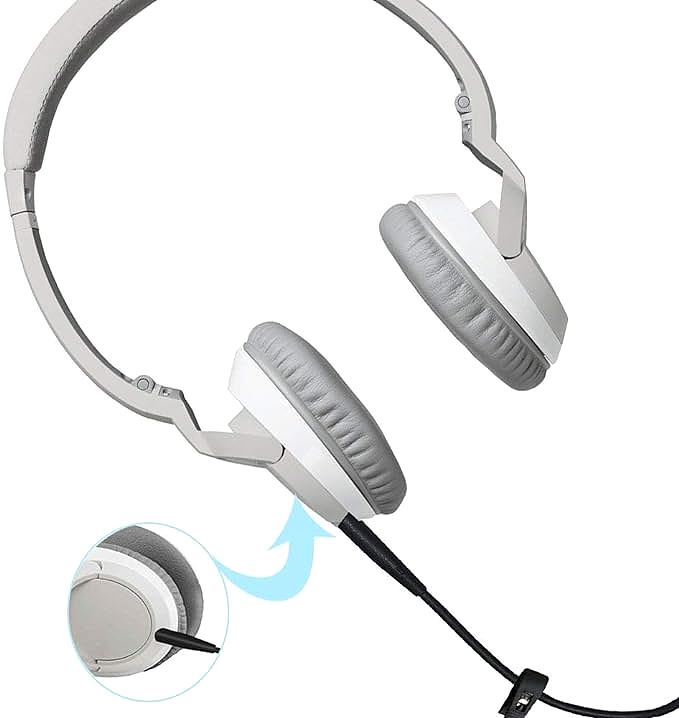
When we take a classic wired headphone like the Bose QC15 and attach a modern transmitter like the BUTIAO Bluetooth Adapter, we are essentially asking a specialized analog device to learn a new digital language. This translation process is fraught with complexity. For the casual listener, it is magic. For the critical user, it is a paradox: we gain freedom of movement, but what do we lose in the domain of time and fidelity?
In this exploration, we will move beyond the hardware shell and dive into the invisible stream of data. We will deconstruct the alphabet soup of Bluetooth codecs (SBC, AAC, aptX), understand the mathematics of lag, and analyze why the “retro-fitting” of audio gear represents both a triumph of convenience and a compromise of physics.
The Mathematics of Lag: Why Bluetooth is Slow
In a wired connection, the signal travels from your phone to your ear at a significant fraction of the speed of light through the copper wire. The latency is effectively zero (microseconds). Your brain perceives the visual of a gunshot in a movie and the sound of the bang as simultaneous.
Bluetooth is different. It is a packet-based radio protocol. The process looks like this:
- ADC (Analog to Digital): The audio in your phone is already digital, but it needs to be prepared for transmission.
- Encoding: The audio is compressed by a codec (e.g., SBC). This takes computational time (processing delay).
- Packetization: The compressed data is chopped into small packets and queued for transmission.
- Transmission: The radio sends the packets over the 2.4 GHz band.
- Buffering: The receiver (the BUTIAO adapter) catches the packets and stores them in a buffer to smooth out any jitter or lost packets.
- Decoding: The adapter unpacks the codec. This takes more computational time.
- DAC (Digital to Analog): The digital signal is converted back to voltage.
The total time for this journey typically ranges from 150ms to 300ms for standard Bluetooth connections. * 150ms: Noticeable to a trained ear. * 300ms: A disaster. In a movie, the actor’s lips move, and the voice follows a third of a second later. It creates a cognitive dissonance that breaks immersion.
The Role of Bluetooth 5.0 in Latency
The BUTIAO adapter utilizes Bluetooth 5.0. While 5.0 is famous for range and speed, it does not inherently solve the latency problem caused by the codec. However, its higher bandwidth allows for more efficient transmission, reducing the time packets spend in the air. The stability of 5.0 also means the buffer on the receiver side can be smaller (because there are fewer dropped packets to worry about), which shaves off crucial milliseconds.
For music, latency is irrelevant. You don’t know if the song started 200ms after you pressed play. But for video and gaming, it is the critical metric. Modern smartphones often compensate for this by delaying the video slightly to sync with the audio, a clever software trick that hides the hardware’s limitation.
The Codec Wars: SBC vs. AAC vs. The World
The sound quality of your wireless QC15 experience is largely dictated by the Codec (Coder/Decoder). Think of codecs as different languages. Both the transmitter (phone) and receiver (adapter) must speak the same language to communicate.
SBC (Subband Coding)
This is the “Universal Translator.” It is mandatory for all Bluetooth audio devices. * Pros: Universal compatibility. Works on everything. * Cons: It is a “lossy” compression. It chops off high frequencies and can struggle with complex, layered music (like orchestral pieces), making them sound “muddy.” It generally has higher latency.
AAC (Advanced Audio Coding)
This is Apple’s language of choice. * Pros: Extremely efficient. It sounds better than SBC at the same bitrate. If you use an iPhone with the BUTIAO adapter, you are likely using AAC. * Cons: It requires more processing power to decode, which can be a drain on the tiny battery of an adapter if not optimized.
The Missing Link: AptX and LDAC
Qualcomm’s aptX and Sony’s LDAC are the “High Definition” languages. They allow for much higher bitrates (more data per second). While basic adapters like the BUTIAO focus on SBC/AAC for broad compatibility and battery life, the industry is moving toward these HD codecs.
However, for a retro-fit device, the limitation is often the source. The QC15 itself is an older headphone. Its drivers were tuned for the analog era. Feeding it an LDAC signal might be overkill—like putting racing fuel in a reliable family sedan. The bottleneck is not just the wireless link; it is the entire chain.
The Power Paradox: Battery Density vs. Design
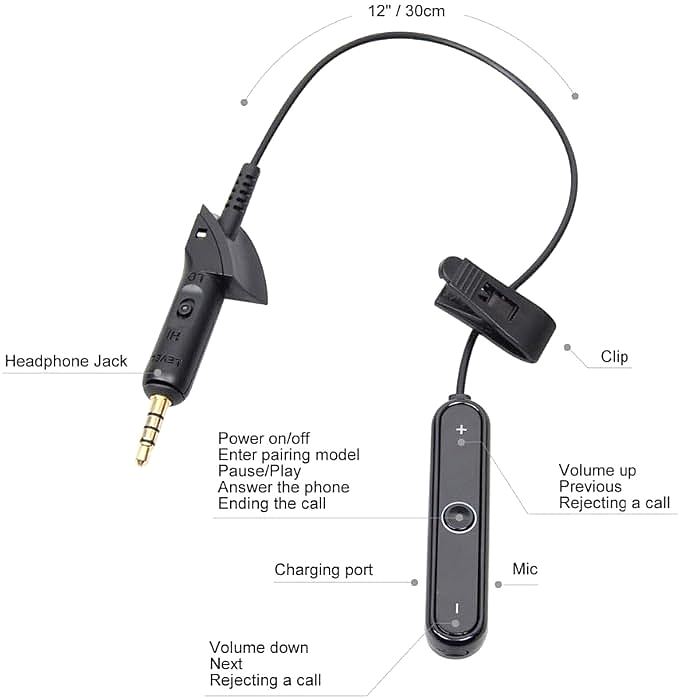
One of the most impressive aspects of modern adapters is their size. The BUTIAO adapter clips onto the side of the ear cup, barely adding any bulk. Yet, it claims hours of playback. This is a triumph of Energy Density.
Inside that slender plastic housing is a tiny Lithium-Polymer (Li-Po) pouch cell. The challenge for engineers is two-fold:
1. RF Power: Transmitting and receiving radio signals consumes power.
2. Amplification: Driving the headphone speakers consumes power.
In a dedicated wireless headphone (like the Bose QC45), the battery is huge, hidden inside the ear cup. In the adapter, the battery is minuscule. This forces a reliance on ultra-efficient chips.
This is why Bluetooth 5.0 is critical. Its “Low Energy” architecture allows the radio to sleep for microseconds between packets, drastically extending the runtime. It is a constant balancing act: increase the signal strength, and the battery dies; decrease it, and the music cuts out.
The Future of Retro-Audio: The “Dumb” Terminal
The existence of the BUTIAO adapter points to a fascinating future trend: the separation of “Intelligence” and “Acoustics.”
In modern “Smart Headphones” (like AirPods Max), the battery, DAC, Bluetooth, and drivers are all fused together. When the battery dies in 3 years, the whole device is trash.
The Retro-Audio model separates them. The QC15 is a “dumb” terminal. It is just magnets and copper. It does not age. The “smart” part is the adapter. When Bluetooth 6.0 comes out, or a new revolutionary codec is invented, you don’t throw away the QC15. You just buy a new $30 adapter.
This Modular Architecture is unintentionally futuristic. It mimics the world of high-end Hi-Fi speakers, where you keep your wooden speakers for 30 years but upgrade your amplifier every decade. By treating headphones as long-term acoustic investments and wireless adapters as disposable/upgradeable tech, we create a more sustainable and economically rational ecosystem.
Conclusion: The Wired Resistance
Will wireless ever truly replace wired? In the consumer market, yes. The convenience is too seductive. But in the laws of physics, wire will always win. A copper wire has infinite bandwidth, zero latency, and requires no batteries.
However, devices like the BUTIAO QC15 Adapter prove that we don’t have to choose sides. We can have the best of both worlds. We can keep the comfort and acoustic legacy of the analog era, and when we need to catch a train or wash the dishes, we can snap on a plastic bridge and step into the digital stream. It is a compromise, yes, but it is a brilliant one. It allows our beloved artifacts to survive in a hostile, jack-less world.