The Physics of Comfort: Why Cillso H97's Semi-In-Ear Design Matters
Update on Jan. 3, 2026, 9:03 a.m.
In the world of personal audio, there is a Great Divide. On one side are the In-Ear Monitors (IEMs), with their silicone tips that plunge deep into the ear canal, sealing out the world to deliver thumping bass. On the other side are the Semi-In-Ear buds, which rest gently in the outer ear, offering breathability and awareness.
For years, the audiophile choice was always In-Ear. The physics were simple: Seal = Bass. Semi-In-Ear buds were dismissed as “leaky” and “tinny.”
But the Cillso H97 Wireless Earbuds challenge this orthodoxy. By combining a Semi-In-Ear form factor with massive 13mm Drivers and the latest Bluetooth 5.4, they attempt to solve the “Comfort vs. Sound” equation.
This article deconstructs the engineering behind this design. We will explore the biomechanics of the outer ear, the acoustic challenges of an unsealed chamber, and how modern driver technology allows open earbuds to punch above their weight class.
Stratum I: The Biomechanics of “Zero Pressure”
Why do people hate silicone tips? It comes down to Occlusion Effect and Canal Pressure. * Occlusion: When you seal your ear, you hear your own body sounds (chewing, walking, breathing) amplified. It’s the “finger in the ear” effect. * Pressure: The ear canal is lined with sensitive skin. Constant outward pressure from a silicone tip can cause contact dermatitis and fatigue.
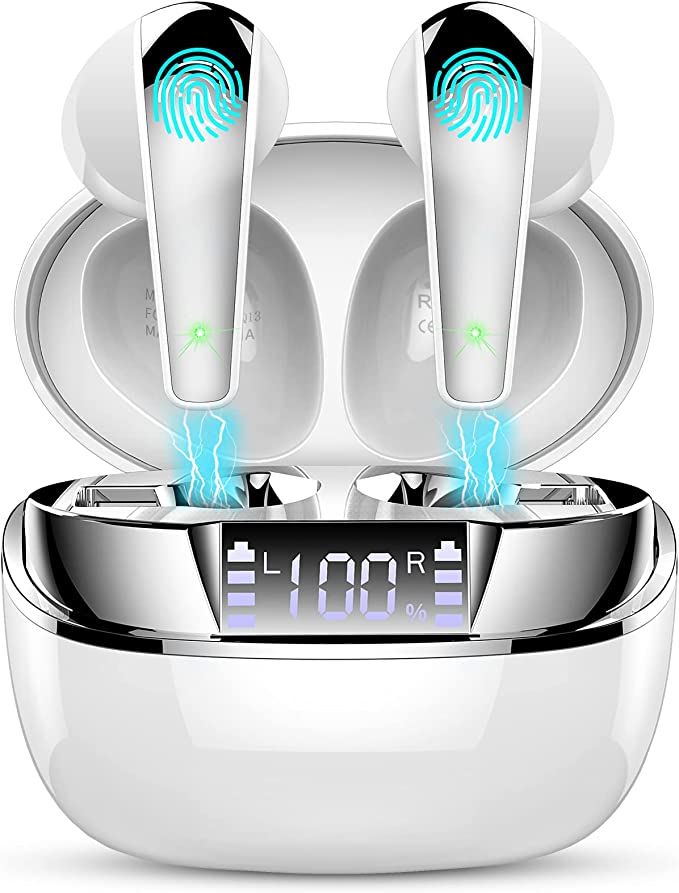
The Cillso H97 weighs just 3.5 grams. It uses a Semi-In-Ear design that rests in the Concha (the bowl of the ear) and hangs from the Intertragic Notch.
* The Suspension System: Instead of relying on friction inside the canal, the H97 uses gravity and the natural contours of the ear cartilage to stay in place. It sits outside the canal.
This results in “Zero Pressure.” Air flows freely. You don’t hear your own footsteps thumping in your skull. For users who wear headphones for 4-8 hours a day, this isn’t just a preference; it’s a requirement for long-term comfort.

Stratum II: The Acoustic Compensation (13mm Drivers)
The physics problem with Semi-In-Ear is Sound Leakage. Without a seal, low-frequency waves (bass) tend to escape into the air rather than pressurizing the eardrum. This usually results in a thin sound.
How does Cillso fix this? Brute Force.
The H97 houses a 13mm Dynamic Driver.
* Displacement: As discussed in previous analyses, a 13mm driver has a surface area roughly 4 times larger than a standard 6mm driver. It moves a massive column of air.
* Compensation: By pushing more air, the driver compensates for the leakage. Even though some bass energy escapes, the sheer volume of air being moved ensures that enough low-frequency energy reaches the eardrum to register as “Deep Bass.”
This is Acoustic Compensation. It’s like using a firehose instead of a garden hose to fill a bucket that has a small hole. You simply overpower the loss. The result is a soundstage that feels wide and airy (due to the open nature) but still retains a solid fundamental beat.
Stratum III: The Connection Frontier (Bluetooth 5.4)
The H97 specs list Bluetooth 5.4. This is the cutting edge of wireless standards (released in 2023).
Most budget earbuds are still on 5.0 or 5.2. What does 5.4 add?
* PAwR (Periodic Advertising with Response): This feature allows for incredibly efficient bidirectional communication between the host (phone) and thousands of end nodes. While you only have two earbuds, this protocol optimization means the radio can “check in” with the phone less frequently while maintaining a tighter sync.
* Energy Efficiency: This efficiency is a major contributor to the 40-Hour total playtime. The chip spends more time in deep sleep states.
* Robustness: Bluetooth 5.4 includes better encryption and interference avoidance. In a gym full of 50 other Bluetooth devices, the H97 is less likely to stutter because it negotiates the crowded 2.4GHz spectrum more intelligently.
Stratum IV: The Shield of IP7 (In an Open Design)
We typically associate high waterproof ratings (IPX7/IP7) with sealed, rubberized sports gear. Achieving IP7 on a hard-plastic, semi-open earbud is an engineering feat.
* The Challenge: Semi-in-ear buds have large mesh openings for the sound. Water will get in.
* The Solution: Internal Nano-Coating. Since you can’t seal the speaker grille (it would block the sound), you coat the internal electronics. The circuit board is hydrophobic. Water that enters the acoustic chamber simply beads up and drains out without shorting the components.
This allows the H97 to be rinsed under a tap or worn in heavy rain, despite its “open” appearance. It brings sports-grade durability to a comfort-first form factor.
Conclusion: The Best of Both Worlds
The Cillso H97 represents the maturity of the Semi-In-Ear category.
It no longer asks you to trade sound quality for comfort. By leveraging the physics of large 13mm drivers and the efficiency of Bluetooth 5.4, it delivers a “HiFi” experience without the invasive seal of an IEM.
For the office worker, the student, or the runner who wants to hear traffic, it is a tool that respects your anatomy while still delivering the energy of your music.