The Art of Subtraction: Redefining Convenience in Pet Tech

Puemin AutoScooper 11 Self Cleaning Litter Box
We live in an era of relentless technological addition. The prevailing wisdom suggests that to make a device "smarter," we must add features: Wi-Fi connectivity, a companion app, push notifications, voice commands. Yet, for many users, this accumulation of complexity has led to a point of diminishing returns, where the effort required to manage the technology outweighs the convenience it promises. This creates a paradox: the "smart" home can often feel quite complicated. In this landscape, a different design philosophy is emerging, one based not on addition, but on thoughtful subtraction. It posits that true convenience is achieved not by adding more features, but by relentlessly removing friction from the user's core task.

This philosophy is powerfully embodied in the concept of a "plug-and-play" device. A product that requires no Wi-Fi pairing, no account creation, and no app to download immediately reduces the user's cognitive load to near zero. Consider an automated litter box. The user's fundamental goal is singular: to not have to scoop waste manually. A device like the Puemin AutoScooper 11, which is explicitly designed to operate without app integration, directly serves this primary goal without imposing secondary tasks. This isn't a lack of technology; it is a deliberate technological choice. It prioritizes reliability and immediacy over a suite of features that, for many users, might offer little practical value while introducing potential points of failure like network outages or software bugs. The most user-friendly interface is, arguably, no interface at all.
This principle of subtracting friction extends beyond the initial setup to the entire lifecycle of the product, most notably in maintenance. Even a self-cleaning device requires periodic deep cleaning. A product that is difficult to take apart and reassemble can quickly transform its automated convenience into a dreaded manual chore. Therefore, a design that emphasizes easy disassembly—such as a system engineered to be taken apart in a few simple, intuitive steps—is a hallmark of superior user-centric design. It acknowledges the reality of ownership and demonstrates respect for the user's time and effort. An open-top architecture further simplifies this process, eliminating the hard-to-reach crevices and corners that can plague enclosed models and make thorough sanitation a frustrating endeavor.

Finally, the most fundamental, yet often invisible, layer of user experience is the material from which a product is made. The choice of material directly impacts durability, hygiene, and ease of cleaning. The use of polypropylene (PP) in many modern household appliances and pet products is a case in point. Polypropylene is a thermoplastic known for its excellent resistance to chemicals—including the ammonia and other corrosive compounds in cat urine—as well as its low moisture absorption and fatigue resistance. As a non-porous surface, it is less likely to harbor bacteria or retain odors, and it is simple to wipe clean. This choice is not merely a line on a spec sheet; it is a tangible feature that contributes to a more hygienic home and a less burdensome cleaning process, embodying the principle of thoughtful design at the most basic level.
In the end, the pursuit of convenience in our technological lives should be a quest for peace of mind, not a collection of features. The most advanced and helpful device is often the one that demands the least of our attention. By focusing on a "plug-and-play" setup, designing for easy maintenance, and selecting materials for long-term practicality, a product can deliver a superior user experience through the art of subtraction. It proves that technology does not need to be "smart" in the conventional, connected sense to be intelligent. Sometimes, the most intelligent choice is simplicity itself.
Puemin AutoScooper 11 Self Cleaning Litter Box
Related Essays

The Engineering of Effortlessness: A UX Review of Modern Hair Dryer Design

More Than a Vacuum: The Systems Engineering Behind Integrated Pet Grooming Solutions

An Engineer's Autopsy of Pet-Tech: How a Single Design Flaw Creates Catastrophic Failure
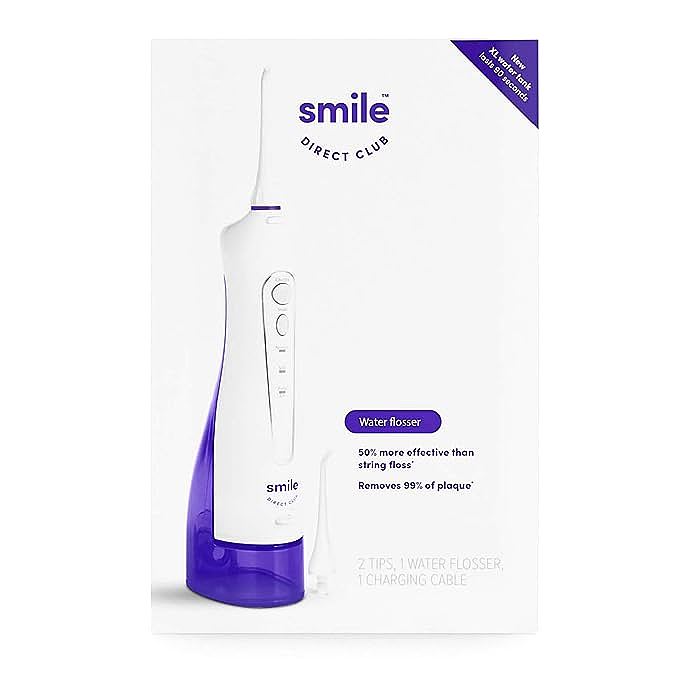
SmileDirectClub Premium Edition Water Flosser: Achieve a Healthier Smile with Advanced Water Flossing

The 143-Pound Mistake: How a Simple Machine Reveals the Deep Flaws in Modern Engineering

The Dyson Paradox: How a Vacuum's 'Strongest Suction' Became Its Greatest Flaw

The Vacuum Paradox: Why a Bestselling Cleaner Reveals the Hidden Flaws in Product Design

The 'Click' of Satisfaction: How Effortless Design Is Winning the User Experience War

The Invisible Interface: The Unseen Challenges of Designing Comfortable and Socially Acceptable XR Glasses
