Beyond Mechanical Scrubbing: The Science of Ultrasonic Cavitation and Tool Hygiene
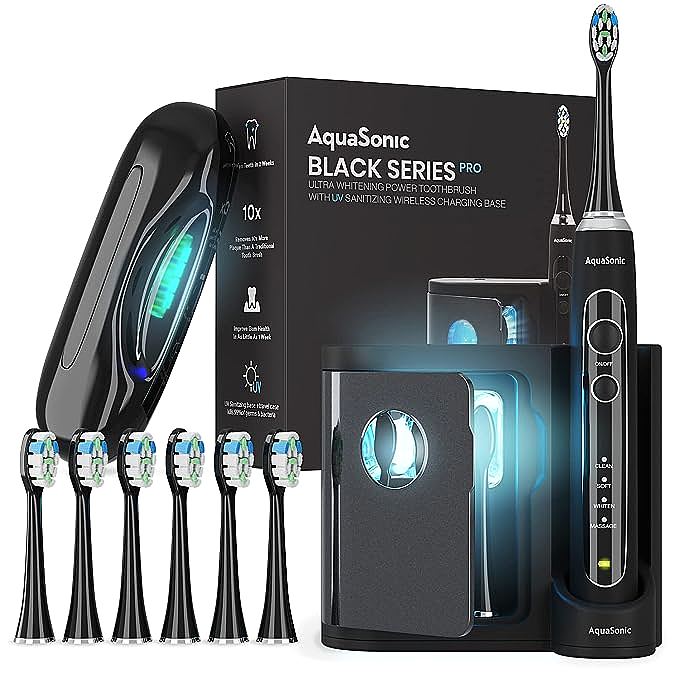
Aquasonic Black Series PRO Ultra Whitening Power Toothbrush
In the realm of oral health, we often obsess over the act of brushing—the technique, the duration, the frequency. Yet, we rarely scrutinize the physics happening at the bristle tips or the biology occurring on the brush once it leaves our mouth. The evolution of dental care has moved past the era of simple mechanical abrasion into a new phase driven by fluid dynamics and microbiology. To truly optimize oral health, we must view the toothbrush not just as a scrubber, but as a precision instrument capable of disrupting microscopic biofilms and, crucially, maintaining its own sterility.
Modern systems, such as the Aquasonic Black Series PRO, exemplify this shift by integrating high-frequency ultrasonic motors with distinct sanitization protocols. But to understand the value of these features, we must first understand the invisible enemies they are designed to fight: plaque architecture and bacterial proliferation.

The Physics of 40,000 VPM: Non-Contact Cleaning
The term "ultrasonic" in dental marketing is often thrown around loosely, but scientifically, it refers to specific frequencies of vibration that alter the behavior of fluids. Standard sonic brushes typically operate around 30,000 vibrations per minute (VPM). While effective, pushing this limit higher—to 40,000 VPM—can significantly enhance a phenomenon known as hydrodynamic cavitation.
When bristles vibrate at this intensity, they do more than just sweep away debris they touch. They vigorously agitate the mixture of saliva, water, and toothpaste, creating rapid pressure changes in the fluid. These fluctuations form microscopic bubbles that implode with immense energy. This implosion sends shockwaves through the fluid, capable of disrupting the sticky matrix of plaque biofilm up to 4 millimeters beyond the actual bristle tips.
This "non-contact brushing" is critical for accessing the interproximal areas (between teeth) and the gingival sulcus (the gumline pockets), where physical bristles often cannot reach. A device capable of 40,000 VPM transforms the oral fluids into a dynamic cleaning agent, essentially power-washing the intricate topography of the enamel without requiring aggressive manual force that could damage gum tissue.

The Dirty Truth: The Microbiology of Tool Maintenance
Perhaps the most overlooked aspect of oral hygiene is the cleanliness of the tool itself. A damp toothbrush, stored in a humid bathroom environment, creates an ideal incubator for bacteria. Studies have shown that toothbrushes can harbor millions of microorganisms, including Staphylococci, coliforms, and yeasts. Every time we brush with a contaminated tool, we potentially reintroduce these pathogens into the oral cavity, undermining the very purpose of brushing.
This is where the integration of UV-C Sanitization becomes a pivotal component of a modern hygiene ecosystem. UV-C light (ultraviolet light in the C spectrum, specifically 200-280nm) functions as a germicide by penetrating the cell walls of microorganisms and disrupting their DNA or RNA structure. This damage prevents the bacteria from replicating, effectively neutralizing them.
The charging base of the Aquasonic Black Series PRO incorporates an auto-timed UV sanitizing chamber. By subjecting the brush head to this focused radiation after every use, the system breaks the cycle of re-contamination. It ensures that the tool entering your mouth is as close to sterile as possible, turning the brush head from a potential vector of infection into a hygienic instrument.

Compliance Economics: The Role of Replacement Frequency
Engineering and biology aside, human behavior plays a massive role in dental health. One of the most common failures in patient compliance is the infrequent replacement of brush heads. Worn bristles become abrasive and lose their effectiveness at plaque removal. However, the recurring cost of premium replacement heads often discourages users from swapping them out every three months as recommended by the American Dental Association (ADA).
A holistic approach to product design addresses this friction point. By including a substantial supply of brush heads (such as the 6 ProFlex heads included with the Black Series PRO), manufacturers remove the immediate economic barrier to compliance. This "pre-commitment" strategy ensures that users are more likely to adhere to optimal hygiene protocols for an extended period (up to two years), simply because the resources are readily available. It shifts the user experience from "rationing" expensive heads to freely maintaining optimal performance.
Modes as Therapies: Targeted Frequency Modulation
Finally, the versatility of a power toothbrush lies in its ability to modulate frequency for specific therapeutic goals. Features like "Whiten" or "Massage" modes are essentially variations in frequency and amplitude.
- Whiten Mode typically utilizes the highest frequency to maximize the cavitation effect, targeting extrinsic stains on the enamel surface caused by coffee or tea.
- Massage Mode often employs a pulsing rhythm. This pulsing improves blood circulation in the gingiva (gums) without causing abrasion, which can be particularly beneficial for individuals with signs of early gum inflammation.
Understanding these modes as targeted therapies rather than arbitrary settings allows users to customize their routine based on their daily oral condition—whether they need maximum stain removal or gentle tissue stimulation.
Conclusion: The Systemic Approach
Oral health is not achieved by a single magic wand, but by a consistent, scientifically sound system. The transition from manual scrubbing to ultrasonic cleaning represents a leap in efficiency, but the loop is only closed when we address the hygiene of the tool itself. Devices that combine high-frequency fluid dynamics with rigorous UV sanitization protocols offer a comprehensive solution, tackling the biological challenges of the mouth from every angle. By understanding the science behind 40,000 VPM and UV-C light, consumers can make informed choices that elevate their daily routine from a chore to a clinical-grade hygiene practice.
Aquasonic Black Series PRO Ultra Whitening Power Toothbrush
Related Essays

The Unseen Battle in Your Mouth: How Sonic Technology and Smart Feedback Redefine Cleaning
Hydrodynamic Resonance: The Physics of Non-Contact Cleaning and the Fluid Dynamics of Sonic Dentistry

Beyond the Bristles: The Fluid Dynamics of Sonic Oral Hygiene and the Physics of Biofilm Disruption
Beyond Mechanical Scrubbing: The Fluid Dynamics of Biofilm Disruption and the Science of Micro-Bubble Cavitation

The Biofilm Breaker: How Sonic Cavitation and Hydrodynamics Redefine Oral Health
The Clinical Standard: Hydrodynamic Shear Stress and Gingival Microcirculation
Democratizing Dental Health: The Science of Accessibility in Portable Water Flossing

Beyond Brushing: The Hydrodynamics of Pulsation and Biofilm Management
Fluid Dynamics & Oral Health: The Engineering of Cordless Irrigation
