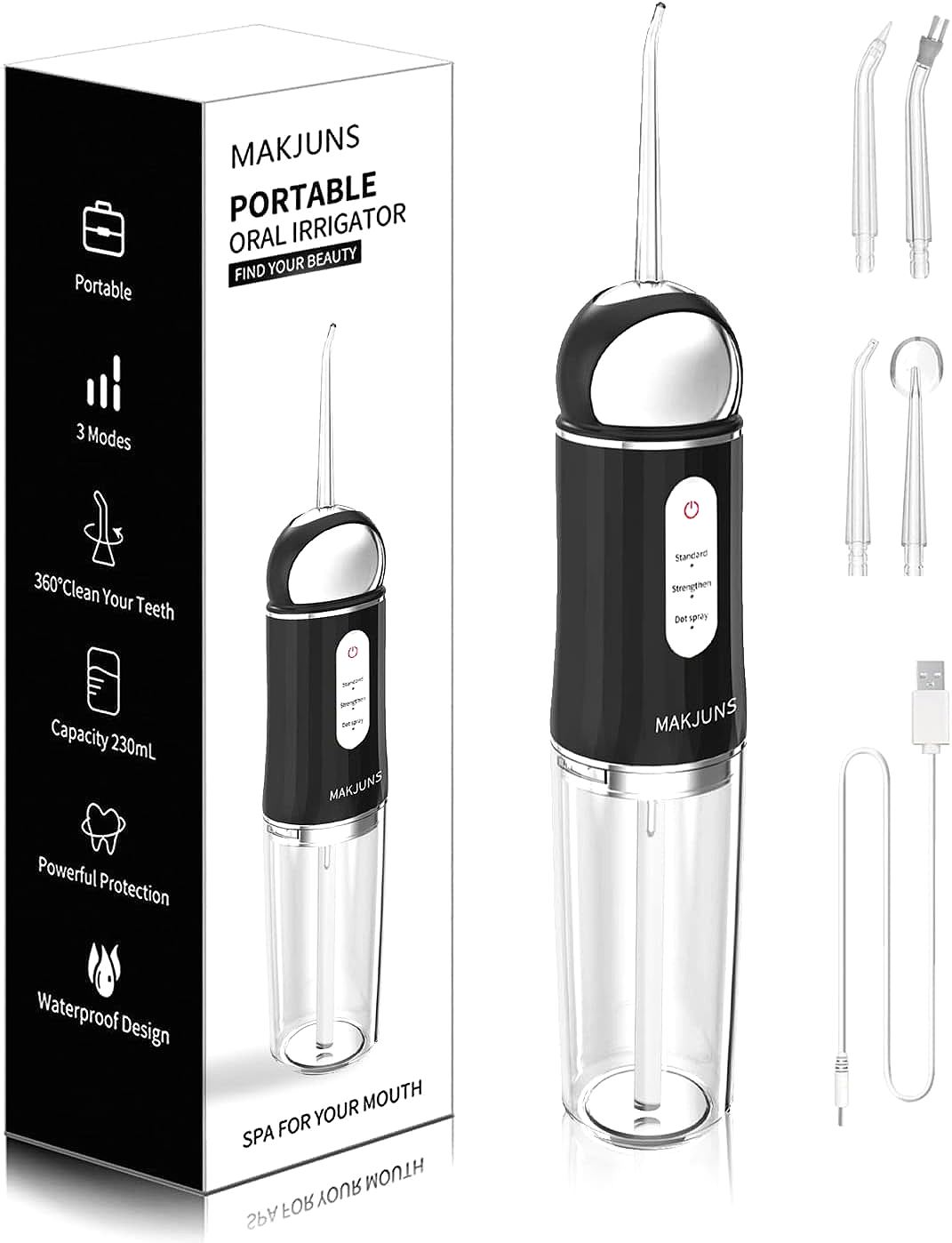
Beyond Brushing: The Hydrodynamics of Pulsation and Biofilm Management

CRI Naturals WFx1 Water Flosser
In the landscape of personal hygiene, few environments are as biologically complex as the human mouth. While the toothbrush remains the cornerstone of surface cleaning, dental professionals have long recognized its geometric limitations. The toothbrush bristles, no matter how advanced, struggle to penetrate the tight interdental spaces or the delicate gingival sulcus—the shallow crevice where the tooth meets the gum. It is in these protected niches that oral health battles are often lost.
To address this, we must look beyond mechanical scrubbing and turn to fluid dynamics. The evolution of the oral irrigator, from a garage invention in the 1960s to modern countertop units like the CRI Naturals WFx1, represents a shift from friction-based cleaning to energy-based biofilm disruption. Understanding the physics behind this process reveals why a jet of water is far more than just a "liquid toothpick."
The Biology of the Enemy: Understanding Biofilm Structure
To appreciate the necessity of a water flosser, one must first understand the adversary. Dental plaque is not merely food debris; it is a biofilm. This is a highly organized, resilient community of bacteria encased in a sticky extracellular polymeric substance (EPS). This matrix acts as a fortress, protecting the bacteria from antimicrobial agents and mechanical removal.
String floss disrupts this matrix through friction, but it requires high manual dexterity and often cannot reach deep into periodontal pockets (spaces greater than 3-4mm deep) where anaerobic bacteria thrive. This is where the concept of Hydrokinetic Activity becomes paramount.
The Physics of Efficacy: Pulsation vs. Continuous Stream
Why do effective oral irrigators pulse? Why not just use a steady stream of water? The answer lies in the mechanics of shear stress.
A continuous stream applies constant pressure, which flows over the biofilm. However, a pulsating stream—specifically in the range of 1,200 to 1,700 pulses per minute—creates a distinct physical phenomenon. Each pulse acts as a kinetic impact event.
1. Compression: The water jet strikes the tissue, compressing the gingival pocket and creating momentary pressure.
2. Decompression: As the pulse recedes, the tissue relaxes.
This rapid cycle of compression and decompression creates a flushing zone. It allows the water to penetrate deeper into the subgingival areas than a static stream could. More importantly, the impact creates shear forces that physically tear the biofilm matrix apart.
Devices engineered with these specifications, such as the CRI Naturals model which operates at approximately 1,700 pulses per minute, leverage this frequency to destabilize the bacterial colony, flushing out inflammatory agents and bacteria from the pocket without damaging the delicate soft tissue.

The Variable Pressure Ecosystem: A Clinical Necessity
Biological tissues vary immensely in their resilience. Healthy, keratinized gingiva can withstand significant pressure, while inflamed, edematous tissue requires a gentle touch. Therefore, broad adjustability is not a luxury; it is a clinical necessity.
A 10-level pressure dial serves as a calibration tool for different stages of periodontal health: * Low Pressure (Levels 1-3): Essential for inflamed gums or post-surgical sites. At this level, the goal is gentle irrigation to remove loose debris without inducing trauma. * Medium Pressure (Levels 4-7): The standard for daily maintenance, balancing cleaning power with comfort. * High Pressure (Levels 8-10): Designed for disruption of mature plaque in healthy mouths.
This granularity allows the user to perform "progressive loading." Just as one builds muscle strength over time, a user can gradually increase pressure as their gum tissue becomes firmer and healthier, avoiding the "shock" that leads many beginners to abandon flossing altogether.
The Psychology of the Countertop Workstation
In an era of miniaturization, the persistence of the large countertop unit is notable. Why choose a bulky unit over a cordless one? The answer is often compliance psychology rooted in capacity.
A thorough cleaning of the entire oral cavity—buccal (cheek side) and lingual (tongue side) surfaces of both arches—typically requires 60 to 90 seconds. Portable units often have small reservoirs (200ml) that run dry in 30 to 45 seconds. The interruption required to refill the tank breaks the user's workflow, often leading to incomplete cleaning.
A 600ml reservoir, standard in countertop designs like the WFx1, ensures an uninterrupted workflow. The continuous supply of water (and stable power from a corded connection) removes friction from the process. It ensures that the user focuses on the angle of the tip and the gumline tracing, rather than rushing to finish before the water runs out.
Furthermore, the inclusion of specialized tips—orthodontic tips with tapered bristles for braces, or periodontal tips for deep pocket delivery—transforms the unit from a general cleaner into a targeted therapy device. For patients with bridges, implants, or orthodontics, these specialized tools are critical for navigating complex hardware that acts as a plaque trap.
Conclusion: Adopting a Hydrodynamic Standard
The transition from manual methods to powered hydrodynamics is more than an upgrade in convenience; it is an upgrade in health outcomes. By utilizing the physics of pulsation and shear stress, modern oral irrigators offer a way to manage the biological reality of biofilm in a way that bristles alone cannot.
While the mechanics are complex, the result is simple: a reduction in the inflammatory burden on the body. Whether through the specific engineering of the CRI Naturals WFx1 or similar high-performance countertop units, the integration of pulsating water into a daily routine represents a scientifically sound investment in long-term systemic health.
CRI Naturals WFx1 Water Flosser
Related Essays
Fluid Dynamics & Oral Health: The Engineering of Cordless Irrigation
Beyond the Rinse: The Hydrodynamic Science of the Waterpik Aquarius WP-660

The Physics of Effervescence: Nano-Bubbles, Cavitation, and the Power of Two-Phase Flow in Oral Hygiene
Hydrodynamic Resonance: The Physics of Non-Contact Cleaning and the Fluid Dynamics of Sonic Dentistry

Beyond the Bristles: The Fluid Dynamics of Sonic Oral Hygiene and the Physics of Biofilm Disruption
Beyond Mechanical Scrubbing: The Fluid Dynamics of Biofilm Disruption and the Science of Micro-Bubble Cavitation

The Biofilm Breaker: How Sonic Cavitation and Hydrodynamics Redefine Oral Health

The Volume Advantage: Analyzing 320ml Capacity and DIY Pressure in Portable Flossing
The Clinical Standard: Hydrodynamic Shear Stress and Gingival Microcirculation