The Architecture of a Smile: How Design and Psychology Shape Kids' Brushing Habits
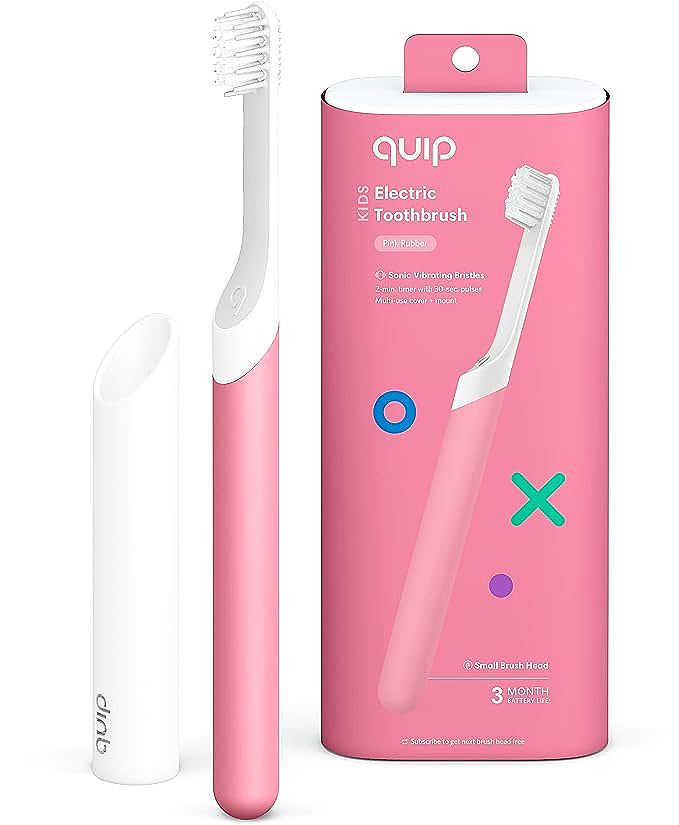
Quip Kids Electric Toothbrush
For many parents, the bathroom sink is a daily battleground. The resistance to toothbrushing is often dismissed as mere stubbornness, but developmental science suggests a deeper, physiological root. A child's mouth is a landscape of intense sensory sensitivity. Primary teeth (deciduous teeth) have thinner enamel and larger pulp chambers than their adult counterparts, making them more responsive to pressure and temperature. Furthermore, a child's sense of time is still developing; two minutes can feel like an eternity.
Therefore, the challenge of establishing oral hygiene habits isn't just about discipline; it's about finding tools that bridge the gap between adult expectations and a child's physiological reality. Modern engineering, exemplified by devices like the Quip Kids Electric Toothbrush, is increasingly looking to behavioral psychology and ergonomics to solve this age-old problem.
The Sensory Equation: Why "Less" Can Be "More"
When we transition from manual to electric brushing for children, the immediate instinct is often to seek the most powerful device. However, high-intensity vibrations and loud motors can trigger a sensory overload in young children, sometimes activating the gag reflex or causing aversion due to the "buzzing" sensation in the skull (bone conduction).
This is where the specific calibration of sonic technology becomes critical. Unlike rotary brushes that rely on mechanical friction, sonic brushes operate by vibrating bristles at high frequencies. In pediatric models, this vibration is tuned to be gentler.
The science behind this is fluid dynamics. The rapid but subtle vibrations—often humming rather than rattling—agitate the fluids in the mouth (saliva, water, toothpaste) into a dynamic cleaning force. This creates microbubbles that can penetrate interdental spaces and the gumline, areas that manual brushing often misses due to a child's developing dexterity. By using a "soft-start" or lower intensity vibration, devices like the Quip aim to provide the efficacy of fluid dynamics without the sensory aggression, turning a frightening experience into a manageable, ticklish one.
The Psychology of the "Habit Loop"
Behavioral scientists describe the "Habit Loop" as a three-part process: Cue, Routine, and Reward. In the context of oral hygiene, the toothbrush must serve as both the tool for the routine and the regulator of the cue.
Children notoriously lack an internal clock. Asking a six-year-old to brush for two minutes is akin to asking them to calculate calculus; they simply lack the temporal perception. This is why the built-in timer with quadrant pacing is not a gimmick—it is a cognitive scaffold.
By pulsating every 30 seconds, the brush externalizes the mental effort of tracking time. It breaks an overwhelming task (2 minutes) into four bite-sized, achievable goals (30 seconds per quadrant). This structure reduces cognitive load and anxiety. When the final pulse signals the end, it provides an immediate sense of completion—a micro-reward that reinforces the neural pathway for the habit. Over time, this external guidance becomes internalized, and the child develops a "muscle memory" for the correct duration.
Ergonomics and Motor Skills: Designing for Small Hands
We often overlook the handle of a toothbrush, but for a child, it is the interface of control. Children's fine motor skills—the ability to make small, precise movements with hands and fingers—are still developing well into elementary school. A handle that is too thick, too heavy, or too slippery can lead to a "fist grip," which encourages aggressive scrubbing rather than the gentle, circular motions recommended by dentists.
Effective pediatric design focuses on proprioception—the body's ability to sense its location and movements. A slender, rubberized handle, such as the one seen on the Quip model, offers high-friction tactile feedback. This allows a child to maintain a secure grip with less muscular effort, promoting a more controlled, fingertip-style hold. This control is essential for angling the bristles towards the gumline (the 45-degree rule) without slipping and causing soft tissue injury.
Furthermore, the size of the brush head is mathematically significant. A smaller surface area increases pressure per bristle (P=F/A), meaning less manual force is needed to clean effective. It also allows for navigation around the tight curves of the pediatric arch without triggering the gag reflex, a common barrier to reaching the posterior molars where cavities often form.
Hygiene and the Ecosystem of Care
Finally, a toothbrush is a bio-tool that requires maintenance. The moist environment of a bathroom is a breeding ground for bacteria. Innovations in storage, such as multi-use covers that double as mirror mounts, address this by promoting airflow and keeping the bristles elevated away from potentially contaminated surfaces.
However, technology is not a magic wand. Even the smartest brush requires parental oversight. Issues like bristle wear or battery depletion can subtly degrade performance over time. A "set it and forget it" mentality can lead to ineffective cleaning if the hardware isn't maintained—batteries must be fresh to maintain the sonic frequency required for fluid dynamics, and brush heads must be replaced before frayed bristles become abrasive to delicate enamel.
Conclusion: Investing in Autonomy
Ultimately, the goal of any pediatric dental tool is obsolescence. We want our children to eventually brush effectively without the need for gamified apps or parental hovering. By selecting tools that respect a child's sensory thresholds and support their developing motor skills, we are doing more than cleaning teeth. We are building autonomy.
Devices that merge gentle sonic physics with behavioral nudges offer a pathway out of the "brushing battle." They transform a chore into a manageable, predictable routine, laying the foundation for a lifetime of health, one guided pulse at a time.
Quip Kids Electric Toothbrush
Related Essays

The Right to Repair Your Smile: Decoding SURI's Sustainable Modular Design

The Physics of Oral Hygiene: Understanding Sonic Technology and Biofilm Control

The Convergence of Clean: How Hydrodynamic Synergy is Rewriting Oral Hygiene Norms

Beyond the Bean: The Psychology of Crafting Your Morning Coffee Ritual

The Enduring Power of Simplicity: Why the Philips Sonicare Essence Still Matters
The Sonicare 1100: Deconstructing the Science of a Smarter, Simpler Clean
The Unseen Science in Your Child's Toothbrush: An Ergonomic and Psychological Deep Dive

evo BLP-1 Collector's Edition Black Panther Electric Toothbrush: Unleash Your Inner Warrior for a Healthier Smile
![Smileactives Vibrite Sonic Power Electric Toothbrush : A Comprehensive Analysis [2024 Edition]](https://storage.maomihezi.com/file/2024-11-02/51WWniz9LmL._AC_SL1500_.jpg?x-oss-process=style/mini_auto)
Smileactives Vibrite Sonic Power Electric Toothbrush : A Comprehensive Analysis [2024 Edition]