Beyond Mechanical Scrubbing: The Fluid Dynamics of Biofilm Disruption and the Science of Micro-Bubble Cavitation
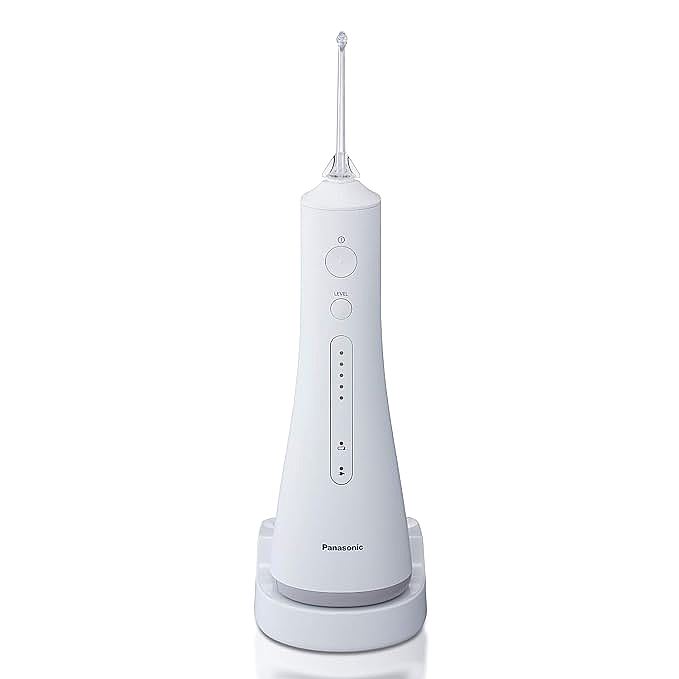
Panasonic EW1511W Professional Cordless Water Flosser
The history of oral hygiene is largely a history of mechanical abrasion. For millennia, the primary strategy for maintaining dental health has been the physical scraping of tooth surfaces, first with chew sticks, then with crude bristles, and finally with the engineered nylon filaments of the modern toothbrush. This approach, while effective for accessible surfaces, faces a fundamental geometric limitation: the complex topography of the human mouth contains crevices, pockets, and interdental spaces that solid bristles simply cannot penetrate.
In recent decades, a paradigm shift has occurred, moving from solid mechanics to fluid dynamics. The introduction of pressurized water as a cleaning medium changed the equation, but the true revolution lies deeper than simple irrigation. It lies in the physics of ultrasonic cavitation—the generation and collapse of microscopic bubbles that act as energetic projectiles against bacterial colonies. This shift represents not just an improvement in tools, but a fundamental change in how we understand the removal of pathogenic biological matrices. Devices like the Panasonic EW1511W Professional Cordless Water Flosser stand at the forefront of this transition, utilizing ultrasonic technology to weaponize water against the persistent threat of biofilm.
The Architecture of the Enemy: Understanding Biofilm Mechanics
To understand why advanced fluid dynamics are necessary, one must first understand the adversary: dental plaque biofilm. Plaque is often misunderstood as merely "food debris" or a passive layer of dirt. In reality, it is a sophisticated, highly organized biological fortress.
The Glycocalyx Matrix and Viscoelasticity
Biofilm consists of microbial communities embedded within a self-produced Extracellular Polymeric Substance (EPS), often referred to as the glycocalyx. This slime layer acts as a protective shield, adhering stubbornly to the hydroxyapatite crystals of the tooth enamel. * Viscoelastic Properties: Biofilm exhibits viscoelastic behavior, meaning it possesses both the elasticity of a solid and the viscosity of a fluid. When brushed (mechanical shear), it can deform and stretch without detaching, much like rubber. * Chemical Resistance: The EPS matrix restricts the diffusion of antimicrobial agents (like those in mouthwash), rendering them largely ineffective against the bacteria buried deep within the layers.
The Periodontal Pocket: An Anaerobic Sanctuary
The most critical battlefield is the periodontal pocket—the gingival sulcus between the tooth and the gum tissue. In a healthy mouth, this depth is 1-3mm. However, as biofilm accumulates, it triggers an inflammatory response (gingivitis), causing the gums to swell and detach, deepening the pocket. * The Accessibility Problem: Once a pocket exceeds 3-4mm, it becomes physically impossible for toothbrush bristles or standard floss to reach the bottom. This creates an anaerobic (oxygen-free) environment where the most virulent, tissue-destroying bacteria (such as Porphyromonas gingivalis) thrive. * The Need for Hydraulic Penetration: The only way to cleanse these deep pockets without invasive surgery is through hydraulic forces that can penetrate the narrow sulcus and flush out the pathogens.
The Physics of Water: Pulsation and Shear Stress
Early oral irrigators relied on a continuous stream of water (laminar flow). While this provided a rinsing effect, it often lacked the kinetic energy required to strip adherent biofilm from the tooth surface. The breakthrough came with the understanding of pulsatile flow.
The Impact of Pulsation Frequency
Modern devices employ a pulsating stream, typically operating between 1,200 and 1,800 pulses per minute. The Panasonic EW1511W, for instance, operates at approximately 1,600 pulses per minute. This pulsation serves a dual purpose rooted in physics:
1. Compression and Decompression: The rapid cycling of pressure creates a "hammering" effect. Each pulse impacts the biofilm, inducing fatigue in its adhesive bonds.
2. Tissue Stimulation: The intervals between pulses allow the gum tissue to rebound, creating a massaging effect that stimulates blood circulation (micro-circulation) in the gingiva, promoting the keratinization of the epithelial tissue which makes gums more resistant to trauma.
Hydrodynamic Shear Stress
The effectiveness of water flossing is governed by Wall Shear Stress ($\tau$). This is the force per unit area exerted by the fluid flowing parallel to the tooth surface.
$$\tau = \mu \frac{\partial u}{\partial y}$$
Where $\mu$ is the dynamic viscosity and $\frac{\partial u}{\partial y}$ is the velocity gradient near the wall.
To remove biofilm, the shear stress generated by the water stream must exceed the cohesive strength of the biofilm matrix. High-velocity pulsed jets maximize this shear stress at the point of impact, effectively peeling the biological layer off the substrate.
The Ultrasonic Revolution: Micro-Bubble Cavitation
The most significant advancement in this field is the integration of Ultrasonic Technology. This moves beyond simple hydraulic pressure to exploit the violent energy release of collapsing bubbles.
The Venturi Effect and Bubble Generation
In advanced nozzles, such as those found in ultrasonic irrigators, the water channel narrows significantly before the exit point. According to Bernoulli's Principle, as the velocity of the fluid increases through this constriction, the static pressure drops. * Micro-Bubble Formation: This pressure drop, combined with high-frequency vibration, introduces air into the stream or causes dissolved gases to come out of solution, forming millions of microscopic bubbles. * The Cloud of Energy: The water jet essentially becomes a carrier mechanism for these energetic voids.
The Mechanics of Cavitation Collapse
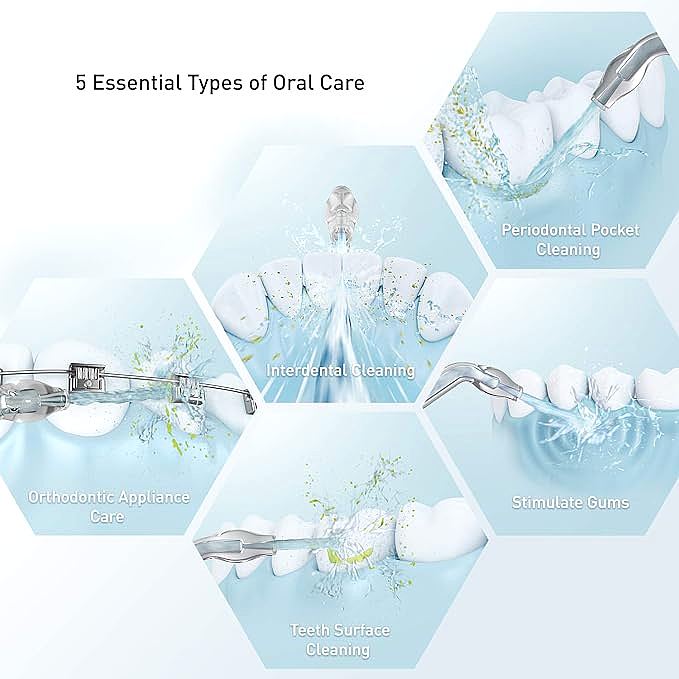
When these micro-bubbles hit a solid surface (the tooth), they undergo a rapid deceleration and pressure increase. This causes the bubbles to collapse or implode. * Shockwaves: The implosion of a cavitation bubble releases a localized shockwave of immense energy. While microscopic, the cumulative effect of thousands of bubbles bursting per second generates significant force. * Biofilm Disruption: These shockwaves act like microscopic depth charges. They can penetrate the porous structure of the biofilm, disrupting the EPS matrix from within and detaching bacteria that would otherwise withstand simple water flow. * Safety: Crucially, because the energy release is microscopic and localized, it is destructive to the fragile biofilm structure but harmless to the robust tissues of the gums and the mineralized enamel of the teeth.
Clinical Application: Tailoring Fluid Dynamics to Anatomy
The practical application of these physical principles requires precise control. The oral cavity is a landscape of varying sensitivities and geometries. A "one size fits all" pressure setting is insufficient and potentially damaging.
Variable Pressure and Tissue Compliance
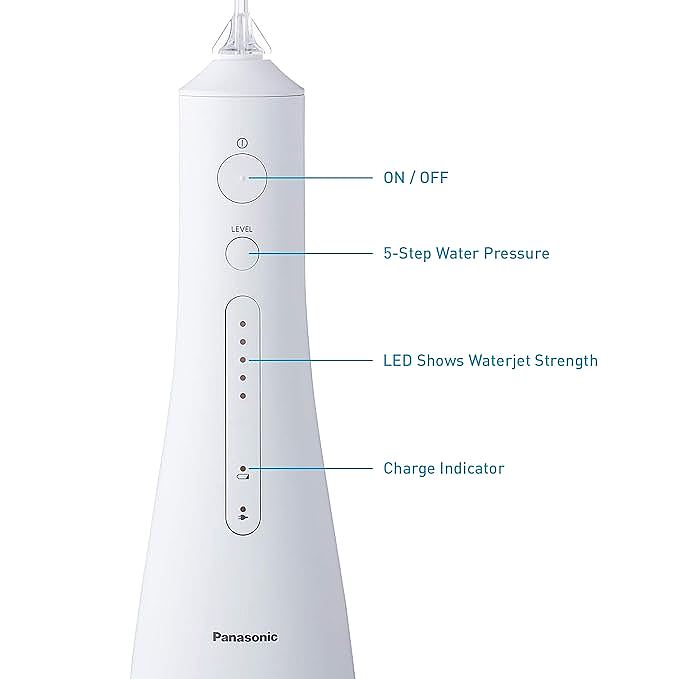
The gingiva is soft tissue with variable compliance (stiffness). Healthy gums are firm, while inflamed gums are edematous (swollen) and fragile. * The Pressure Spectrum: Devices offering a range of settings (e.g., 5 levels on the EW1511W) allow the user to match the hydraulic force to the tissue condition. High pressure (Level 5) maximizes shear stress for cleaning robust enamel surfaces and orthodontic brackets. Low pressure (Level 1-2) utilizes the gentle massaging action of pulsation to treat inflamed pockets without causing trauma. * Memory and Consistency: The ability to return to a specific pressure setting ensures consistent therapy. This is vital for patient compliance, as the fear of pain from an overly aggressive setting is a primary deterrent to daily flossing.
The Orthodontic Challenge
Orthodontic appliances (braces) present the ultimate challenge for mechanical cleaning. Brackets and wires create "shadow zones" where toothbrush bristles cannot reach, and where biofilm accumulates rapidly, leading to white spot lesions (decalcification). * Turbulence and Flow: In these complex geometries, turbulent flow is more effective than laminar flow. The chaotic movement of water caused by the ultrasonic stream and the deflection off brackets ensures that water eddies reach behind the wires and around the bracket base. * Debris Evacuation: The high volume of water acts as a transport medium, physically flushing away the larger food particles (macroscopic debris) dislodged by the ultrasonic action.
The Future of Hydrodynamic Oral Care
The trajectory of oral hygiene technology is clear: it is moving towards a deeper integration of fluid mechanics and biological understanding. The future lies not in stiffer bristles, but in smarter water.
We are approaching an era where "brushing" might become a secondary activity to "irrigating." As our understanding of the systemic links between oral health and cardiovascular health deepens, the ability to control sub-gingival biofilm becomes a medical necessity rather than just a cosmetic routine. The Panasonic EW1511W demonstrates that the technology to achieve this—ultrasonic cavitation, controlled pulsation, and high-velocity shear—is no longer confined to the dental chair but is available for the daily regimen.
By harnessing the physics of fluids, we are finally able to reach the hidden frontiers of our own anatomy, maintaining a microbiome balance that mechanical scraping alone could never achieve. The war against biofilm is being won, not by force, but by the intelligent application of energy.
Panasonic EW1511W Professional Cordless Water Flosser
Related Essays

Beyond the Bristles: The Fluid Dynamics of Sonic Oral Hygiene and the Physics of Biofilm Disruption

The Microscopic Demolition: How Ultrasonic Cavitation in Water Flossers Dismantles Plaque

The Mechanics of Delicacy: Low-Pressure Hydrodynamics in Tonsillar and Periodontal Care
Hydrodynamic Resonance: The Physics of Non-Contact Cleaning and the Fluid Dynamics of Sonic Dentistry

The Biofilm Breaker: How Sonic Cavitation and Hydrodynamics Redefine Oral Health
The Clinical Standard: Hydrodynamic Shear Stress and Gingival Microcirculation
Democratizing Dental Health: The Science of Accessibility in Portable Water Flossing

Beyond Brushing: The Hydrodynamics of Pulsation and Biofilm Management
Fluid Dynamics & Oral Health: The Engineering of Cordless Irrigation
