Fluid Dynamics & Oral Health: The Engineering of Cordless Irrigation
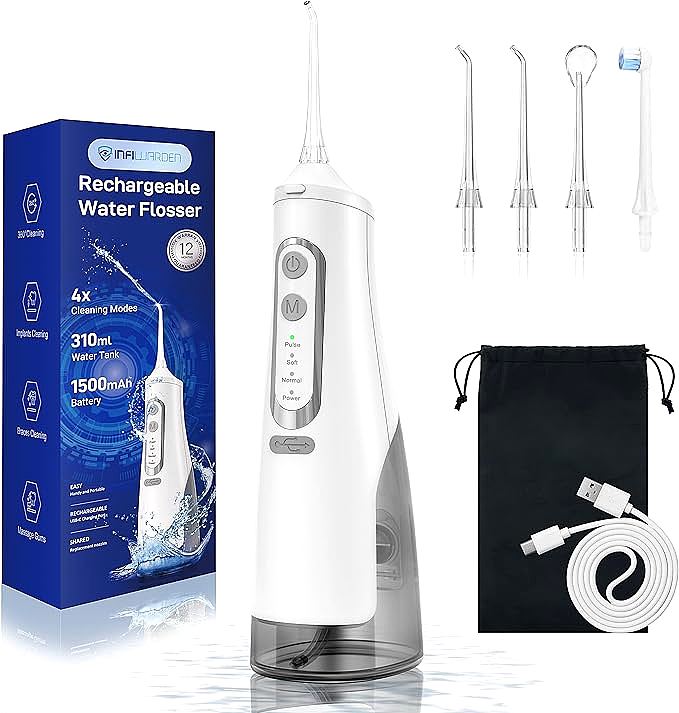
INFIWARDEN Cordless Water Flosser
The battle for oral health is fought on a microscopic scale. While mechanical brushing handles the broad surfaces of our teeth, the most dangerous pathogens retreat to the "interdental col" and the "gingival sulcus"—tight spaces where toothbrush bristles act like clumsy giants. This is where the physics of hydrodynamics becomes essential.
Water flossing is not merely "washing" your teeth; it is the application of shear force to disrupt the adhesive matrix of bacterial biofilm (plaque). The transition from string to stream represents a technological leap in how we manage oral hygiene. Analyzing devices like the INFIWARDEN Cordless Water Flosser, we can decode how modern engineering packages this hydraulic power into a portable form factor, making professional-grade irrigation accessible anywhere.
The Physics of the Pulse: Why Pressure Matters
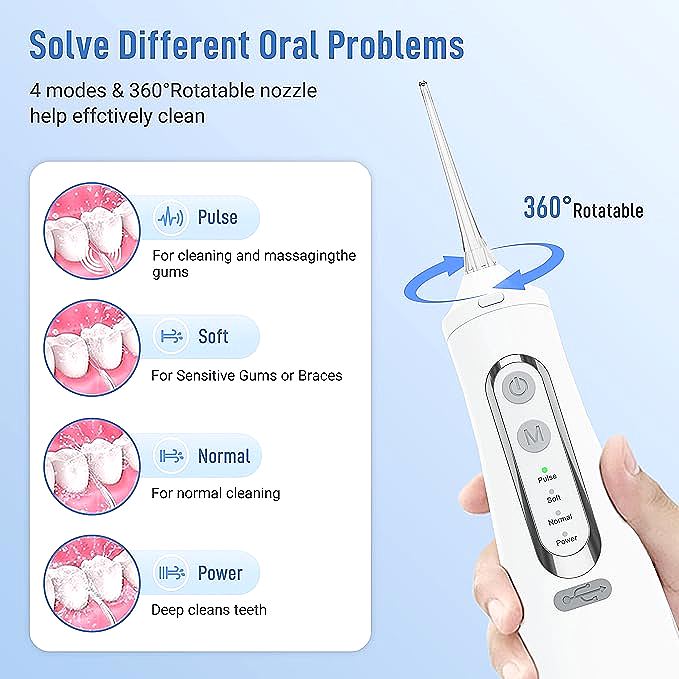
A common misconception is that water flossers simply rinse away food. In reality, effective plaque removal requires a specific balance of pressure and pulsation. The INFIWARDEN unit operates on a spectrum of 40 to 120 PSI (Pounds per Square Inch). This wide dynamic range is crucial for clinical efficacy.
- The Science of Shear: At higher pressures (80-120 PSI, typically the "Normal" or "Power" modes), the water jet generates sufficient impact force to physically detach organized bacterial colonies from the tooth surface. This is particularly vital for breaking the bond of plaque biofilm that has matured for over 24 hours.
- The "Pulse" Advantage: Unlike a continuous stream, the pulsating water jet (a core feature of this device) creates a compression-decompression cycle on the gum tissue. This micro-massage effect stimulates blood flow in the capillaries of the gingiva, promoting faster healing for inflamed tissues—a mechanism known as "hydrotherapy."
Capacity vs. Compactness: Solving the "Refill Fatigue"
One of the primary friction points in adopting cordless water flossers is the tank size. Standard portable units often cap out at 200ml, forcing users to stop and refill mid-session—a nuisance that leads to poor habit compliance.
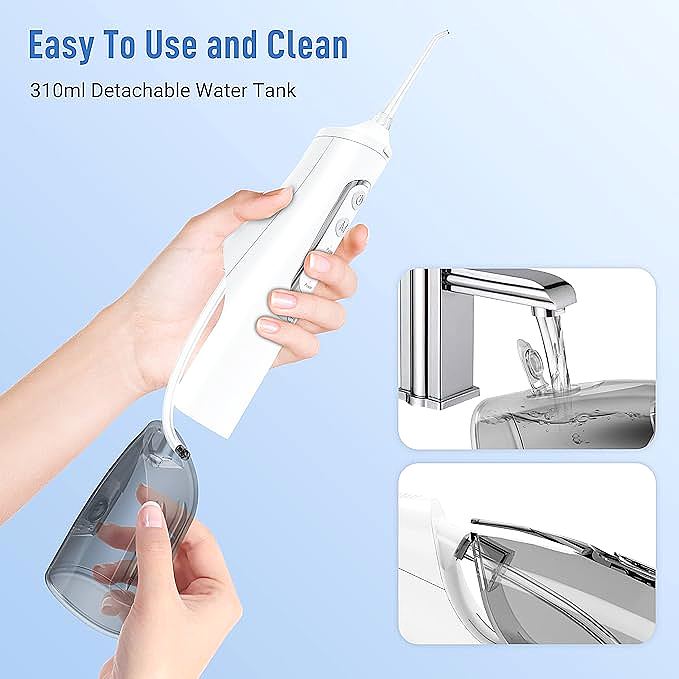
The 310ml reservoir on the INFIWARDEN is a deliberate engineering choice to bridge the gap between "portable" and "countertop" performance.
* The Calculation: A thorough cleaning of all four quadrants of the mouth typically requires 60-90 seconds of continuous flow. A 310ml capacity ensures that users can complete a full "oral cleaning sequence" without interruption. This seamless experience is critical for maintaining the daily habit.
The Orthodontic Imperative: A Tool, Not a Toy
For individuals with braces, bridges, or fixed implants, traditional hygiene methods are often biologically insufficient. Archwires and brackets create physical barriers that string floss cannot easily navigate.
This is where the specialized tips included with the INFIWARDEN system demonstrate their value.
* Fluid Navigation: Water acts as a non-Newtonian fluid in this context, molding itself to flow around brackets and under wires. The high-pressure jet flushes out food debris trapped in the "dead zones" of orthodontic appliances that act as plaque traps.
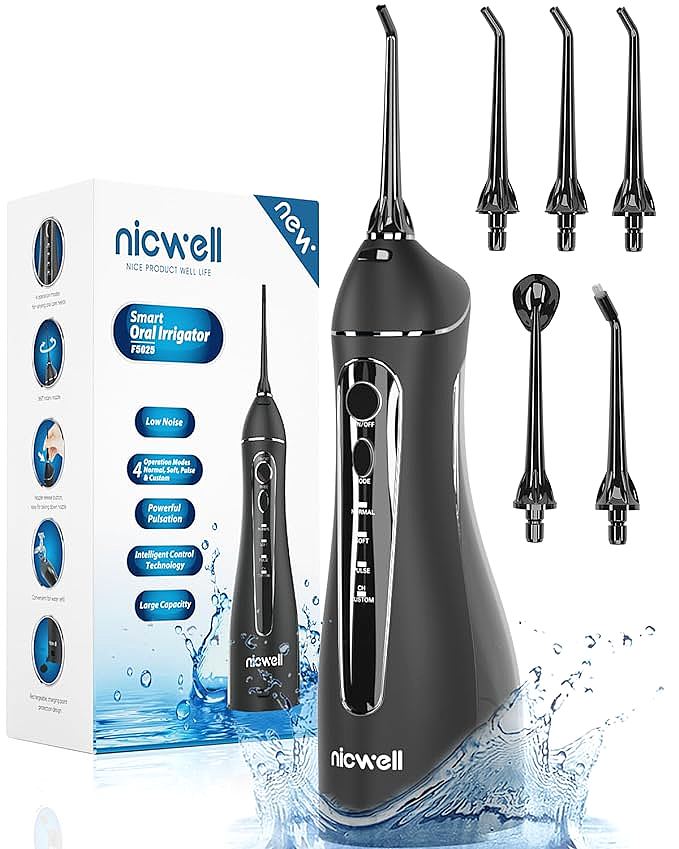
* Targeted Tips: The inclusion of 4 interchangeable tips (including a tongue cleaner and a brush tip) transforms the device from a simple irrigator into a comprehensive hygiene station. The 360° rotating nozzle allows the user to direct this stream perpendicular to the tooth surface—the optimal angle for cleaning—even in hard-to-reach posterior areas.
Managing the Learning Curve: The "Mess" Factor
New users often report that water flossing is "messy," with water spraying everywhere. It is important to understand that this "mess" is evidence of the device's high flow rate, which is necessary for effective flushing.
To master the INFIWARDEN, one must adopt the correct technique: lean over the sink, close lips slightly around the nozzle to prevent splashing, and let the water drain passively from the mouth. It is a skill, much like learning to ride a bike. Starting on the "Soft" mode (40 PSI) allows the user to master this coordination before graduating to higher pressures.
Durability Protocols: Understanding IPX7
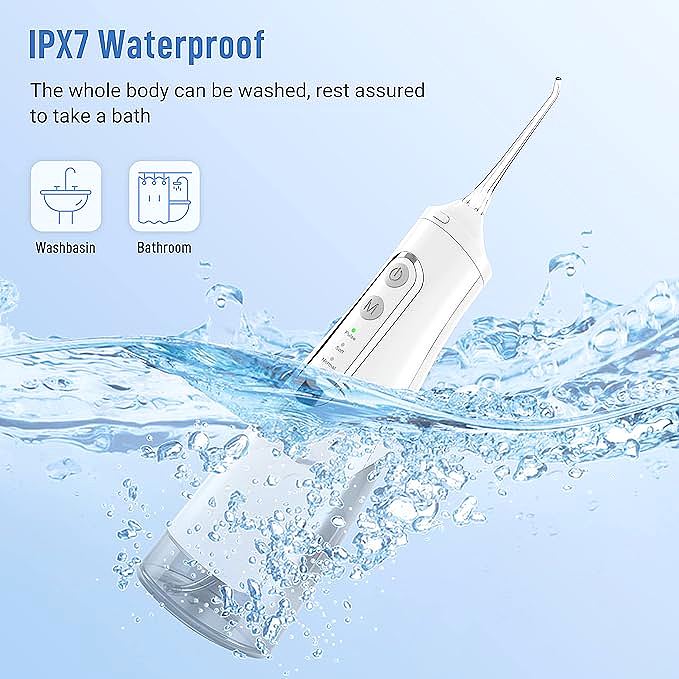
Electronic devices that live in the bathroom face a hostile environment: constant moisture. The IPX7 waterproof rating of the INFIWARDEN means it can withstand immersion in water up to 1 meter for 30 minutes. This allows for use in the shower—a popular strategy to mitigate the "mess" factor.
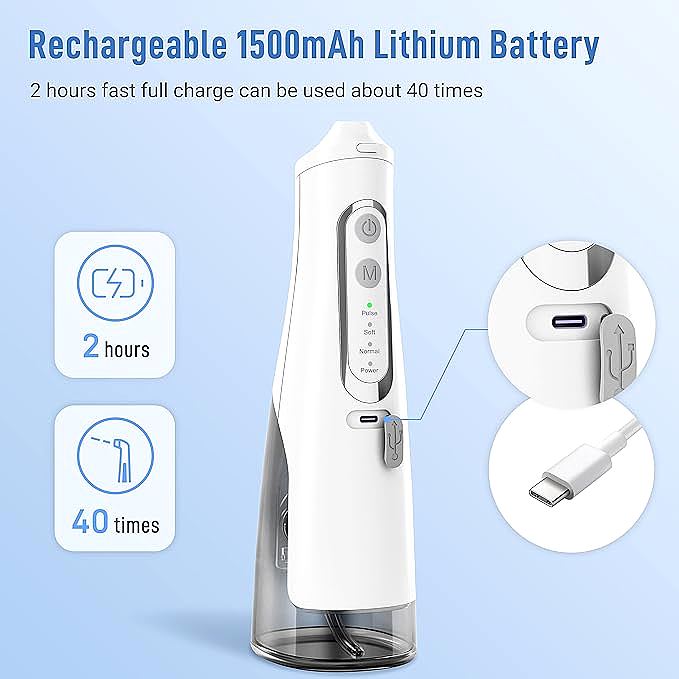
However, longevity requires protocol. While the device is sealed, the Type-C charging port is a critical ingress point. * Maintenance Insight: Most failures in waterproof electronics are due to charging while wet or residue buildup on the seals. Ensuring the silicone cover is tightly secured during use and that the port is bone-dry before charging is the single most important step to protect the 1500 mAh battery and internal circuitry. Treat it like a piece of dive equipment: rinse, dry, and inspect.
Conclusion: Empowering the Patient
The shift to powered interdental cleaning is more than a convenience; it is an upgrade in health outcomes. By utilizing a tool like the INFIWARDEN Cordless Water Flosser, users are not just "picking teeth"; they are deploying targeted hydrodynamics to manage the oral microbiome. With its extended tank capacity, versatile pressure range, and travel-ready design, it removes the barriers between you and optimal gingival health. It puts the power of the dental clinic in your carry-on bag.
INFIWARDEN Cordless Water Flosser
Related Essays

Beyond Brushing: The Hydrodynamics of Pulsation and Biofilm Management
Hydro-Kinetic Precision: Mastering Oral Biofilm Control with Visualized Pressure

The Physics of Effervescence: Nano-Bubbles, Cavitation, and the Power of Two-Phase Flow in Oral Hygiene
Hydrodynamic Resonance: The Physics of Non-Contact Cleaning and the Fluid Dynamics of Sonic Dentistry

Beyond the Bristles: The Fluid Dynamics of Sonic Oral Hygiene and the Physics of Biofilm Disruption
Beyond Mechanical Scrubbing: The Fluid Dynamics of Biofilm Disruption and the Science of Micro-Bubble Cavitation
Fluid Dynamics in Orthodontics: Mastering Non-Contact Cleaning with Precision Irrigation

Hydrodynamic Hygiene: Mastering Oral Biofilm Control with Portable Precision

The Biofilm Breaker: How Sonic Cavitation and Hydrodynamics Redefine Oral Health
