The Physics of a Flawless Clean: How 40,000 VPM Sonic Toothbrushes Actually Work
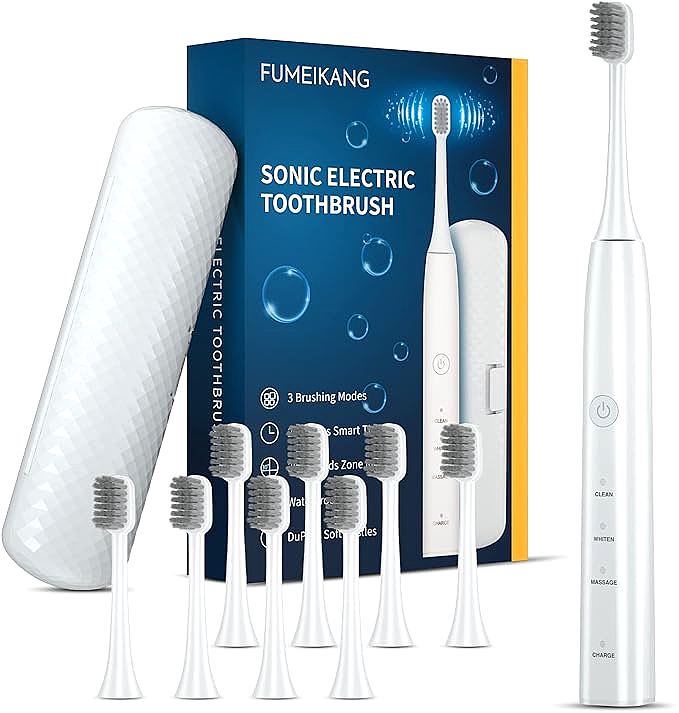
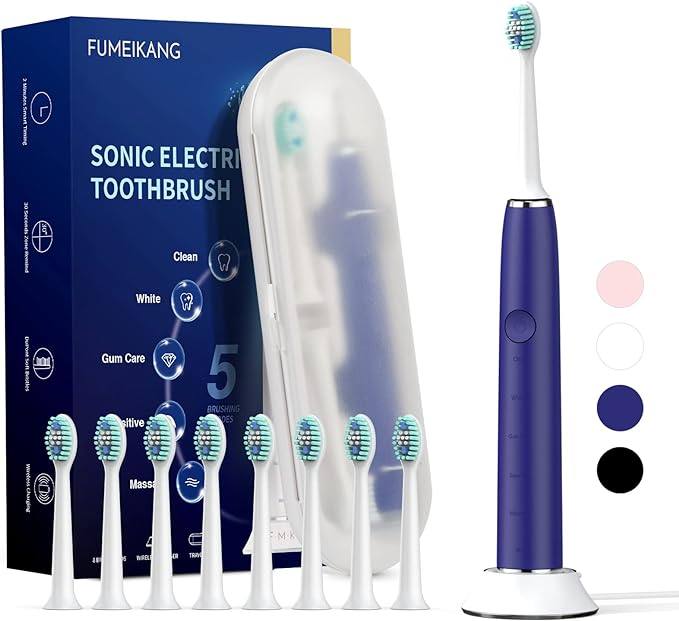
FUMEIKANG F Series-FS14 Sonic Electric Toothbrush
There's a frustrating paradox in modern oral hygiene. You can be diligent, brushing for the prescribed two minutes, twice a day, using perfect technique. Yet, at your next dental check-up, you’re still met with the familiar scraping sound as the hygienist tackles the plaque your best efforts missed. This isn't a failure of effort; it's a failure of technology. The problem is that we’ve been bringing a tool of brute force—the traditional toothbrush—to a microscopic, highly sophisticated fight. The future of a truly flawless clean doesn't lie in scrubbing harder. It lies in smarter science.
This is a deep dive into the physics, engineering, and user strategy behind modern high-frequency sonic toothbrushes. We're moving beyond marketing claims to deconstruct how these devices represent a fundamental paradigm shift in how we clean our teeth, turning invisible forces into tangible results.
The Real Enemy: Why Brute Force Brushing Fails
To appreciate the solution, we must first respect the problem. Dental plaque is not simply a layer of food debris. It is a biofilm—a complex, sticky, and resilient city of bacteria that fortifies itself with a protective slime matrix. This microscopic fortress adheres to tooth enamel with incredible tenacity, and its residents produce acids that are the primary culprits behind cavities and gum disease. A manual toothbrush, and even many oscillating electric models, operate on a single principle: mechanical abrasion. You are physically scraping this biofilm from a surface.
While this approach can be effective on the smooth, easily accessible plains of your front teeth, it has inherent physical limitations. It struggles to effectively reach into the tight valleys between teeth and the crucial area just beneath the gumline. You can scrub with all the vigor in the world, but your bristles are often too large and their motion too simplistic to disrupt the enemy in its most fortified strongholds. So, if brute force reaches a physical limit against this microscopic fortress, the only way forward is to change the rules of engagement. Instead of a battering ram, what if you could use a targeted shockwave? This is where the physics of sound enters the conversation.
The Sonic Paradigm Shift: Cleaning with Invisible Forces
The term "sonic" is more than a brand name; it's a scientific designation. It refers to a toothbrush that vibrates at a speed within the range of human hearing (20-20,000 Hz). When translated to brush strokes, this results in tens of thousands of movements per minute. This incredible speed does something magical: it transforms the mixture of water, toothpaste, and saliva in your mouth into a dynamic, supercharged cleaning medium. This process is driven by two powerful, interconnected physical phenomena confirmed by outlets like the Journal of Dental Research: Cavitation and Acoustic Microstreaming.
Imagine the head of the toothbrush as a high-frequency agitator. As it vibrates, it creates intense pressure waves in the surrounding fluid. This causes the formation and instantaneous collapse of millions of microscopic bubbles—a process called Cavitation. Each time one of these tiny vacuum bubbles implodes, it releases a significant burst of energy, creating a shockwave that is powerful enough to rupture bacterial cell walls and blast plaque off the tooth surface, often without the bristle ever making direct contact.
Simultaneously, the intense vibration generates a powerful current in the fluid, known as Acoustic Microstreaming. This creates a turbulent flow that surges deep into areas where bristles cannot go—reaching up to several millimeters beyond the tips of the bristles. In essence, you are creating a microscopic, pulsating pressure washer inside your mouth, which flushes out plaque and bacteria from between teeth and below the gumline. This is the fundamental difference: you are no longer just scrubbing your teeth; you are creating an energized fluid environment that actively cleans them on a microscopic level.
Anatomy of a Modern Sonic Instrument: A Case Study
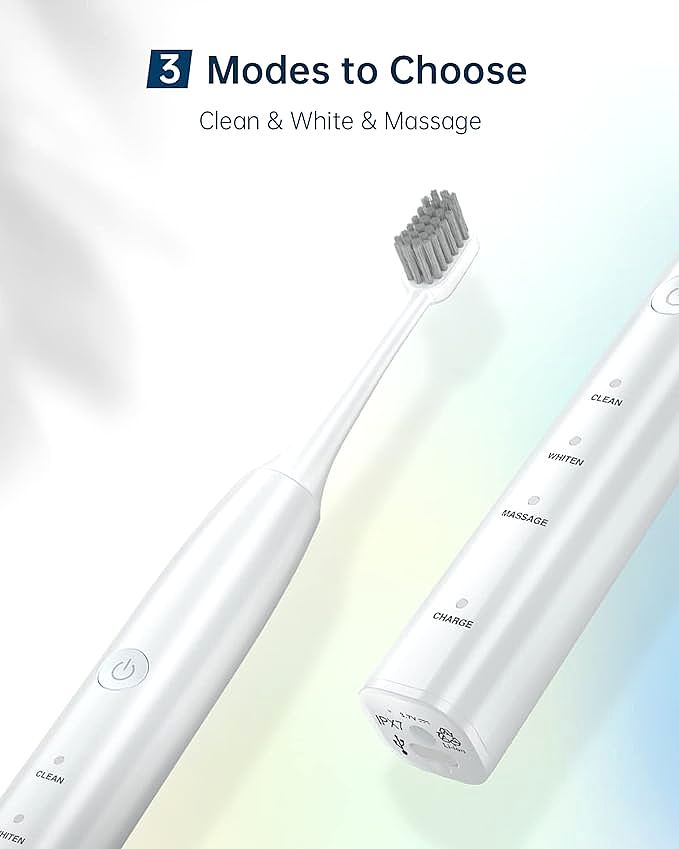
This science of invisible forces is compelling in theory, but how is it engineered into a device you hold in your hand every morning? To understand this, let's place a modern sonic toothbrush, like the FUMEIKANG F Series-FS14, under the microscope as a practical example of these principles in action.
The Heart - The 40,000 VPM Motor
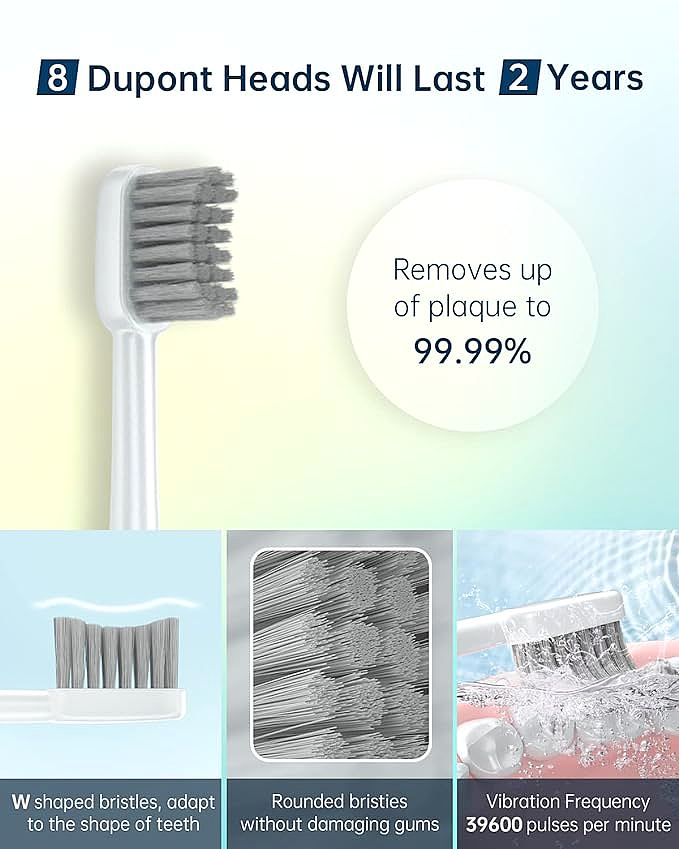
The core of any sonic toothbrush is its motor. The FS14 is equipped with a magnetic levitation motor capable of producing 40,000 vibrations per minute. This figure isn't arbitrary; it sits squarely in the optimal range to generate vigorous fluid dynamics. It is the engine that drives both the cavitation effect and the acoustic microstreaming, ensuring the cleaning power extends far beyond the physical reach of the bristles. It's the difference between a gentle breeze and a focused jet of air.
The Fingertips - The DuPont Brush Head
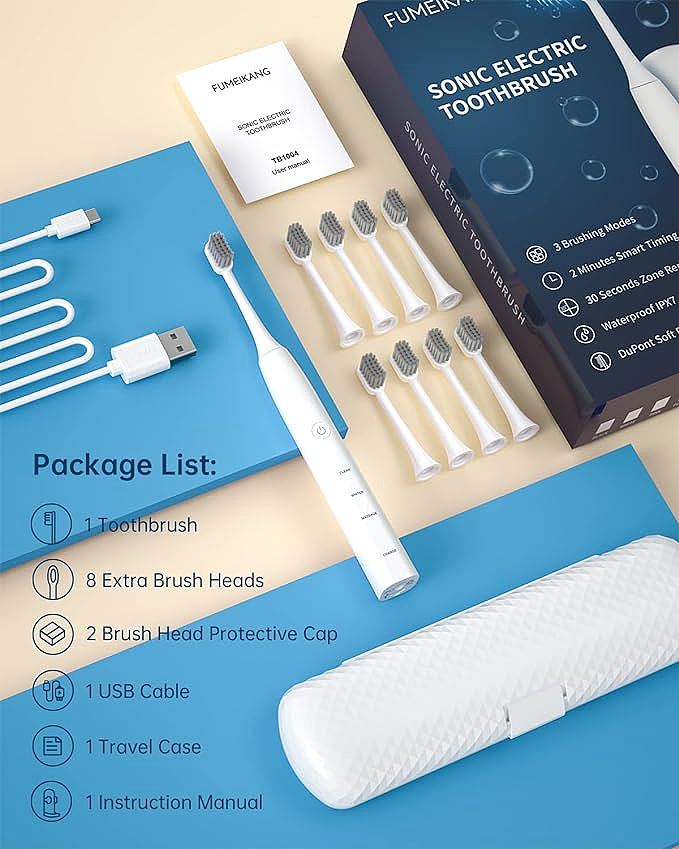
A powerful motor is useless without an effective delivery system. The FS14 utilizes eight brush heads engineered with DuPont™ Tynex® nylon filaments, a material renowned in the dental industry for its durability, excellent bend recovery, and low water absorption, which helps maintain hygiene. The bristles are arranged in a "W" shape, a specific topographical design intended to hug the contours of the teeth. This ensures that as the motor transfers its vibrational energy, the maximum amount is delivered efficiently to the tooth surface, creating the ideal conditions for the fluid dynamics to take over. Rounded bristle tips further ensure this powerful action is gentle on enamel and gum tissue.
The Ecosystem of an Effortless Routine
A superior clean is not just about a single moment of powerful action; it's about the consistent application of correct habits. The best technology is designed to make these habits effortless.
The Brain - The Smart Timer
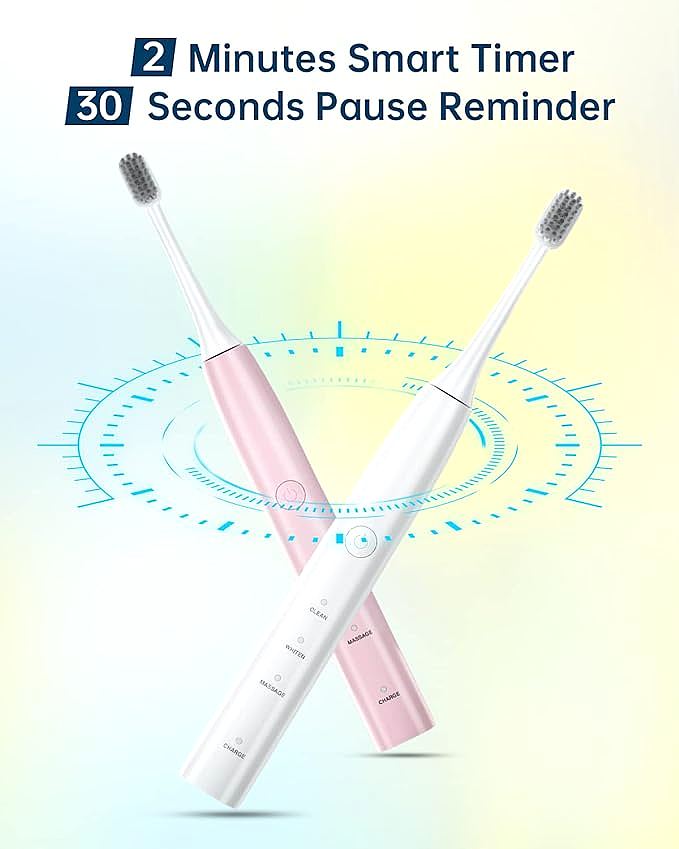
Dentists almost universally recommend the "Modified Bass Technique," which involves brushing for a full two minutes, focusing on each quadrant of the mouth. The FS14 incorporates a built-in 2-minute timer with a 30-second interval pacer. This is not a gimmick; it is a piece of behavioral design. The brief pause every 30 seconds is a cognitive cue, prompting you to move to the next section of your mouth. It removes the guesswork and ensures a consistent, dentist-approved clean, every single time.
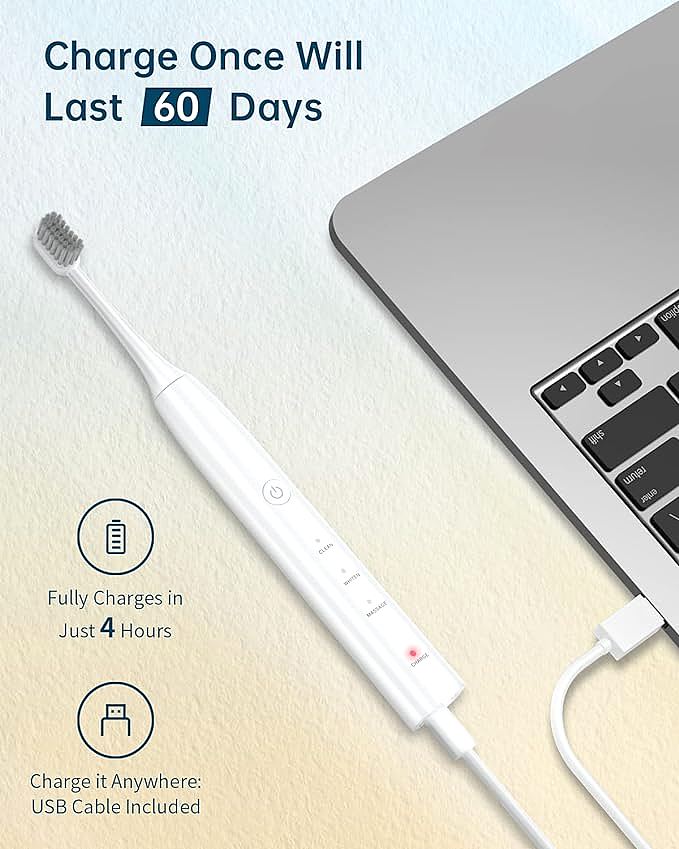
The Stamina - The 60-Day Battery
User friction is the enemy of habit. A dead battery is a common reason for skipping a brushing session or reverting to a manual brush. The FS14's lithium-ion battery is engineered for an exceptional 60 days of use on a single 4-hour charge. This translates directly into user freedom—the freedom to travel for weeks without a charger, the freedom from countertop clutter, and the freedom from the low-level anxiety of managing yet another device's battery life. This is all facilitated by a modern, convenient Type-C charging port.
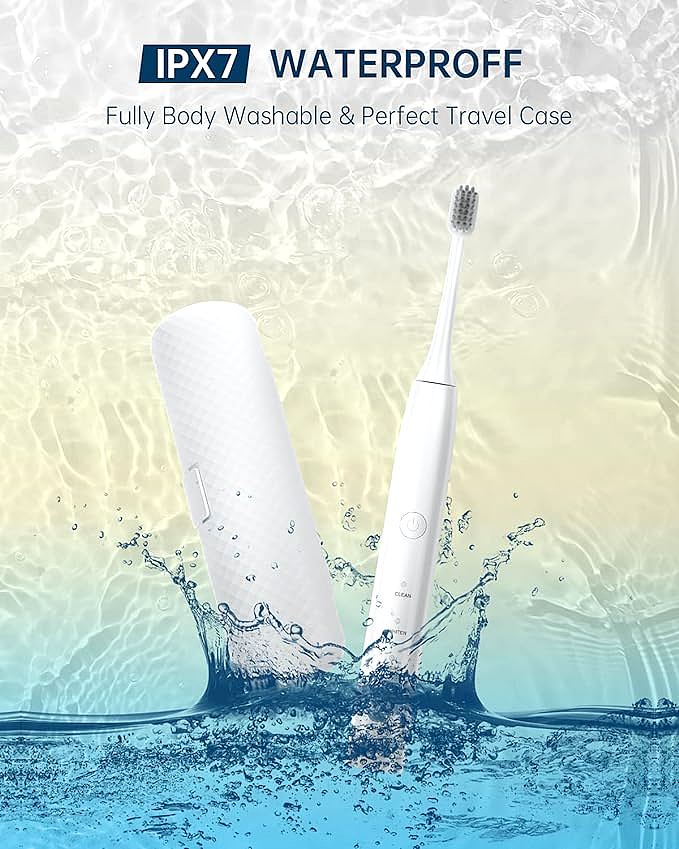
The Armor - IPX7 Waterproofing
A toothbrush lives in a wet environment. An IPX7 waterproof rating means the device can be fully submerged in up to one meter of water for 30 minutes. In practical terms, this means you can use it in the shower and rinse it under the tap without a second thought, ensuring both convenience and long-term durability against accidental water damage.
A User's Guide to Sonic Power: Understanding the Nuances
But a powerful engine and a sophisticated design are only half the equation. Owning a precision instrument is one thing; becoming a skilled operator is another. So, how do you wield this power for maximum benefit without causing harm?
Nuance 1: Vibration Speed vs. Cleaning Efficacy
There is a common misconception that more power or higher speed is always better. This is not necessarily true. The goal of a sonic toothbrush is not to aggressively scrub the teeth into submission, but to create optimal fluid dynamics. An excessively powerful or improperly controlled vibration could be uncomfortable or even harmful. The 40,000 VPM frequency is effective because it hits a sweet spot, generating robust cleaning forces in the fluid while the well-designed, soft bristles remain gentle on the gums. The cleaning comes from the water, not the impact.
Nuance 2: Technique Still Matters
A sonic toothbrush changes how you brush. You must resist the instinct to scrub back and forth as you would with a manual brush. The correct technique is to simply glide the brush head slowly across your teeth, at a 45-degree angle to the gumline, and let the high-frequency vibrations and fluid dynamics do the work. Spend a few seconds on each tooth and let the 30-second pacer guide your journey through each quadrant. The machine provides the power; you provide the guidance.
Conclusion
The journey from a manual toothbrush to a high-frequency sonic instrument is more than just an upgrade; it is a graduation in thinking. It’s the choice to move from a simple lever to a complex machine, from applying brute force to mastering elegant physics. Devices like the FUMEIKANG FS14 are compelling not just for their impressive specifications, but because they embody this shift. They integrate a powerful physical cleaning mechanism with a thoughtful ecosystem of features designed to build and maintain effortless, effective oral health habits.
By understanding the science at play, you are no longer just a consumer choosing a product. You are an informed operator selecting the right instrument for a precise and important job, equipped with the knowledge to achieve a level of clean that scrubbing alone could never reach.
FUMEIKANG F Series-FS14 Sonic Electric Toothbrush
Related Essays

The Unseen Force: How Sonic Toothbrush Technology Redefines a Deeper Clean

The Unseen Force: How Sonic Toothbrush Technology Redefines a Deeper Clean
The Unseen Force: How Sonic Toothbrushes Like the FUMEIKANG FS13 Revolutionize Your Oral Health
The Science of a Deeper Clean: An In-Depth Look at the Burst Sonic Toothbrush
The Unseen Force: How Sonic Toothbrushes Use Fluid Dynamics to Clean Where Bristles Can't
The Unseen Force: How Sonic Toothbrushes Wage a Microscopic War on Plaque
The Unseen Force in Your Toothbrush: Deconstructing the Science of Sonic Cleaning
The Physics of a Flawless Smile: How 40,000 VPM Sonic Toothbrushes Really Work

Big Mouth Electric Toothbrush Rotimi Royalty Edition: Elevate Your Oral Care with Smart Technology
