The Art of Essentialism: Why Tech-Heavy Toothbrushes May Not Be the Answer to Oral Health
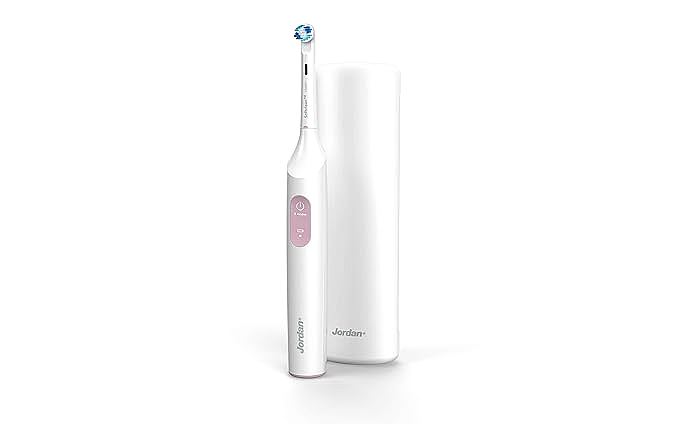
Jordan Clean Smile Electric Toothbrush
In an era where even our refrigerators have Wi-Fi, the humble toothbrush has not escaped the wave of digitization. A stroll down the dental care aisle reveals devices boasting Bluetooth connectivity, AI-powered coaching apps, and touchscreens. While technological advancement is generally positive, one must ask: does adding complexity necessarily equate to better clinical outcomes?
The core of oral hygiene is not data collection; it is the consistent, mechanical disruption of biofilm. There is a growing argument among hygiene experts for a return to essentialism—prioritizing tools that master the fundamentals without introducing cognitive clutter. This philosophy, often embodied in Scandinavian design principles, suggests that the most effective tool is the one that disappears into your routine, allowing you to focus on the act of cleaning itself.
The Mechanics of Oscillation: Efficiency Over Effort
To understand why electric toothbrushes are generally recommended over manual ones, we must look at the fluid dynamics and mechanics of cleaning. Manual brushing relies heavily on the user's dexterity—specifically the "Bass Method," which involves vibrating the bristles at a 45-degree angle to the gumline. It is a technique that is difficult to master and even harder to maintain when tired.
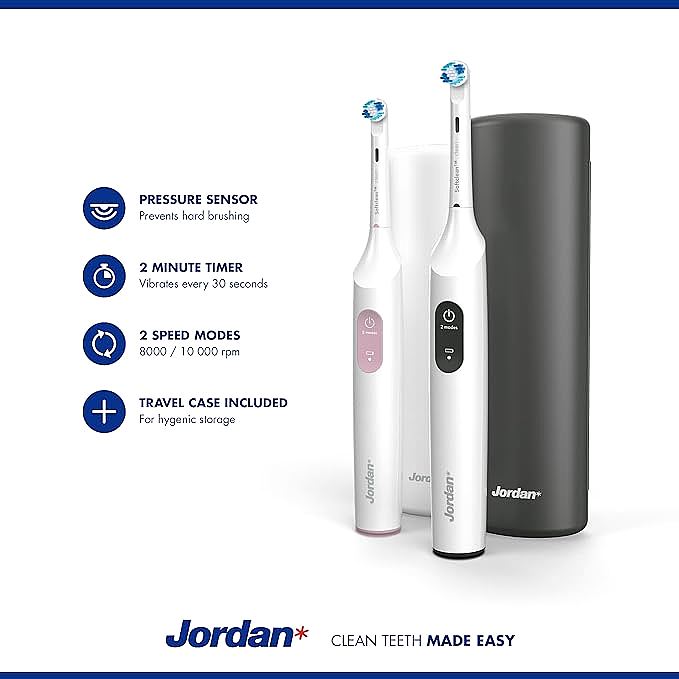
Devices utilizing oscillating technology, such as the Jordan Clean Smile, solve this bio-mechanical challenge. By rotating the brush head at high speeds—often thousands of movements per minute—the device performs the micro-movements for you. This is not merely about convenience; it is about standardization.
The oscillating action mechanically shears the sticky polysaccharide matrix that binds bacteria to the tooth surface. Unlike manual scrubbing, which can miss irregularities in the tooth anatomy, a small, round oscillating head is designed to cup each tooth individually. This "tooth-by-tooth" approach ensures that the interproximal areas (the spaces between teeth) and the gum margin receive consistent agitation, regardless of the user's manual dexterity.
The One "Smart" Feature You Actually Need: Force Mitigation
If we strip away the apps and the gamification, is there any digital feature that is indispensable? The answer is yes: the Pressure Sensor.
Gingival recession (receding gums) and cervical abrasion are frequently caused by "traumatic brushing"—the misconception that scrubbing harder yields cleaner teeth. In reality, plaque is soft and easily removed; it is only when it mineralizes into tartar that it becomes hard. Scrubbing enamel with excessive force is akin to sanding a mirror; over time, it causes irreversible damage.
A pressure sensor acts as a biofeedback loop. It serves as a critical safety net, alerting the user—often through a change in vibration or motor sound—when the force exceeds the safe threshold (typically around 150-200 grams).
A Note on Bristle Firmness: It is worth noting that some product specifications may list firmness as "Hard." In the context of modern dentistry, soft bristles are universally preferred for the vast majority of the population to protect the gingiva. If a device comes with a firmer head, or if the description refers to the handle's rigidity rather than the bristles, the role of the pressure sensor becomes even more paramount. It becomes the primary defense against abrasion. Users should always prioritize soft replacement heads where available to work in tandem with the sensor.
Design as a Driver of Consistency
Why does the look and feel of a toothbrush matter? Because habit formation relies on reducing friction. A device that requires pairing with a phone, updating firmware, or frequent charging adds "friction" to the twice-daily habit.
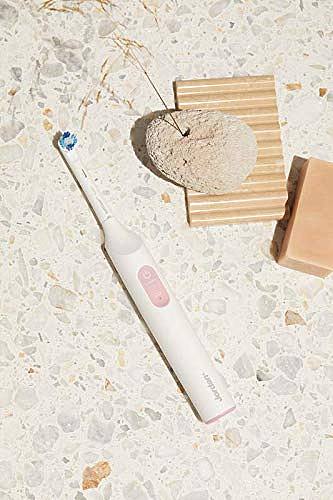
The Scandinavian design ethos—prioritizing functionality, simplicity, and clean lines—addresses this psychological aspect. A toothbrush should be intuitive: pick it up, press a button, and clean.
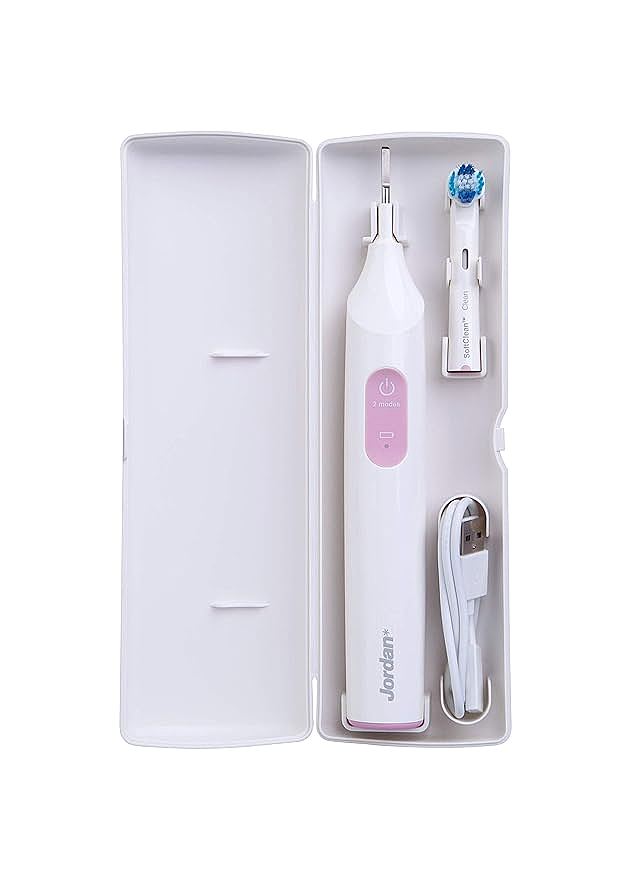
Battery life plays a surprisingly large role in this consistency. A device that requires a charging dock on the counter adds clutter and creates "charging anxiety." Modern efficient batteries that offer multi-week usage (such as the 3-week capacity found in the Jordan model) liberate the user from the wall outlet. This is particularly relevant for modern bathrooms lacking shaver sockets, or for travelers who prefer to leave bulky chargers at home.
Conclusion: The Sophistication of Simplicity
Advanced oral care does not require a degree in computer science. The goal is to remove plaque effectively without damaging the soft tissues of the mouth.
By choosing tools that focus on high-quality mechanical oscillation and robust safety sensors, while discarding superfluous digital distractions, users can achieve a professional level of cleanliness. The Jordan Clean Smile serves as a prime example of this philosophy in action—proving that sometimes, the smartest choice is the simplest one. Whether you are upgrading from a manual brush or downgrading from an over-complicated gadget, the focus should always remain on the fundamentals: consistent timing, correct technique, and safe pressure.