The Physics of Pulse: Engineering Deep Bass and Active Silence in the Monster Persona
Update on Jan. 13, 2026, 9:20 a.m.
In the auditory spectrum, bass is the foundation. It is the rhythmic pulse of modern music, the visceral thrum of a film score, and the frequency range that we feel as much as we hear. Yet, reproducing deep, accurate bass in a portable headphone is one of the most challenging tasks in audio engineering. It requires moving significant volumes of air within a confined space, all while battling the intrusion of external low-frequency noise.
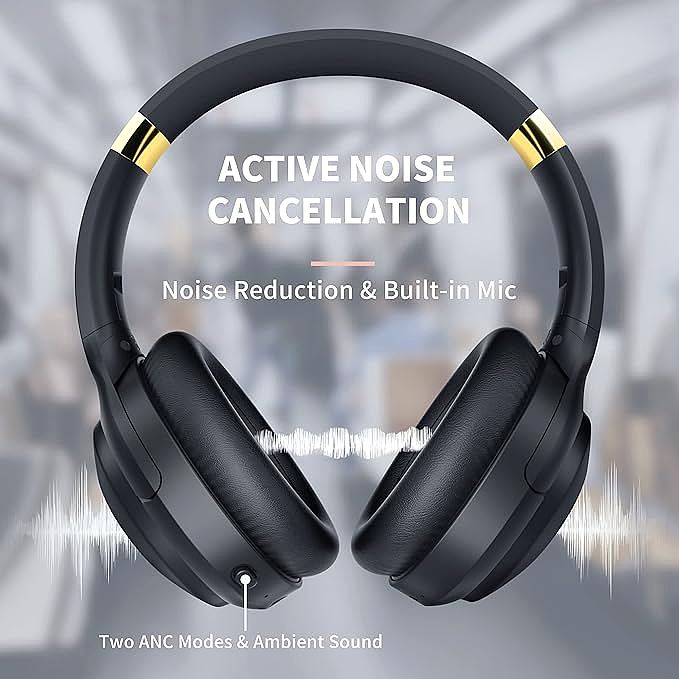
The Monster MH31902 Persona Noise Cancelling Wireless Headphones are designed with a specific philosophy: Bass First. Known for their “Pure Monster Sound,” these headphones prioritize the impact and depth of the low end. But this isn’t just about turning up the equalizer. It is about the physics of driver excursion, the aerodynamics of acoustic chambers, and the symbiotic relationship between Active Noise Cancellation (ANC) and bass perception. This article deconstructs the science of the low-end and how silence makes it louder.
The Aerodynamics of Deep Bass
To create a 40Hz tone (a low E on a bass guitar), a speaker driver must push and pull the air molecules in front of it 40 times per second. This is a mechanical event.
* Excursion: The distance the diaphragm travels forward and backward is called excursion. To maintain the same volume (Sound Pressure Level, SPL) as a high-frequency sound, a low-frequency sound requires exponentially more air displacement.
$$SPL \propto Acceleration \times Area$$
Since acceleration is lower at low frequencies, the driver must move further (higher amplitude) to compensate.
* The Monster Driver: The Persona likely utilizes high-excursion dynamic drivers with a flexible surround and a powerful magnetic motor. This allows the diaphragm to travel longer distances without distortion, moving the necessary volume of air to create that physical “punch.”
The Chamber and Back-Wave
Every time the driver moves forward to push air into your ear, it pulls air from behind it. This creates a “back-wave” inside the ear cup. If not managed, this back-wave can bounce off the housing and hit the diaphragm from behind, canceling out the sound (destructive interference). * Damping and Venting: Monster engineers must tune the internal volume of the ear cup. By using specific damping materials and calculating the size of bass reflex vents, they control the back-wave. A properly tuned vent allows the back-pressure to escape at specific frequencies, reinforcing the bass response rather than canceling it. This is the difference between “boomy” bass (uncontrolled resonance) and “deep” bass (tuned resonance).
Active Noise Cancellation: The Canvas for Bass
Bass frequencies are notoriously difficult to hear in noisy environments. The “masking effect” occurs when external low-frequency noise (like a bus engine or airplane roar) occupies the same frequency band as the music’s bass line. The brain struggles to separate them.
Usually, the user compensates by turning up the volume, which risks hearing damage.
Active Noise Cancellation (ANC) solves this physics problem.
The Low-Frequency Filter
As we’ve explored in previous articles, ANC works by generating an anti-wave. * Targeting the Drone: The Persona’s ANC system is specifically tuned to target low-frequency, steady-state noise (20Hz - 500Hz). By cancelling out the engine drone, it “clears the floor” of the audio spectrum. * The Psychoacoustic Benefit: With the background noise gone, the bass in the music no longer has to compete. It pops. The user perceives the bass as deeper and richer, not because the driver is working harder, but because the interference is gone. This synergy between ANC and bass tuning is the hallmark of the “Persona” sound signature.

Hi-Fi Audio: Beyond the Bass
While bass is the anchor, “Hi-Fi” (High Fidelity) implies accuracy across the spectrum. A headphone that only does bass is a subwoofer, not a speaker.
The Monster Persona aims for a V-Shaped Sound Signature. This is a common audiophile term where the Bass and Treble are slightly elevated relative to the Midrange.
* The Physics of Excitement: Human hearing is less sensitive to bass and treble at lower volumes (Fletcher-Munson curves). A V-shaped tuning compensates for this, making the music sound “exciting” and “dynamic” even at moderate listening levels.
* Diaphragm Stiffness: To reproduce “crisp highs” alongside deep bass, the driver diaphragm must be rigid enough not to flex when moving rapidly for treble frequencies, yet light enough to stop instantly. Materials like bio-cellulose or polymer composites are often used to achieve this balance of stiffness and mass.
The Signal Path: Wireless Fidelity
The bridge between the digital file and the analog wave is Bluetooth. * Compression and Codecs: Wireless audio involves compression. However, modern codecs (like AAC or aptX, though not specified, implied by “Hi-Fi”) are efficient enough to transmit the full frequency range required for deep bass and clear highs. * The DAC/Amp Stage: Inside the headphone, a tiny Digital-to-Analog Converter (DAC) and Amplifier drive the speakers. For bass-heavy headphones, this amp must have high current capability to control the large movements of the woofer. The “deep bass” claim implies a robust internal amplifier design capable of delivering instantaneous power without clipping.
Conclusion: The Rhythm Machine
The Monster MH31902 Persona is engineered for rhythm. It understands that for many listeners, music is physical. It uses the physics of High-Excursion Drivers to move air, the science of Acoustic Venting to tune resonance, and the mathematics of Active Noise Cancellation to create a silent stage for the performance.
It is a device that celebrates the low end, proving that with the right engineering, you can take the club experience with you, creating a private, pulsed sanctuary in the middle of a noisy world.