Ergonomics of Isolation: The Material Science of Closed-Back Headphones
Update on Jan. 13, 2026, 9:19 a.m.
While Active Noise Cancellation (ANC) gets all the headlines for its “magical” silence, it is biologically and physically impossible without a partner: Passive Noise Isolation. Before a microchip can invert a sound wave, the headphone’s chassis must physically block it.
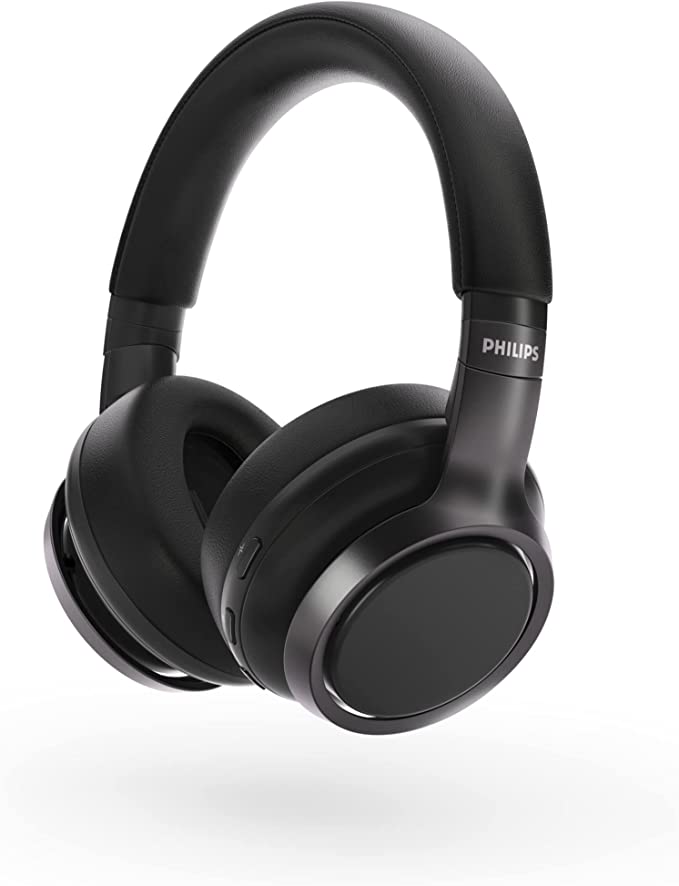
The xmwm Wireless Headphone relies heavily on this fundamental layer of defense. Its Over-Ear (Circumaural) design and PU Leather materials are not just fashion choices; they are acoustic components. This article explores the physics of the acoustic seal, the thermodynamics of wearable materials, and the mechanics of foldable structures.
The Physics of the Seal: Why “Over-Ear” Matters
Sound behaves like water; it finds the path of least resistance. A tiny gap between the headphone pad and the jawline acts like a leak in a boat.
* High-Frequency Blockade: As discussed in the previous article, ANC struggles with high frequencies (voices, silverware clinking). These waves carry less energy and are easily reflected by physical barriers. The hard plastic shell of the xmwm acts as a Sound Mirror, reflecting high-frequency noise away from the ear.
* The Cushion’s Role: The “ultra-soft ear cushions” serve a critical engineering function: Compliance. The human head is irregular—glasses, hair, jawbones create uneven surfaces. The foam inside the cushion must be compliant enough to deform around these obstacles to create a hermetic air seal.
* Bass Response: This seal is vital for bass. Low-frequency waves are long and lazy. If there is a leak, the pressure generated by the driver escapes, and the bass “rolls off” or disappears. The xmwm’s “deep, accurate bass response” is physically impossible without this tight pneumatic seal.
Material Science: PU Leather and Thermodynamics
The ear muffs are made of PU (Polyurethane) Leather. In the context of audio, PU leather has distinct advantages and disadvantages compared to real leather or velour.
* Acoustic Reflectivity: PU leather is non-porous. Unlike fabric, which lets air (and sound) pass through, PU leather traps air. This maximizes passive isolation, keeping outside noise out and music in. It creates a Closed System.
* Thermodynamics: The downside of a closed system is heat. The human ear regulates body temperature. A non-porous material traps metabolic heat and humidity.
* The Trade-off: Engineers choose PU leather for budget ANC headphones because it offers the best “Isolation-to-Cost” ratio. It mimics the sealing properties of high-end protein leather, ensuring the ANC microphones have a stable acoustic environment to work in, even if it runs warmer than open-back velour pads.
The Closed-Back Chamber: Resonance and Space
The xmwm is a Closed-Back headphone. The rear of the driver is sealed within the ear cup. * Acoustic Suspension: The air trapped behind the driver acts as a spring. As the driver moves back, it compresses this air. This “air spring” helps control the movement of the driver, allowing for tighter, more controlled bass transients compared to an open design where the driver flaps freely. * Privacy: In a library or office (“suitable for daily use”), closed-back designs prevent “sound leakage.” You can listen at high volumes without disturbing your neighbor. This is a social engineering feature as much as an audio one.
Mechanical Engineering: The Foldable Hinge
Portability adds a layer of mechanical complexity. The xmwm features a Foldable Design and Adjustable Length Hinge.
* Stress Points: A hinge introduces a potential failure point. It must withstand the torque of opening and closing thousands of times.
* Clamping Force: The metal band inside the adjustable hinge acts as a leaf spring. It provides the Clamping Force necessary to press the ear cups against the head.
* The Goldilocks Zone: Too loose, and the acoustic seal breaks (no bass, no ANC). Too tight, and it causes headaches (“squeezing the head”). The engineering challenge is to calibrate the spring constant ($k$) of the headband to maintain the seal without exceeding the pain threshold of the temporal region.
Conclusion: The Structural Foundation of Sound
The xmwm Wireless Headphone demonstrates that before software can enhance audio, hardware must secure it. Its Over-Ear form factor and PU Leather pads create the physical conditions necessary for silence and bass. Its Foldable mechanics balance portability with structural integrity.
It reminds us that in audio, biology and physics meet at the ear pad. A headphone is a wearable structure that must negotiate with the shape of the human body to deliver its payload of sound. Without the passive engineering of the seal, the active wizardry of the electronics would be lost to the wind.