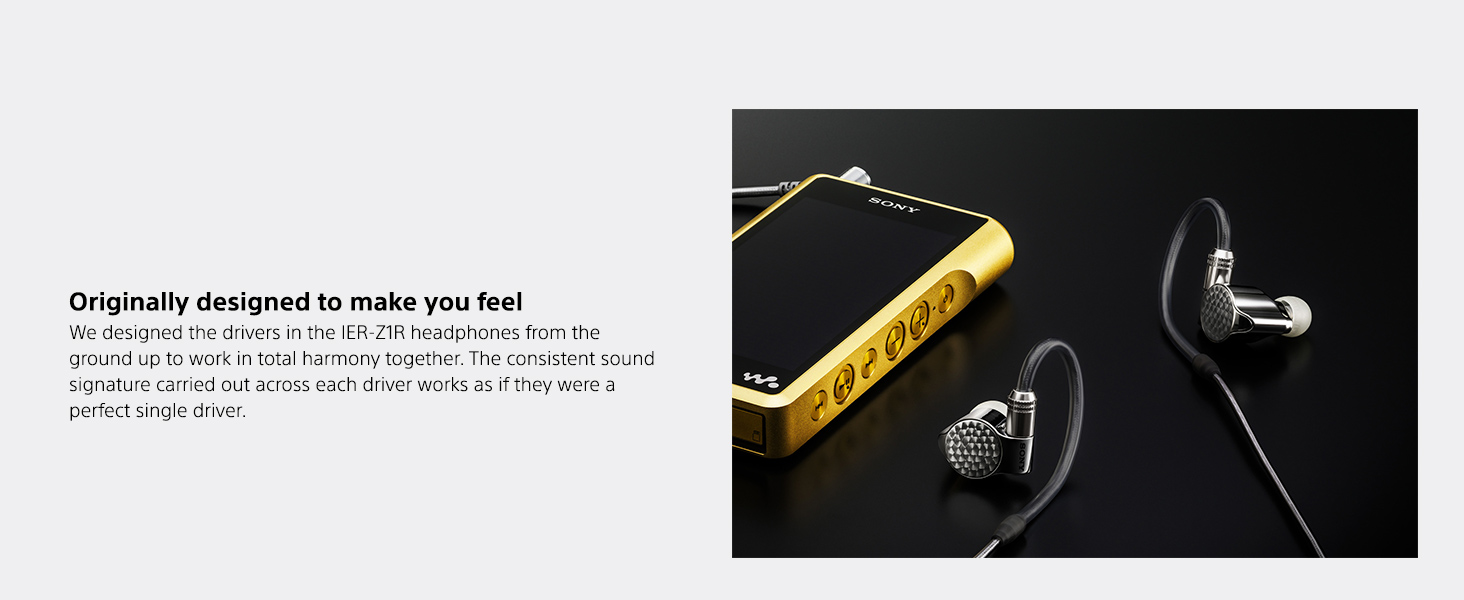
Metallurgy and Emotion: The Material Science of High-Fidelity Audio
Update on Jan. 13, 2026, 9:16 a.m.
In the realm of high-end audio, materials are not merely structural; they are acoustic components. The casing of a headphone does more than hold the drivers in place; it sings along with them. Or, in the ideal case, it refuses to sing at all. The battle against unwanted resonance—the subtle vibrations of the housing that color and muddy the sound—is fought in the periodic table of elements.
The Sony IER-Z1R Signature Series is a case study in extreme materials science. Its housing is not plastic, nor aluminum, nor even steel. It is forged from Zirconium Alloy, housing an inner chassis of Magnesium Alloy. This article explores the metallurgy of sound, explaining why specific metals are chosen for high-fidelity applications, the impact of mass and damping on sonic purity, and the intersection of industrial craft and acoustic engineering.
The Zirconium Shield: Hardness, Density, and Damping
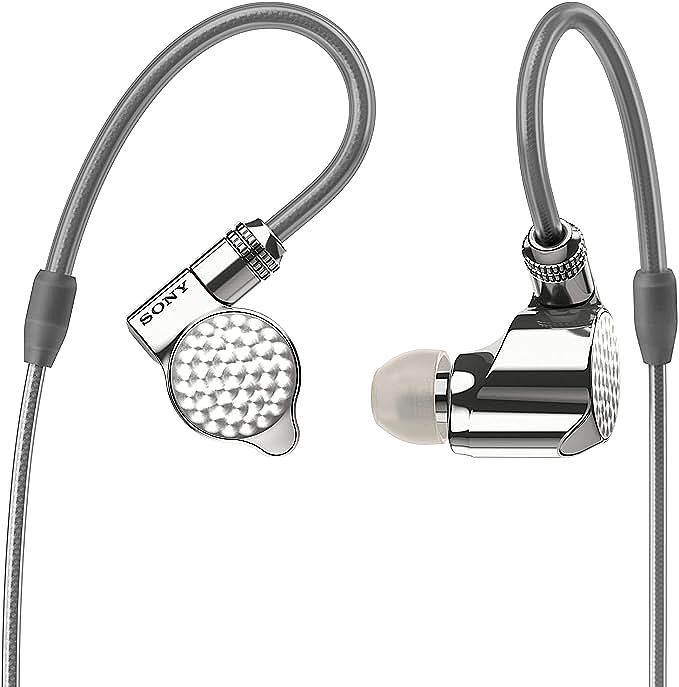
The outer shell of the IER-Z1R is crafted from Zirconium alloy. Zirconium is a transition metal, often used in nuclear reactors for its corrosion resistance and in high-end jewelry for its luster. But in audio, its value lies in its physical properties.
The Physics of Enclosure Resonance
Any container has a resonant frequency. When a speaker driver vibrates, it imparts energy to its enclosure. If the enclosure vibrates, it becomes a secondary, uncontrolled sound source. This introduces distortion.
To minimize this, engineers seek materials with high Stiffness (to push resonant frequencies above the audible range) and high Internal Damping (to dissipate vibrational energy as heat).
* Zirconium vs. Aluminum: Zirconium is significantly harder and denser than aluminum (commonly used in IEMs). Its hardness (HV) is roughly 3 times that of stainless steel.
* Acoustic Inertia: This high mass and stiffness create an acoustically “inert” housing. It acts as an unshakeable anchor for the drivers. Because the housing refuses to vibrate, more of the driver’s energy is converted into sound waves moving towards the ear, and less is lost to shaking the shell. This results in cleaner transients and a “blacker” background silence.
The Perlage Finish: Functional Beauty
The “Perlage” (fish-scale) pattern on the faceplate is not just decoration. While visually striking, surface texturing can also play a minor role in breaking up standing waves on the surface (though its primary function here is undoubtedly aesthetic luxury). It reflects the “Crafted in Japan” ethos, treating the headphone as a piece of fine jewelry meant to endure for decades.
The Magnesium Core: Structural Rigidity
Inside the Zirconium shell lies an inner housing made of Magnesium Alloy. Magnesium is prized for its high strength-to-weight ratio and excellent damping capacity. * Vibration Absorption: Magnesium has a unique hexagonal lattice structure that absorbs vibrational energy exceptionally well. By mounting the three drivers (12mm DD, BA, 5mm DD) into this magnesium chassis, Sony ensures that the vibration of the powerful 12mm woofer does not physically shake the delicate Balanced Armature driver. * Isolation: This mechanical isolation is crucial for clarity. If the woofer shakes the tweeter, the high frequencies become modulated (Doppler distortion). The magnesium core acts as a stable foundation, decoupling the drivers from each other physically while aligning them acoustically.
The Signal Path: Silver-Coated Oxygen-Free Copper
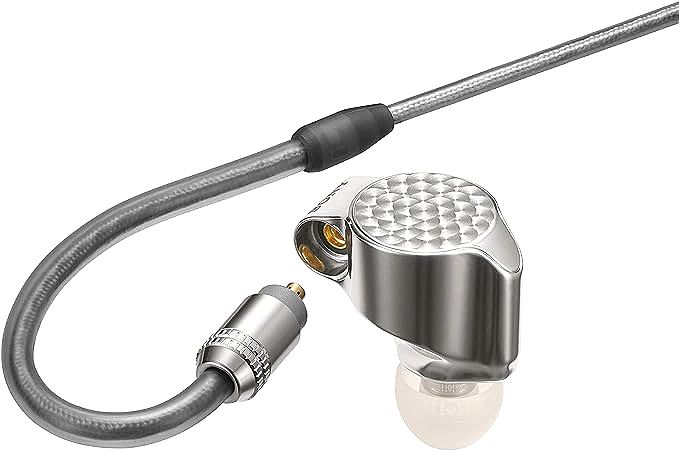
Material science extends to the wires that carry the signal. The IER-Z1R includes cables made from Silver-Coated Oxygen-Free Copper (OFC). * Skin Effect: High-frequency electrical signals tend to travel along the surface of a conductor (the “skin effect”). Silver is the most conductive metal known, superior even to copper. By plating the copper core with silver, the cable minimizes resistance for high-frequency signals, theoretically preserving the “sparkle” and “air” of the music. * Silk Insulator: The cable uses natural silk braid as an insulator and damper. Silk absorbs micro-vibrations in the cable (triboelectric noise) and reduces “microphonics”—the thumping sound heard when a cable rubs against clothing. This is a nod to traditional Japanese audio craftsmanship, where natural materials are often valued for their neutral sonic character.
Balanced Connection: The 4.4mm Standard
The inclusion of a 4.4mm Balanced Cable (Pentaconn) is a significant statement. As discussed in previous articles, balanced connections offer superior noise rejection (Common Mode Rejection) and channel separation compared to single-ended 3.5mm connections. * Crosstalk Reduction: In a single-ended cable, the left and right channels share a ground wire. Heavy bass in the left channel can modulate the ground voltage, bleeding signal into the right channel (crosstalk). Balanced cables have separate grounds (or return paths) for each channel. This complete electrical isolation widens the Soundstage, a key strength noted in reviews of the IER-Z1R.
Crafted in Japan: The Human Element of Engineering
The label “Crafted in Japan” on the IER-Z1R implies a manufacturing philosophy known as Monozukuri—the art of making things. In the context of mass production, high-end audio remains a stronghold of hand-assembly.
* Driver Matching: Because of the complexity of the hybrid system, drivers must be carefully matched. Slight variations in the magnetic flux of the dynamic drivers or the tension of the BA reeds can cause channel imbalance.
* Assembly Precision: Fitting the magnesium core into the zirconium shell, sealing the acoustic tubes, and ensuring the MMCX connectors are robust requires a level of tolerance control that is difficult to automate.
This human oversight ensures that the theoretical perfection of the engineering design is realized in the physical product. It justifies the investment not just in materials, but in the expertise required to assemble them.
Conclusion: The Weight of Quality
Users often comment on the weight of the IER-Z1R. It is heavy. But in light of the material science involved, this weight is a feature, not a bug. It is the weight of non-resonant Zirconium; it is the mass required to silence the enclosure so the drivers can speak.
The Sony IER-Z1R is a testament to the idea that materials matter. By selecting metals for their acoustic properties rather than their cost or weight, and by refining the signal path with silver and silk, Sony has created a device where the physical form is completely subservient to the acoustic function. It is a marriage of metallurgy and emotion, built to last as long as the music itself.