Biometrics of Comfort: Weight Distribution and the Psychology of Wearables
Update on Jan. 13, 2026, 8:49 a.m.
The most successful wearable technology is the kind you forget you are wearing. This state of “disappearance” is not achieved by magic, but by rigorous biomechanical engineering. When an object is placed in the sensitive cartilage of the human ear, every fraction of a gram matters.
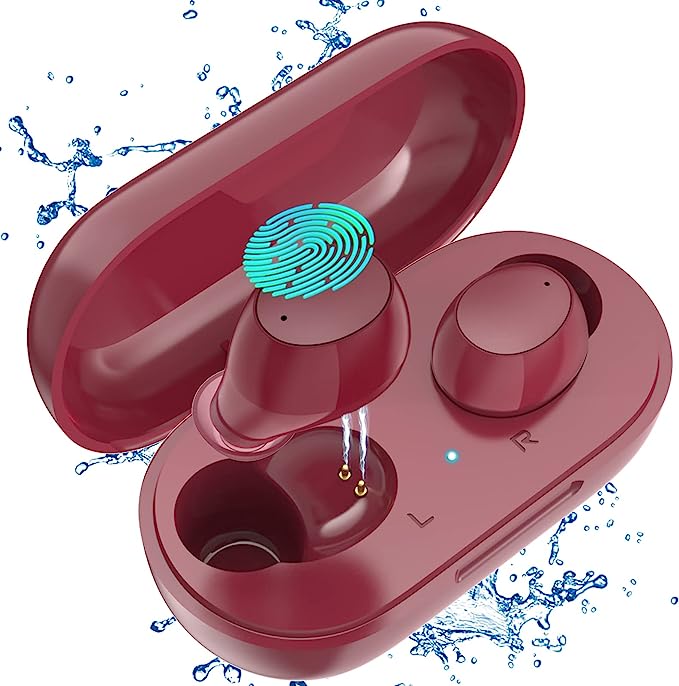
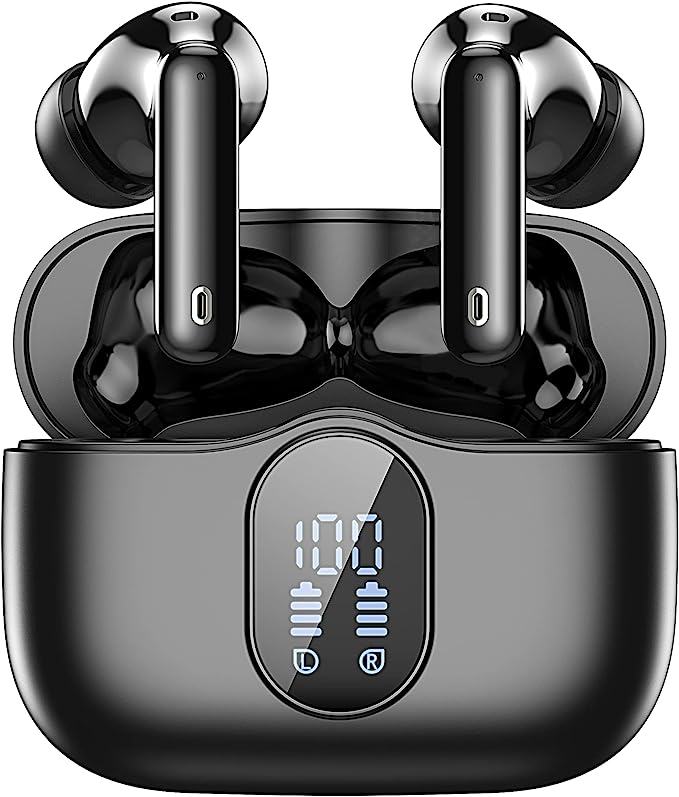
The Lanteso S21 Mini Wireless Earbuds, with their featherlight 4.1g construction, are an exercise in Subtractive Design. By removing mass, bulk, and cables, they aim to remove the friction between the user and the audio. This article explores the biology of the ear, the physics of weight distribution, and the psychology of invisible interfaces.
The Physics of 4.1 Grams: Thresholds of Sensation
Why is 4.1 grams significant? It approaches the Weber Fraction for tactile sensation in the ear. * The Tragus and Concha: The earbud rests primarily on the concha (the bowl) and is held in place by the tragus and antitragus. These cartilage structures are elastic but sensitive to continuous pressure. * Gravitational Torque: $T = F \times d$. Even a light object can cause fatigue if its center of gravity hangs far outside the ear (long moment arm). The S21’s “Mini” form factor keeps the mass center deeply recessed within the concha. This minimizes the torque on the ear canal, reducing the “lever effect” that causes soreness over time. * Inertial Stability: During running or exercise, a heavier earbud has more inertia. It wants to stay still while your head moves, leading to bouncing and dislodging. A 4.1g mass has so little inertia that it couples almost perfectly with the head’s movement, requiring less clamping force to stay secure. This creates the sensation of “weightlessness.”

The Psychology of the Invisible Interface: Smart Touch Control
When a device is too small to see while wearing, interaction becomes purely tactile and cognitive. The S21 employs Smart Touch Control.
This is a shift from explicit interaction (pressing a button) to implicit interaction (gestures).
Capacitive Sensing vs. Mechanical Buttons
- Mechanical: Requires force. Pushing a button on an earbud drives the nozzle deeper into the ear canal, causing discomfort (the “stethoscope effect”).
- Capacitive: Detects the electrical change from a fingertip. It requires zero force. This preserves the acoustic seal and comfort.
- The Learning Curve: Touch controls require the user to build a spatial map of the device in their mind. “Tap once,” “Double tap,” “Long press.” This relies on Proprioception (body awareness). The ergonomic design of the S21, likely with a slight contour or texture variance, guides the finger to the active zone, reducing the cognitive load of “finding the button.”
The Battery Case: A Psychophysical Anchor
While the earbuds disappear, the charging case remains the physical anchor. It provides 20 hours of extra battery, but its role is also psychological. * Object Permanence: In a world of tiny, easy-to-lose objects, the case is the “home.” Its magnetic click (mentioned in the product data) provides haptic confirmation that the earbuds are safe and charging. * Energy Assurance: The “Mini designed portable charging box” fits in a coin pocket. This portability ensures that the energy source is always within reach, alleviating the low-battery anxiety that accompanies wireless tech.

Conclusion: Technology that Gets Out of the Way
The Lanteso S21 represents a design philosophy where hardware aspires to be nothing. By reducing weight to the biological threshold of sensation and simplifying control to a touch, it removes the barriers between the listener and the audio.
It demonstrates that the future of wearables is not about adding more screens and buttons, but about refining the physics of the device until it seamlessly merges with the biology of the user.