Decoupling from the Stream: The Cognitive Science of Standalone Audio and Focus
Update on Jan. 13, 2026, 8:43 a.m.
In the early 21st century, the trend in consumer electronics was convergence. The smartphone swallowed the camera, the GPS, the calendar, and the MP3 player. We gained convenience, fitting the world into our pockets. But we lost something profound in the process: the ability to monotask. The device we use to listen to music is the same device that demands our attention with emails, news alerts, and social media likes. The act of listening, once a singular pursuit, became a background activity to a fragmented digital life.
There is a growing counter-movement, however, rooted in cognitive psychology and digital minimalism. It champions the return of Single-Purpose Devices—tools designed to do one thing well, without the cognitive overhead of multitasking. The iJoy IJHP21 Ultra Wireless Headphones, with their integrated Micro SD card capability, inadvertently champion this philosophy. By allowing users to physically decouple their audio experience from their communication device, they offer a pathway back to deep work, immersive leisure, and cognitive clarity. This article explores the neuroscience of distraction, the benefits of “offline” zones, and the enduring utility of standalone audio architecture.
The Neuroscience of Distraction: Why “Phone-Free” Matters
To understand the value of a headphone that doesn’t need a phone, we must understand how the brain processes attention. The human brain is not designed for multitasking; it is designed for serial processing. When we think we are multitasking, we are actually “task-switching” rapidly.
- Switching Costs: Every time a notification pings while you are listening to music or a podcast, your brain shifts focus. Even if you don’t look at the phone, the anticipation of the notification creates a “cognitive leak.” Research shows that it takes an average of 23 minutes to fully regain focus after an interruption.
- Dopamine Loops: Streaming apps are engineered to keep you engaged with the screen, not the audio. They suggest new tracks, show videos, and encourage scrolling. This triggers short-term dopamine loops that prevent the brain from entering deeper, more restorative states of alpha and theta wave activity associated with “Flow.”
The Standalone Advantage
The iJoy IJHP21 Ultra creates a physical barrier to this distraction economy. By loading a playlist onto a Micro SD card and leaving the phone in another room, the user creates a “No-Fly Zone” for interruptions. The headphones become a closed loop. There is no possibility of a call breaking the rhythm of a workout. There is no temptation to check Instagram between songs.
This “constraint” is actually a feature. It forces the brain to settle into the auditory experience. For students, writers, and athletes, this hardware-enforced isolation is a powerful tool for sustaining attention spans that have been eroded by the attention economy.
The Physics of Portable Focus: Foldability and Readiness
Cognitive focus is also a function of environment. We often need to change our physical location to change our mental state—moving from a noisy open office to a quiet corner, or from a chaotic home to a library. This necessitates Portability.
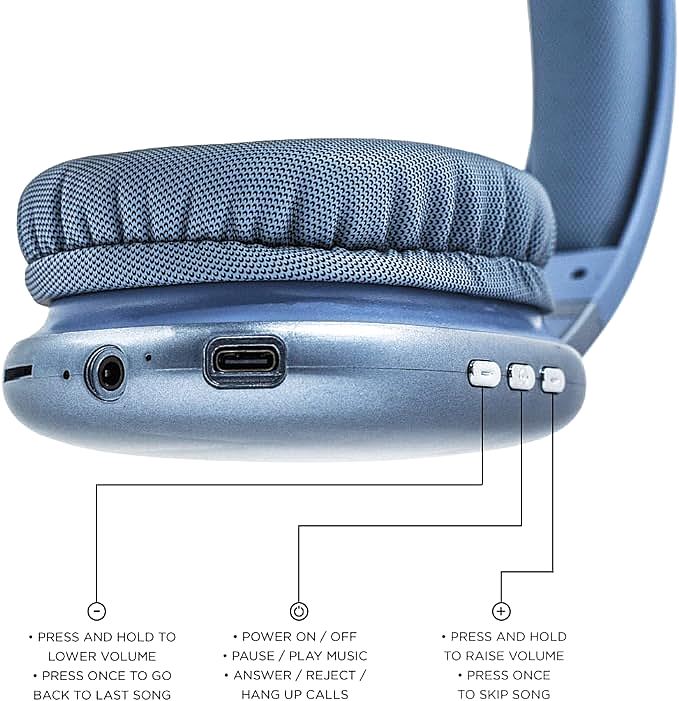
The foldable design of the iJoy Ultra is significant here. From a mechanical engineering standpoint, the hinges allow the ear cups to collapse into the headband arch, reducing the device’s volume by approximately 50%. * The “Go-Bag” Theory: In productivity systems, having a “Go-Bag” with essential tools reduces the friction of starting work. A pair of foldable headphones that fits easily into a bag ensures that the “zone of silence” is always portable. * Structural Integrity: A folding mechanism introduces moving parts, which are potential failure points. The design challenge is to create a hinge that provides enough friction to hold the shape but is durable enough to withstand thousands of cycles. The material choice for the hinge pin and the surrounding plastic chassis is critical for longevity.
When a user unfolds the headphones, it is a ritualistic act. It signals to the brain: “It is time to focus.” This tactile interaction prepares the neural pathways for deep work or relaxation.

The Acoustic Boundary: Passive Isolation as a Cognitive Wall
We previously discussed the physics of passive noise isolation. Now, let’s consider its psychological impact. The over-ear (circumaural) design of the iJoy Ultra creates an acoustic boundary between the self and the environment.
- Sensory Gating: The brain constantly filters sensory input. Loud environments force the brain to work harder to “gate” out irrelevant noise. This causes cognitive fatigue. By physically blocking 15-20 decibels of ambient noise through the premium cushion padding, the headphones lower the cognitive load.
- The Privacy Effect: Psychologically, wearing large, over-ear headphones acts as a “Do Not Disturb” sign to others. It is a social signal that establishes a boundary. This perceived privacy allows the user to feel psychologically safe and unobserved, which is a prerequisite for creative thinking and deep relaxation.
The “immersive” quality mentioned in the product description is not just about bass response; it’s about the removal of sensory competition. When the noise floor drops, the brain can allocate more resources to processing the audio content, leading to higher retention of audiobooks and deeper emotional connection to music.

The Endurance of Attention: Battery Life and Mental Stamina
Focus is a finite resource, much like battery life. The 10-hour playtime of the iJoy Ultra aligns well with the limits of human daily endurance. * Circadian Rhythms: A typical “deep work” or “flow” session lasts 90 minutes to 4 hours. A battery that supports multiple such sessions without anxiety is essential. * The Anxiety of Disconnection: Paradoxically, the fear of running out of battery can be a distraction. The presence of the Backup Audio Cable (Aux) provides a psychological safety net. Knowing that the tool will continue to work even if the power fails removes a layer of background anxiety.
This reliability transforms the headphones from a gadget that needs care into a tool that supports the user. It fades into the background, allowing the mental task to take center stage.
Conclusion: The Architecture of Mindful Listening
In an era of hyper-connectivity, the iJoy IJHP21 Ultra Wireless Headphones offer a surprisingly subversive value proposition. They are not just budget-friendly audio devices; they are architectural tools for the mind.
By enabling offline playback via SD card, they support digital minimalism. By providing passive isolation through ergonomic design, they reduce cognitive load. By offering portability through folding mechanics, they make focus mobile. In using them, we reclaim a small but significant piece of our cognitive sovereignty, proving that sometimes, the best way to move forward is to disconnect.