Acoustic Isolation and the Physiology of Focus: The Science of Passive Noise Cancellation in Sport
Update on Jan. 13, 2026, 8:32 a.m.
In the psychology of athletic performance, there is a mental state famously described by Mihaly Csikszentmihalyi as “Flow.” It is a state of complete immersion, where the outside world fades away, and the athlete becomes one with the activity. Achieving this state requires intense focus, free from distraction. In the crowded, cacophonous environments where modern exercise often takes place—busy gyms, traffic-laden streets, bustling parks—silence is a scarce resource.
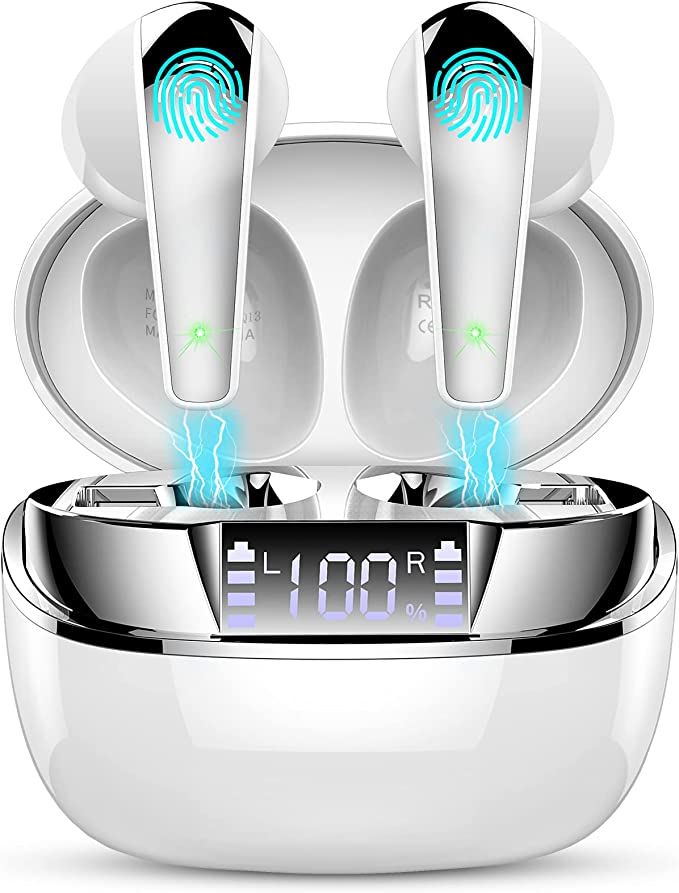
This is where the acoustic engineering of headphones plays a pivotal role, not just as delivery systems for music, but as tools for cognitive isolation. While Active Noise Cancellation (ANC) generates counter-waves to cancel noise electronically, there is a more fundamental, reliable, and physically grounded approach: Passive Noise Cancellation (PNC). Devices like the BOLOXA X-U8I Wireless Earbuds, with their customizable in-ear sealing mechanism, rely on this principle. This article explores the physics of sound isolation, the “room gain” effect of sealed ear canals, and how managing the acoustic environment can tangibly improve physical endurance and focus.
The Physics of Isolation: Mass, Seal, and Transmission Loss
Passive Noise Cancellation is essentially soundproofing on a miniature scale. It relies on physical barriers to prevent sound waves from entering the ear canal. Unlike ANC, which requires power and works best on low-frequency drones, PNC works across the entire frequency spectrum, particularly effectively against high-frequency, sudden noises (like clanking weights or chatter) that break concentration.
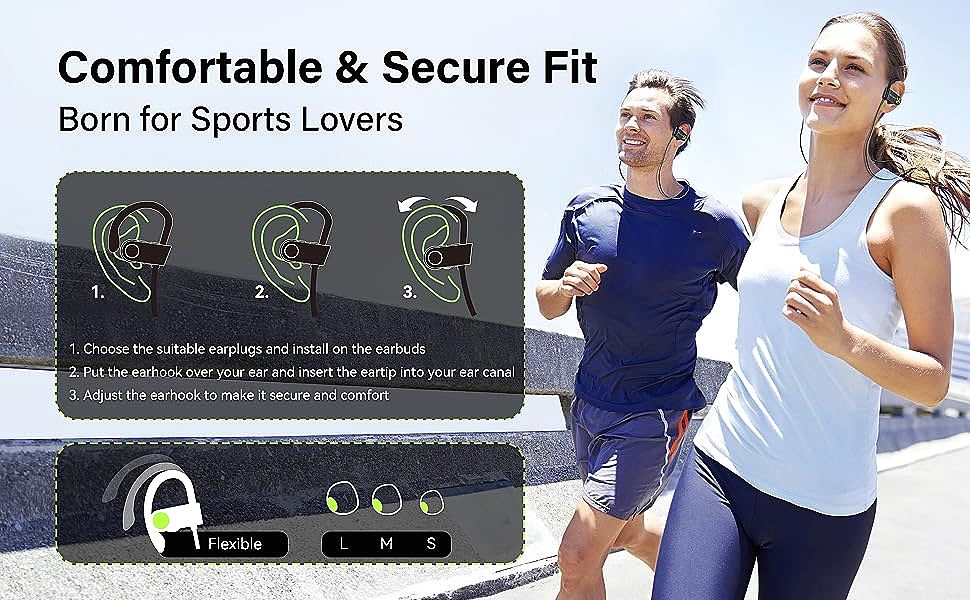
The effectiveness of PNC is governed by the Transmission Loss (TL) of the barrier. * The Barrier Effect: The silicone eartip and the body of the earbud act as a plug. Sound waves traveling through the air hit this plug. Because the density of the silicone/plastic is much higher than the density of air, most of the sound energy is reflected back rather than transmitted through. * The Importance of the Seal: The BOLOXA X-U8I comes with three sizes of eartips (S, M, L). This is not just for comfort; it is an acoustic necessity. A leak in the seal as small as a pinhole can compromise low-frequency isolation by up to 10-15 dB. Sound behaves like water; it will find the path of least resistance. A perfect, airtight seal is the only way to ensure the physical barrier works.
The “Room Gain” and Bass Response
The seal does more than block outside noise; it drastically alters the internal acoustics of the ear. When an earbud seals the ear canal, it creates a pressure chamber.
1. Pressurization: In an open air environment (like with open-back headphones), the driver must move a huge amount of air to create low-frequency (bass) waves. But in a small, sealed volume of air (the occluded ear canal), the driver acts like a piston in a cylinder. Even small movements of the 13mm driver can create significant changes in air pressure.
2. Room Gain: This phenomenon is known as “room gain” or “cabin gain.” It allows in-ear monitors to produce deep, visceral bass that physically reverberates in the skull, without requiring massive amounts of amplifier power.
3. The Energy Connection: For the athlete, this deep bass is crucial. Research in music psychology has shown that songs with prominent, rhythmic bass lines (120-140 BPM) can synchronize with motor movements, improving running cadence and reducing the rate of perceived exertion (RPE). The “Stereo Bass” of the BOLOXA X-U8I is thus not just an aesthetic feature, but a functional performance enhancer fueled by the physics of the sealed chamber.
The Physiology of Focus: Minimizing Cognitive Load
Why does noise hurt performance? The human brain has a limited amount of attentional resources. * The Filtering Cost: In a noisy environment, the brain must actively filter out irrelevant auditory stimuli to focus on the task at hand (e.g., maintaining running form, counting reps). This filtering process consumes metabolic energy and cognitive bandwidth. * The Startle Response: Sudden loud noises trigger a micro-startle response, releasing cortisol and momentarily disrupting motor coordination.
By physically blocking these distractions via a secure PNC seal, the BOLOXA X-U8I reduces the cognitive load on the athlete. The brain can stop “patrolling” the auditory environment and redirect those resources to the physical effort. This is the physiological basis for “getting in the zone.” The stability provided by the flexible earhooks further supports this; the user doesn’t have to devote mental energy to worrying about the earbud falling out. The equipment disappears, leaving only the focus.
The Endurance of Solitude: Battery Life as a Psychological Support
Maintaining this “bubble of focus” requires energy—electrical energy. If the music stops halfway through a marathon, the psychological bubble bursts, and the fatigue rushes in.
The BOLOXA X-U8I offers 12 hours of playtime per charge. In the context of “flow state,” this excess capacity acts as a safety margin.
* The Anxiety of Depletion: Using earbuds with short battery life creates “range anxiety.” The user subconsciously worries about the battery dying, which is a distraction in itself.
* The All-Day Assurance: Knowing that the device can outlast any humanly possible workout session removes this variable from the equation. The 100 hours of standby time provided by the charging case means the device is ready even if you forgot to charge it yesterday. Reliability fosters a relaxed, focused state of mind.
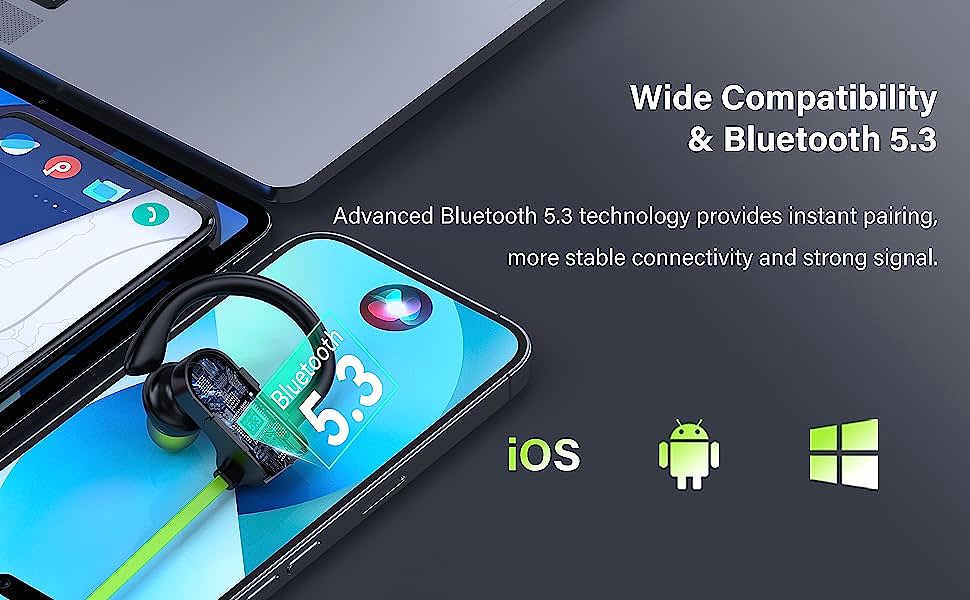
Connectivity and Flow: The Role of Bluetooth 5.3
A “flow state” is fragile. A single skip in the music, a crackle of static, or a desynchronized video can break the immersion.
Bluetooth 5.3 serves as the invisible guardian of this flow.
* Channel Classification: By actively hopping away from crowded Wi-Fi frequencies in a busy gym, it ensures the audio stream remains unbroken.
* Low Latency: For those who exercise with video instructors (like Peloton or YouTube workouts), synchronization is key. The low latency inherent in modern Bluetooth standards ensures that the visual cue of the instructor matches the auditory beat, maintaining the rhythm of the workout.
Conclusion: The Tool for the Tuned-In Athlete
In the end, a sports earbud is more than a speaker; it is an isolation tank, a metronome, and a coach. The BOLOXA X-U8I Wireless Earbuds demonstrate how engineering choices—passive noise sealing, robust battery life, and stable connectivity—converge to support the psychology of the athlete. By understanding the science of sound isolation and the physiology of focus, users can use these tools not just to distract themselves from the pain of exertion, but to dive deeper into the joy of movement.