The Acoustics of Focus: Passive Isolation, Comfort, and the Engineering of Utility
Update on Jan. 13, 2026, 8:02 a.m.
In the modern landscape of work and education, our environments are increasingly hostile to concentration. Open-plan offices, bustling coffee shops, and chaotic classrooms create a constant barrage of auditory distractions. The headphone, therefore, has evolved from a simple music playback device into a tool for cognitive preservation—a portable sanctuary. While the market buzzes with “Active Noise Cancellation” (ANC) as the premium solution, there is a simpler, often more effective approach rooted in architectural acoustics: Passive Noise Isolation.
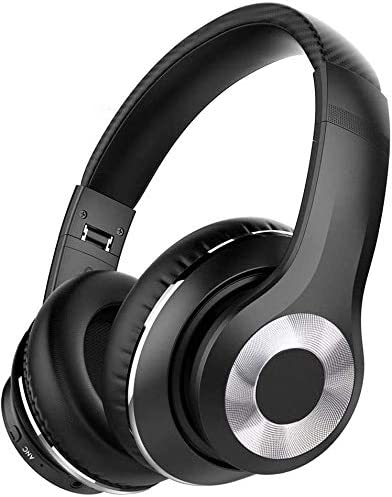
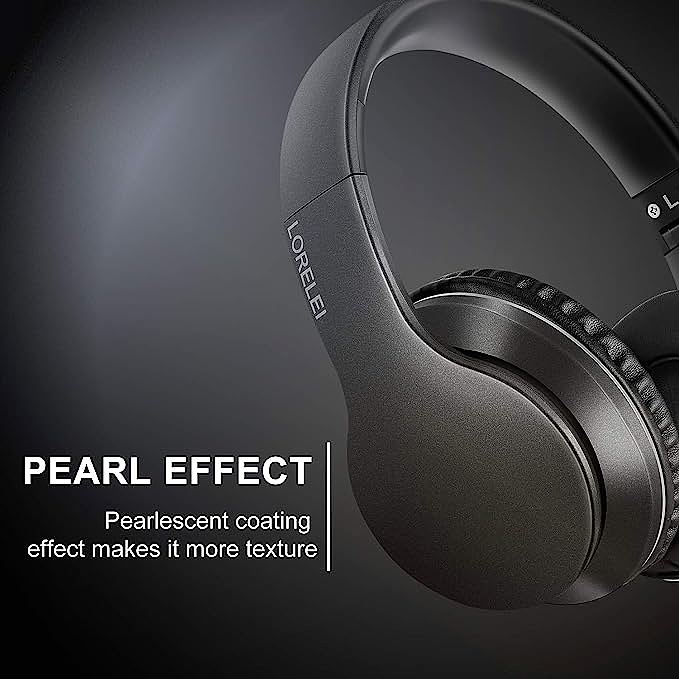
The LORELEI X6 Over-Ear Headphones exemplify this philosophy. They do not rely on inverted sound waves or digital processing to silence the world. Instead, they rely on mass, density, and seal. Coupled with a design focus on structural durability and ergonomic weight distribution, the X6 represents a masterclass in “Institutional Utility”—gear designed not just to be worn, but to be used, dropped, folded, and relied upon day after day. This article explores the science of passive isolation, the biomechanics of comfort, and the material engineering that allows such a device to survive the rigors of real life.
The Science of Silence: Passive Isolation vs. ANC
To understand the value of the X6, we must distinguish between the two primary methods of noise reduction. Active Noise Cancellation works by using microphones to “hear” external noise and generating an “anti-noise” wave to cancel it out. This is miraculous for low-frequency drones (like airplane engines) but often struggles with sudden, high-frequency sounds (like voices or dropped objects). It also requires power and can introduce a subtle “pressure” sensation on the eardrum.
The Physics of the Barrier
Passive Isolation, employed by the X6, operates on the “Mass Law” of transmission loss. It treats noise not as a signal to be processed, but as energy to be blocked. * The Seal: The primary mechanism is the circumaural (over-ear) or supra-aural (on-ear) seal. The soft, protein-leather ear cushions of the X6 conform to the irregular contours of the ear/head. This air-tight seal prevents sound waves from entering the ear canal directly. * Absorption and Reflection: The hard plastic outer shell reflects high-frequency sound waves, while the dense foam inside the ear cups absorbs acoustic energy.
The Cognitive Benefit
Passive isolation is particularly effective at blocking human speech—the most distracting sound for the human brain. While ANC often lets voices bleed through, a physical barrier muffles the intelligibility of speech. Psychoacoustically, “unintelligible” speech is far less distracting than clear speech because the brain stops trying to decode the language. For students and professionals, this creates a “zone of focus” without the electronic hiss or battery dependence of ANC.
Structural Engineering: The Foldable Hinge and Nylon Tensile Strength
Durability in consumer electronics is often an afterthought, but for a “utility” headphone, it is paramount. The LORELEI X6 features two critical structural elements designed to mitigate the most common failure points of headphones: the hinge and the cable.
The Mechanics of Folding
The X6 is designed to be foldable. From a mechanical engineering perspective, the hinge is a stress concentrator. It must withstand thousands of cycles of opening and closing. The compact design allows the headphones to collapse into a smaller footprint, making them easy to toss into a backpack. This portability is essential for students moving between classes or commuters. However, a folding mechanism also acts as a shock absorber. If the headphones are dropped, the kinetic energy can often be dissipated by the unit folding rather than snapping a rigid headband.
The Nylon Braided Cable: A Material Solution
The single most common failure in wired headphones is internal wire fracture. Copper strands are ductile but prone to work-hardening and snapping if bent repeatedly at a sharp angle. The X6 encases its cable in a nylon braided sheath. * Bend Radius Limit: The stiffness of the nylon braid physically prevents the cable from being bent into a sharp “kink” that would snap the copper. It forces a gentler bend radius, preserving the conductor integrity. * Tensile Strength: Nylon is a high-strength polymer. The braiding adds significant tensile strength, meaning if the cable is snagged on a doorknob or pulled by a child, the force is borne by the nylon sheath rather than the delicate copper wires or the solder joints inside the jack. * Tangle Resistance: The textured surface and slight rigidity of the braid increase friction against itself, making it thermodynamically unfavorable for the cable to tie itself into knots—the dreaded “pocket spaghetti” phenomenon.

Ergonomics and Biomechanics: The Weight of Comfort
Comfort is subjective, but its roots are biomechanical. A headphone is a clamp. It applies pressure to the head to maintain a seal. If that pressure is too high, it restricts blood flow in the capillaries of the ear, causing pain (“clamping force fatigue”). If it is too low, the seal breaks, and bass is lost.
Weight Distribution
The LORELEI X6 is marketed as “Lightweight” (approx. 7.25 oz). In the world of ergonomics, mass is the enemy of endurance. Heavier headphones require higher clamping force to stay on the head to counteract gravity. By using lightweight, high-strength plastics instead of metal, the X6 reduces the required clamping force.
The Headband Slider
The adjustable slider is crucial for aligning the ear cups with the auditory canal. The “vector of force” must be perpendicular to the side of the head. The X6’s sliders allow users to adjust this vector to accommodate different head sizes (from adults to children). This adjustability, combined with the pivoting ear cups, ensures that the pressure is distributed evenly around the ear (the pinna) rather than focusing on a single pressure point, enabling long sessions of wear without the “hot spots” typical of poorly designed headsets.
Institutional Utility: The School and Office Scenario
While often sold to individuals, the design of the X6 makes it an ideal “institutional” headphone for schools, libraries, and labs. * Hygiene and Maintenance: The lack of fabric on the ear cups (using protein leather instead) allows them to be wiped down and sanitized easily—a critical feature for shared equipment. * Standardization: The 3.5mm jack is the universal donor of audio. It works with 10-year-old school desktops, brand new Chromebooks, tablets, and testing equipment. There are no drivers to install, no Bluetooth pairing lists to manage, and no batteries to check before an exam. * Cost-Efficiency: In an institutional setting, the “Total Cost of Ownership” includes replacement costs. The durability features (nylon cable, flexible plastic) reduce the replacement rate, making the X6 a fiscally responsible choice for large-scale deployment.
Conclusion: The Tool for the Task
The LORELEI X6 does not try to be a luxury item. It does not offer an app, firmware updates, or voice assistants. Instead, it offers a focused set of physical attributes designed for utility. It offers the silence of passive isolation for focus, the durability of nylon and impact-resistant plastic for longevity, and the universal compatibility of the 3.5mm jack for ease of use.
In a world obsessed with smart features, the X6 is unapologetically “dumb.” But in its simplicity lies its strength. It is a tool that disappears when you use it, leaving you alone with your work, your class, or your music. It is a testament to the idea that sometimes, the best technology is the one that you don’t have to think about at all.