Budget Acoustics: The Physics of Drivers, Waterproofing, and Battery Chemistry
Update on Jan. 13, 2026, 7:59 a.m.
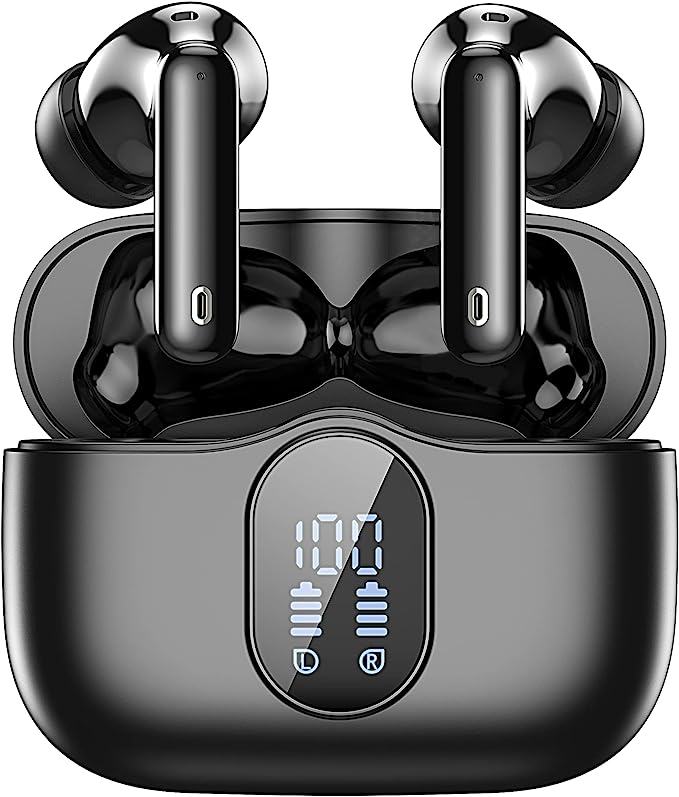
When we purchase a piece of technology for the price of a sandwich, we instinctively lower our expectations. We assume the physics must be compromised, the materials inferior, and the longevity questionable. While partially true, the reality of modern budget engineering, exemplified by the Vtkp S42, is far more nuanced. It is a game of strategic trade-offs, where engineers leverage specific physical principles to maximize performance in critical areas while cutting costs in others.
This article delves into the “hard science” of the budget earbud. We will explore the mechanics of the large 13mm driver, the chemistry of the waterproofing that allows for an IPX7 rating, and the electrochemical reality of the batteries that power it all. This is the physics of affordability.
The Mechanics of the 13mm Driver: Size vs. Control
The Vtkp S42 highlights its 13mm dynamic drivers as a key selling point. In the audio world, “bigger is better” is a common trope, but the physics of sound transduction reveals a complex balancing act.
The Physics of Air Movement
A dynamic driver works like a piston. A voice coil suspended in a magnetic field moves a diaphragm back and forth, compressing and rarefying air to create sound waves. * Low Frequency (Bass): To reproduce a 50Hz bass note, the driver must move a large volume of air. A 13mm driver has a surface area of approximately 132mm², compared to roughly 78mm² for a standard 10mm driver. This 70% increase in area means the driver doesn’t have to move as far (excursion) to produce the same volume of bass. This efficiency is why budget earbuds often have surprisingly powerful low-end; physics is on their side.
The Problem of Cone Breakup
However, size introduces a problem: rigidity. As the frequency increases (treble), the diaphragm must vibrate thousands of times per second. Ideally, the entire diaphragm should move as a rigid unit. But in larger, cheaper diaphragms (typically made of PET or PU plastic), the material isn’t stiff enough to withstand the acceleration forces. * Cone Breakup: At high frequencies, the edges of the diaphragm might be moving out of sync with the center. This creates modal resonances or distortion. The sound becomes “muddy” or harsh. * The Budget Solution: To mitigate this, manufacturers often use composite diaphragms (like the “triple-layer” mentioned in the S42’s marketing). By laminating a stiffer material in the center, they attempt to control these resonances without the cost of exotic materials like Beryllium. It’s a clever material science hack to extend the frequency range of a large, bass-focused driver.
Waterproofing for the Masses: The Science of IPX7
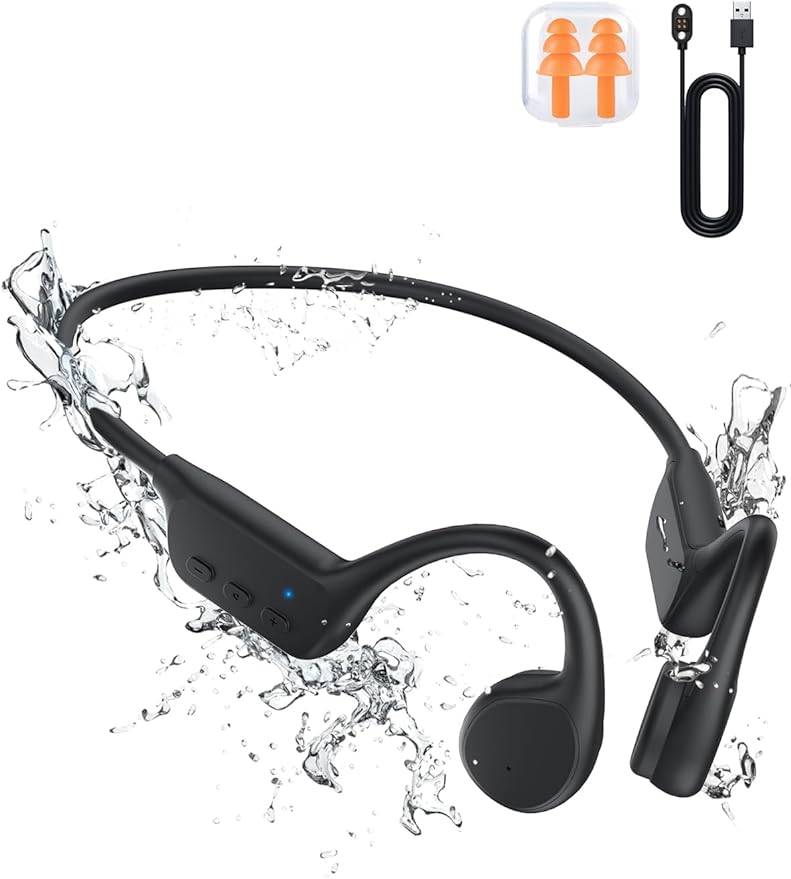
The S42 claims an IPX7 waterproof rating, meaning it can survive submersion in 1 meter of water for 30 minutes. Achieving this on a budget product involves two distinct engineering approaches: Physical Sealing and Nano-Coating.
Ultrasonic Welding
The plastic shell of the earbud isn’t glued together; it is likely ultrasonically welded. High-frequency acoustic vibrations are applied to the joint between the two plastic halves. The friction generates localized heat, melting the plastic and fusing it into a single, hermetically sealed unit. This process is fast, automated, and creates a seal that is impervious to water ingress.
Hydrophobic Nano-Coatings
Water can still enter through necessary openings like the microphone port or the speaker mesh. This is where chemistry comes in. Manufacturers apply a hydrophobic nano-coating—typically a plasma-deposited fluoropolymer—to the internal circuit board (PCB) and components. * Contact Angle: This coating increases the “contact angle” of water droplets. Instead of spreading out and wetting the surface (which causes short circuits), the water beads up and rolls off. Even if water gets inside the earbud, the electronics remain “dry” at a molecular level. * The Limitation: While effective against fresh water, these coatings can be degraded by the surfactants in soap, the chlorine in pools, or the salts in ocean water. IPX7 is a laboratory standard for fresh water, not a guarantee of invincibility against all liquids.
The Electrochemistry of the Battery: Life and Death
The battery is the ticking clock of any wireless device. The S42 uses Lithium-Ion (Li-ion) chemistry, likely a Lithium Cobalt Oxide (LCO) cathode design common in small electronics.
The Cycle Life Reality
Budget Li-ion cells typically favor high capacity (energy density) over longevity. A standard high-quality cell might retain 80% of its capacity after 500 charge cycles. Budget cells might hit that degradation point at 300 cycles. * SEI Layer Growth: Every time the battery charges, a Solid Electrolyte Interphase (SEI) layer builds up on the anode. Over time, this layer consumes lithium ions and increases internal resistance. In budget cells with less pure electrolytes, this layer grows faster, leading to a quicker decline in battery life over months of use.
The Parasitic Drain of “Instant On”
The Hall Effect sensor that enables “instant pairing” comes with an energetic cost. The earbuds never truly turn off; they enter a low-power “standby” mode, constantly polling the sensor or waiting for a wake-up signal. This parasitic drain means that if you leave the earbuds in a drawer for a month, you might find the case empty. Premium devices use sophisticated power management logic (PMIC) to minimize this drain to micro-amps; budget devices often have higher quiescent currents, leading to faster self-discharge.
Conclusion: The Engineering of “Good Enough”
The Vtkp S42 is a triumph of Pareto Engineering—the 80/20 rule applied to manufacturing. By securing the 20% of features that provide 80% of the user experience (big bass, waterproofing, instant connection) and achieving them through standardized, mass-produced technologies, it delivers a product that defies its price tag.
It teaches us that high-fidelity audio and military-grade durability are no longer the exclusive domain of luxury goods. Through the physics of large drivers, the chemistry of nano-coatings, and the economies of scale, the “budget” earbud has evolved from a disposable toy into a legitimate tool for daily life. It may not last a decade, but for the price of a lunch, it doesn’t have to.