Nicwell W01 Review: Does This $30 Flosser Beat the $80 Giants?
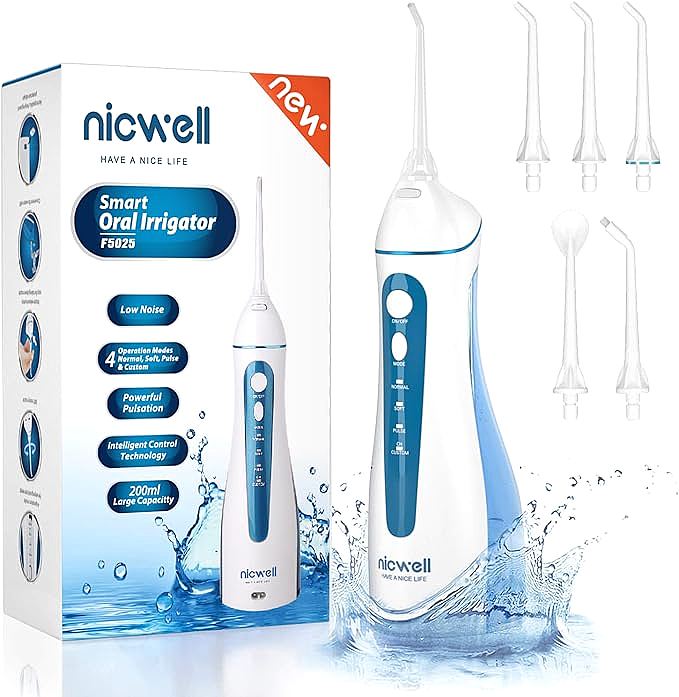
Nicwell W01 Water Dental Flosser
The sound of a water flosser is distinct—a rhythmic, percussive thumping that signals mechanical work is being done. But not all thumps are created equal. In the crowded market of oral irrigators, price often dictates performance... or so the legacy brands would have you believe.
The Nicwell W01 Water Dental Flosser represents a disruption in the "Brand Tax" economy. Retailing at a fraction of the cost of its premium competitors, it claims to offer the same, if not better, hydraulic specifications. But does the physics hold up? When you strip away the marketing, are you left with a high-performance pump or a glorified squirt gun? We are diving deep into the fluid dynamics, the pressure regulation logic, and the structural engineering of the W01 to verify if it is a legitimate tool for periodontal health.
The Problem: Binary Pressure vs. Biological Nuance
Most budget cordless flossers suffer from a fatal flaw: "Binary Logic." They typically offer three settings: Low (too weak), Medium (often undefined), and High (often painful). Human gum tissue, however, is not uniform. The keratinized tissue around your molars can withstand significantly higher pressure than the delicate, non-keratinized mucosa near your front teeth or inflamed periodontal pockets.
Using a "one-size-fits-all" high-pressure setting on inflamed gums is not cleaning; it is trauma. Conversely, using low pressure on a healthy gum line fails to generate the shear stress required to dislodge sticky biofilm. The market gap has always been granular control in a handheld form factor.
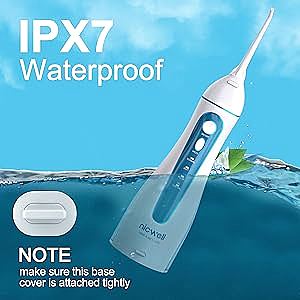
The Proof: Deconstructing the "Custom" Mode Algorithm
The Nicwell W01 solves the binary pressure problem through its innovative "Custom" mode, a feature that is frequently misunderstood by users but is the device's crown jewel.
Unlike standard modes that rely on fixed resistor values to regulate motor speed, the Nicwell's Custom mode utilizes a form of variable output that allows the user to select from 8 distinct pressure levels ranging within the 30-110 PSI spectrum.
- The Mechanism: By holding the mode button, the device cycles through these 8 levels. The internal microcontroller adjusts the voltage delivered to the pump motor, effectively creating a "stepless" feel.
- The Data: This allows you to dial in exactly 30 PSI for sensitive post-surgery areas or ramp up to the full 110 PSI for blasting stubborn food debris from tight interdental spaces.
- The Nuance: This is particularly vital for "desensitization training." New users often bleed at 50 PSI. With the W01, you can start at Level 1 (30 PSI) for week one, move to Level 3 for week two, and eventually condition your gums to withstand the optimal cleaning pressures of Level 8.
- The Scenario: Imagine you have a sore spot on your lower left gum due to a trapped popcorn kernel. A standard "High" mode might cause pain. With the Nicwell, you set it to Level 2 to gently flush the area, then switch to Level 8 to clean your healthy molars.
| Metric | Generic Budget Flosser | Nicwell W01 |
|---|---|---|
| Pressure Control | 3 Fixed Steps (Low/Med/High) | Stepless DIY (Levels 1-8) |
| Max Pressure | Typically 80-90 PSI | 110 PSI |
| Pulse Frequency | ~1200 pulses/min | 1400-1800 pulses/min |
Deep Dive: The Physics of 1800 Pulses Per Minute
Why does the Nicwell W01 operate at such a high frequency (1400-1800 times/min)? Why not just a continuous stream of water?
The answer lies in Hydro-Kinetic Energy. Biofilm (plaque) is a sticky polymer matrix that adheres tenaciously to tooth enamel. A continuous stream of water (laminar flow) often flows over the biofilm without removing it.
Pulsation creates a phenomenon known as Micro-Hydraulic Hammering.
1. Compression: The water jet hits the surface, applying pressure.
2. Decompression: The gap between pulses (milliseconds) allows the tissue to recoil slightly.
3. Shear Stress: The rapid cycle of impact and release creates shear forces that tear the biofilm structure apart.
4. Flushing Action: The decompression phase allows the debris to be flushed out of the pocket before the next pulse hits, preventing the "packing" of debris deeper into the gum line.
At 1800 pulses per minute, the Nicwell W01 is operating at the upper limit of efficiency for handheld devices, maximizing this disruptive effect without damaging the epithelial attachment of the gums.
Engineering Analysis: The IPX7 Gasket Risk
Portable electronics that live in the bathroom face a silent killer: galvanic corrosion caused by moisture intrusion. The Nicwell W01 carries an IPX7 waterproof rating, theoretically allowing it to be submerged in 1 meter of water for 30 minutes. This makes it shower-safe, a huge convenience factor.
However, engineering is about weak points.
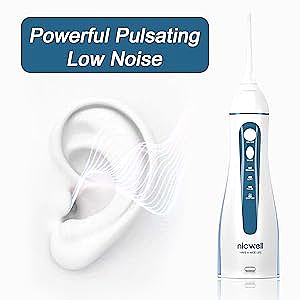
As seen in the image above, the device relies on a silicone gasket to seal the charging port. * The Risk: If you charge the device and fail to press this gasket back in firmly, the IPX7 rating is void. Water will enter the charging circuit, and the device will die. * The Mitigation: The device boasts a 21-day battery life (based on a 4-hour charge). This is a significant engineering advantage because it reduces the frequency of interaction with the seal. You only need to open that risk point once every three weeks, statistically reducing the chance of user error leading to water damage compared to devices that require weekly charging.
Addressing the Durability Concern
A common criticism in the "under $40" category is the durability of the water tank hinge. * The Reality: The Nicwell W01 features a detachable 200ml tank. While the dual-filling design allows you to fill through a small door, user feedback suggests the hinge on this door is a stress point. * The Fix: To maximize longevity, it is recommended to detach the entire tank for filling rather than relying on the small hinge door. This also facilitates better drying and prevents mold growth—a common issue in flossers that are never fully opened.
The Verdict
The Nicwell W01 is not just a "cheap alternative." It is a specifically engineered tool that prioritizes pressure customization and high-frequency pulsation. While it lacks the premium build materials of an $80 unit (evident in the tank hinge), the core hydraulic engine delivers 110 PSI and 1800 PPM, numbers that compete directly with the market leaders. For users who master the "Custom" mode, it offers a level of periodontal precision that binary 3-mode flossers simply cannot match.
Nicwell W01 Water Dental Flosser
Related Essays
The Hydrodynamics of Biofilm Disruption: 1800 PPM Mechanics - Case Study: Nicwell W01

Hydrodynamic Hygiene: Mastering Oral Biofilm Control with Portable Precision
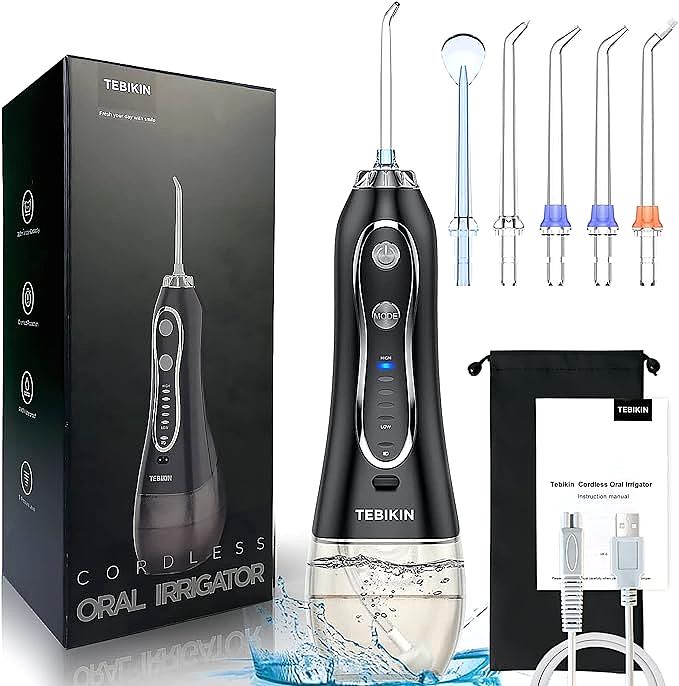
Mastering Hydrodynamics: The Engineering Behind Cordless Oral Irrigation
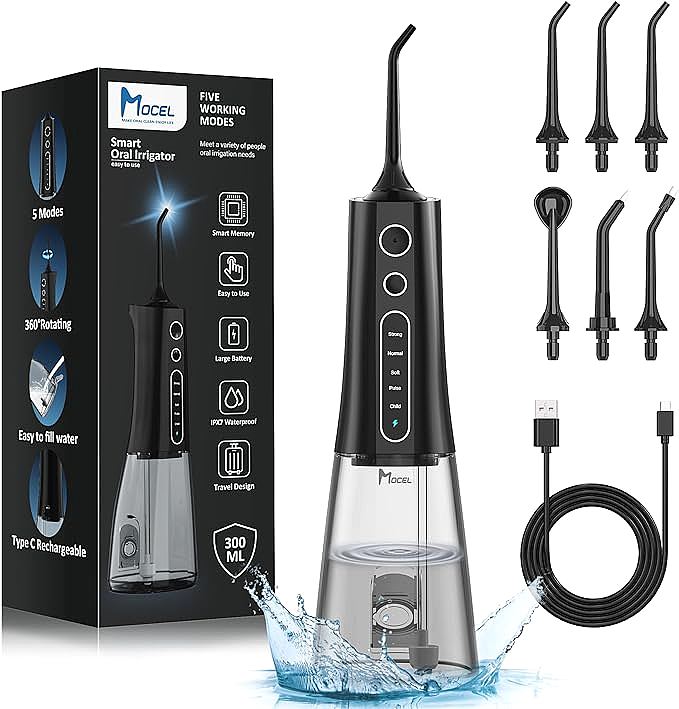
Frictionless Hygiene: How High-Frequency Pulsation and Compliance Design Redefine Oral Care
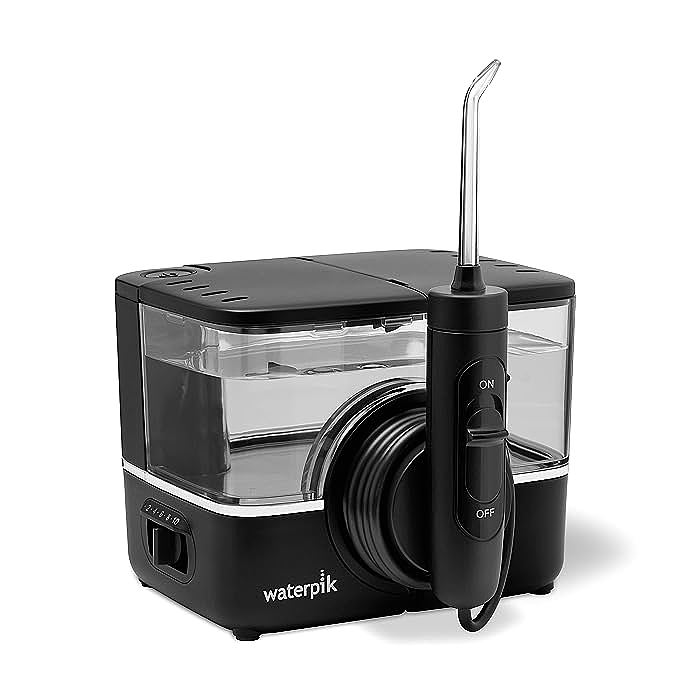
The Engineering of a Cleaner Smile: An In-Depth Analysis of the Waterpik ION Cordless Water Flosser

YIRENZUI Cordless Water Flosser: An Engineer's Deep Dive Beyond the Specs