The Fluid Dynamics of Commoditization: Acoustic Microstreaming in Entry-Level Sonic Motors - Case Study: Aneebart
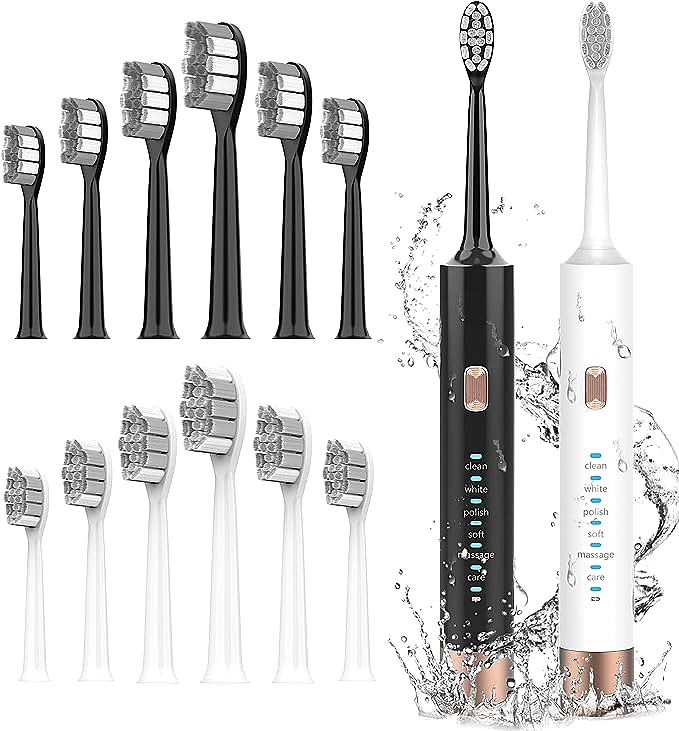
Aneebart Sonic Electric Toothbrush
For decades, "Sonic" oral care was a walled garden, guarded by patents and premium pricing. The premise was simple yet scientifically profound: it wasn't just the bristles scrubbing the tooth that cleaned; it was the physics of the fluid surrounding them. However, entry into this club typically cost upwards of $100.
Today, we are witnessing a manufacturing singularity. The technology required to generate high-frequency vibrations has transitioned from aerospace-grade novelty to commoditized utility. We now see devices retailing for the price of a latte claiming specifications that rival flagship medical devices. This raises a fundamental question of physics: Is a vibration simply a vibration? To answer this, we must look beyond the brand names and delve into the principles of Fluid Dynamics and Electromechanics, using the Aneebart Sonic Electric Toothbrush as a case study in this technological democratization.
The Physics of Non-Contact Cleaning: Acoustic Microstreaming
The primary argument for any sonic device operating above 30,000 Vibrations Per Minute (VPM) is not mechanical scrubbing, but Hydrodynamics.
When a brush head oscillates at such high frequencies (the Aneebart claims 38,000 VPM), it turns the mixture of saliva, water, and toothpaste into a turbulent, active cleaning agent. This phenomenon is known as Acoustic Microstreaming.
- Shear Stress: The rapid oscillation creates drag forces in the fluid. When these forces exceed the tensile strength of the bacterial adhesion (the "glue" holding plaque to the tooth), the biofilm is ripped away.
- The 4mm Zone: Clinical studies suggest that this "fluid drag" can disrupt plaque up to 4 millimeters beyond the tips of the physical bristles. This allows the fluid to penetrate deep into the interproximal spaces (between teeth) and below the gumline, areas where physical bristles often cannot reach.
Therefore, the efficacy of a sonic brush is primarily determined by its ability to maintain this frequency. If the motor can sustain 38,000 VPM, the fluid physics works, regardless of the logo on the handle.
The Motor Dilemma: Speed vs. Torque
However, generating speed is easy; generating Torque is hard. This is the engineering divergence between a $200 device and a $10 device like the Aneebart. * The Maglev Standard: Premium brushes often use "Magnetic Levitation" motors. These frictionless systems deliver high speed and high torque. If you press the bristles hard against your teeth, the motor pushes back, maintaining the oscillation amplitude. * The Budget Solution: Entry-level devices often utilize simpler eccentric mass or resonant motors. They can easily achieve the 38,000 VPM benchmark in free air. However, they typically possess lower stall torque.
Case Study Application:
The Aneebart Sonic Electric Toothbrush represents the latter engineering philosophy. It delivers the critical 38,000 VPM required for acoustic microstreaming, but it demands a change in user behavior. Because the motor has less torque reserve, pressing hard ("Scrubbing") will dampen the vibrations, effectively killing the cleaning action.
This dictates a specific technique: The Floating Method. The user must allow the bristles to barely skim the surface of the teeth. By doing so, the motor spins freely at top speed, and the Fluid Dynamics take over. In this scenario, the cleaning performance of the budget motor converges with that of the premium motor, purely through user adaptation.
Deconstructing Cost: The "Umbilical" Charging Design
How does a manufacturer achieve a price point of roughly $5 per unit? They delete the most expensive non-essential component: the Inductive Charging Base.
Traditional electric toothbrushes use wireless charging (induction) to maintain waterproofing. This requires:
1. Copper coils in the base.
2. Copper coils in the handle.
3. Rectifier circuits.
4. A separate plastic molding for the dock.
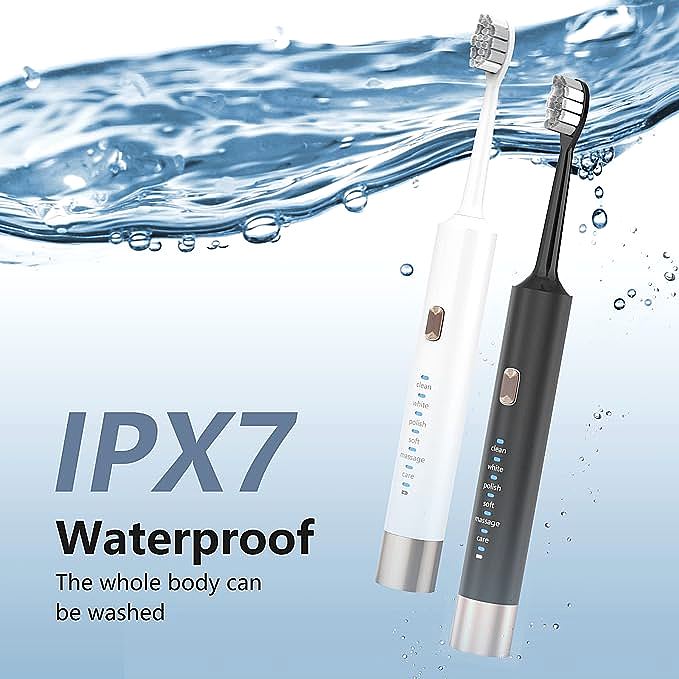
The Aneebart engineers bypassed this entire subsystem. * The Mechanism: They integrated a short USB-A cable directly into the bottom of the handle, concealed behind a screw-cap with an O-ring seal. * The Economic Impact: This removes the need for a separate charger (charger e-waste) and simplifies the internal circuitry. It is a "brutalist" design choice—trading the elegance of "drop-and-charge" for the raw utility of universal USB compatibility and reduced BOM (Bill of Materials) cost.