Beyond Brushing: How Biofeedback & 3D Mechanics Protect Your Gums
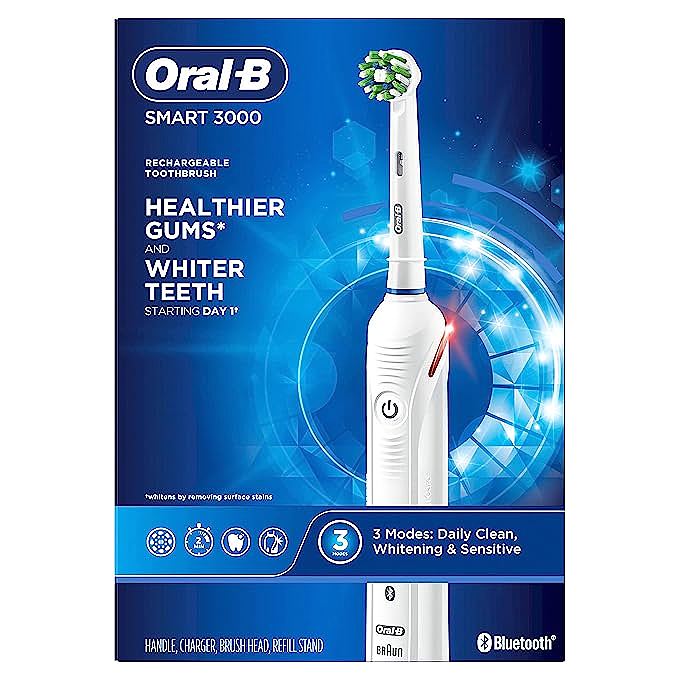
Oral-B Pro 3000 3D Electric Toothbrush
In the landscape of daily hygiene, brushing is often performed on autopilot. We wake up, we scrub, we rinse. Yet, dental professionals increasingly warn that this "unconscious" approach is leading to two contradictory problems: inadequate plaque removal in hard-to-reach areas, and traumatic abrasion on prominent surfaces.
The evolution of the electric toothbrush is no longer just about motorizing the bristles; it is about integrating biofeedback loops that coach the user in real-time. By examining the engineering behind devices like the Oral-B Pro 3000, we can understand how modern oral care tools act less like simple brushes and more like active preservation systems for your enamel and gingival tissue.
The Physics of "3D" Disruption: Why Scrubbing Fails
To understand the necessity of powered instruments, one must first understand the enemy: plaque biofilm. This sticky colony of bacteria adheres tenaciously to tooth surfaces. Manual brushing relies on the user's dexterity to mechanically shear this film off. However, most users default to a horizontal scrubbing motion, which cleans the broad surfaces but misses the interdental spaces—the precise locations where disease starts.
The Oral-B Pro 3000 utilizes what is technically termed Oscillating-Rotating-Pulsating (ORP) technology, marketed as "3D White" action. This is a three-step mechanical process occurring thousands of times per minute:
1. Pulsation: The brush head moves in and out (towards and away from the tooth) to loosen the structure of the biofilm.
2. Oscillation & Rotation: The round head twists back and forth to sweep the loosened debris away.
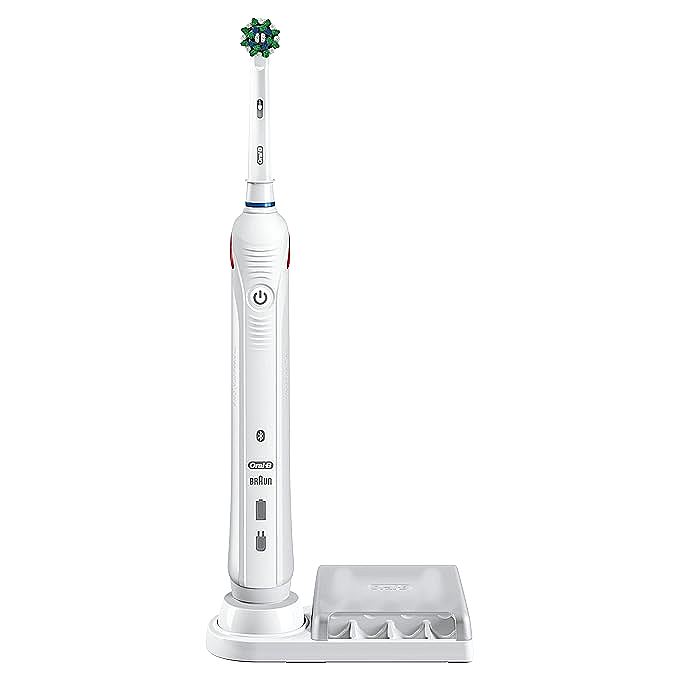
Decoding the Noise: Users often note that oscillating brushes sound "louder" or more mechanical than their sonic counterparts. This acoustic profile is the result of physical torque. Unlike sonic brushes that rely on fluid dynamics, ORP systems use direct mechanical engagement. That "drill-like" sound is the audible signature of a high-torque motor ensuring the bristles maintain their sweeping motion even under load.
The Biofeedback Loop: Preventing "Gingival Suicide"
Perhaps the most insidious threat to long-term oral health is not neglect, but over-zealousness. Gingival recession (receding gums) and abfraction lesions (notches at the gumline) are frequently caused by brushing too hard.
This is where the Visible Pressure Sensor transforms the toothbrush into a safety device. Located on the handle neck of the Pro 3000, this sensor creates an immediate feedback loop: * Trigger: The user applies force exceeding safe clinical limits (typically >2-3 Newtons). * Response: A bright red light illuminates, and the pulsation motor automatically slows down or stops. * Correction: The user instinctively relaxes their grip.
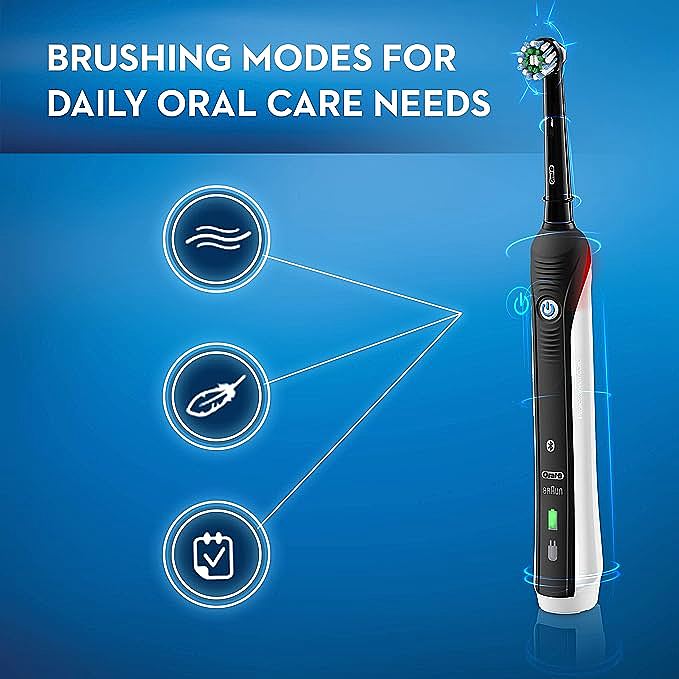
This feature interrupts the "muscle memory" of aggressive scrubbing. Over time, it retrains the user to let the bristles do the work rather than the hand. For anyone with a history of sensitive teeth or receding gums, this feature is arguably more valuable than the cleaning action itself.
Anatomy-Centric Design: The Round Head Advantage
Why are dental tools round? The human dental arch is a curve, and individual teeth are not flat blocks; they are contoured organic shapes.
The compact, round brush head—a signature of the Oral-B ecosystem—is designed to cup each tooth individually.
* Posterior Access: Large, rectangular brush heads often trigger the gag reflex or cannot maneuver into the tight space between the last molar and the jawbone (the retromolar space).
* Lingual Cleaning: The round shape fits snugly against the lingual (tongue-side) surfaces of the lower incisors, a notorious zone for tartar buildup (calculus) due to the proximity of salivary glands.
Data-Driven Hygiene: The Role of Connectivity
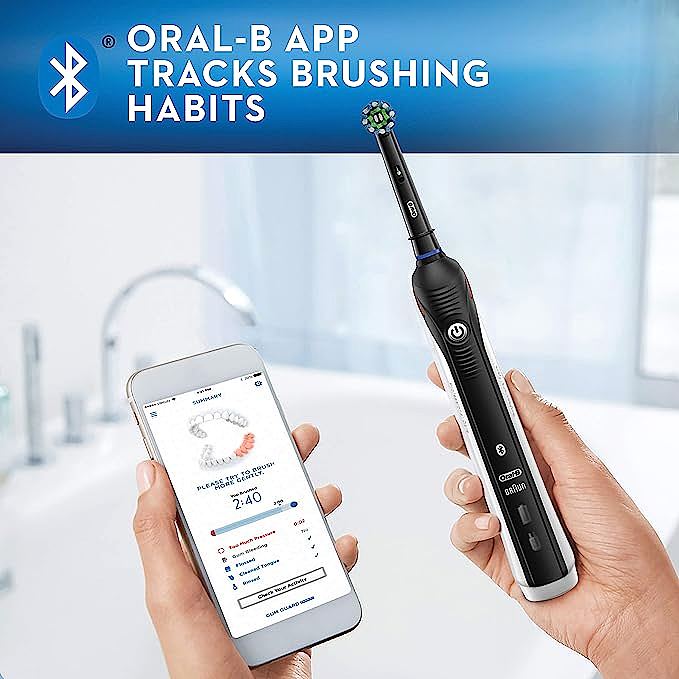
We live in the age of the "Quantified Self," tracking everything from steps to sleep. The integration of Bluetooth technology in oral care extends this quantification to hygiene.
Connecting the Pro 3000 to the smartphone app creates a digital log of brushing habits. While some may view this as superfluous, behavioral psychology suggests otherwise.
* The Hawthorne Effect: People modify their behavior simply because they know they are being observed (or tracked).
* Gap Analysis: The app can highlight sessions where the user brushed for less than the recommended two minutes, turning vague intentions into concrete metrics.
Practical Engineering: Battery and Maintenance
From a usability standpoint, the transition to electric requires a shift in maintenance habits. The lithium-ion battery in the Pro 3000 offers a consistent power output curve, meaning the motor speed won't drag as the battery depletes—a crucial factor for maintaining the efficacy of the 3D movement.
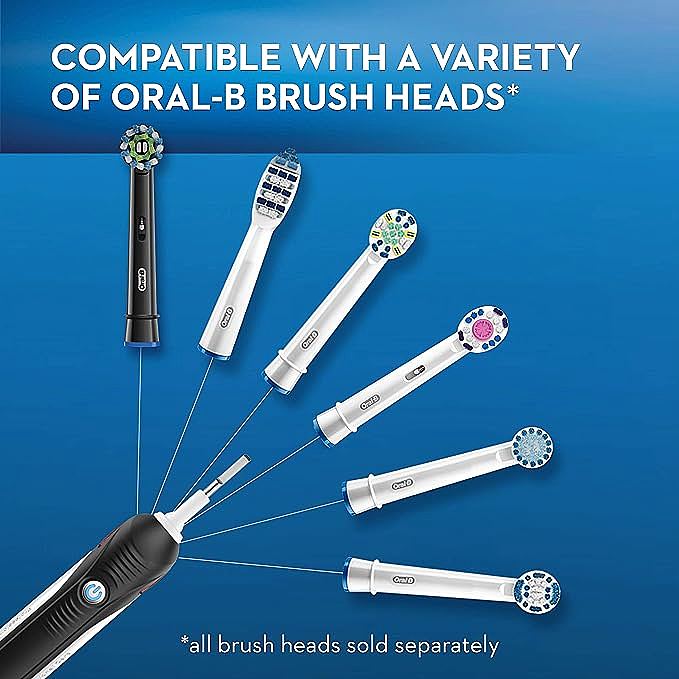
Furthermore, the Amazon Dash Replenishment integration addresses a common failure point in hygiene compliance: using worn-out brush heads. Bristles that are splayed or worn become abrasive and lose their ability to reach interdental spaces. Automating this supply chain ensures that the hardware interacting with your biology is always in optimal condition.
Conclusion: Investing in a System
Upgrading to a device like the Oral-B Pro 3000 is not merely a purchase of a "fancier" toothbrush; it is an investment in a hygiene system. It replaces inconsistent manual friction with scientifically validated oscillating mechanics, and more importantly, it replaces unconscious habits with sensor-guided precision.
In the fight against periodontal disease and enamel wear, the most powerful tool is not just the brush, but the awareness of how you use it. By outsourcing the timing, pressure regulation, and motion to a smart device, you ensure that your daily ritual is preserving your smile, not slowly eroding it.
Oral-B Pro 3000 3D Electric Toothbrush
Related Essays
