The Cybernetics of a Smile: Fluid Dynamics and Sensor-Guided Oral Health
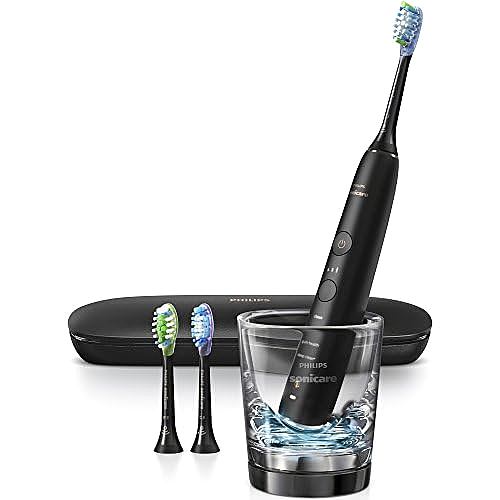
Philips Sonicare DiamondClean Smart 9300 (HX9903/11 )
In the microscopic landscape of the human mouth, a perpetual siege is underway. The adversary is not merely food debris, but a complex, organized community known as biofilm—commonly referred to as plaque. This sticky matrix adheres to enamel with surprising tenacity, serving as the breeding ground for the acids and bacteria that drive gingivitis and periodontal disease. For nearly a century, the standard countermeasure was mechanical friction: the manual toothbrush. However, as our understanding of oral biology has advanced, so too has the realization that human dexterity alone is often insufficient to breach this bacterial fortress.
This realization has ushered in the era of precision oral care, characterized by devices that utilize advanced physics and data-driven feedback to transcend the limitations of the human hand. The Philips Sonicare DiamondClean Smart 9300 serves as a paradigmatic example of this shift, representing a convergence of fluid dynamics and behavioral cybernetics.
The Physics of Non-Contact Cleaning
To understand the premium placed on high-end sonic devices, one must look beyond the bristles. The core differentiator of Sonicare technology is the frequency of 62,000 brush movements per minute. This figure is not arbitrary; it is the threshold required to generate a phenomenon known as Acoustic Streaming.
Unlike manual or rotary brushes that rely almost exclusively on direct physical contact (scrubbing) to remove plaque, high-frequency sonic vibrations create turbulence within the fluids of the mouth (saliva, water, and toothpaste). * Fluid Shear Forces: This turbulence generates powerful shear forces that extend beyond the tips of the bristles. These micro-currents can penetrate up to 3-4 millimeters into the interdental spaces and the sub-gingival pockets—areas that standard bristles cannot physically reach. * Biofilm Disruption: The energy transfer from these fluid waves actively destabilizes the structural integrity of the plaque biofilm, rendering it easier to rinse away.
This is the scientific basis for claims of removing "10x more plaque." It is not just about brushing harder; it is about deploying a fluid-based weapon against a biological target.
The Correction of Human Error: Haptic Cybernetics
The greatest flaw in oral hygiene is not the tool, but the operator. Clinical studies consistently show that users often apply excessive force (causing gum recession) or miss critical zones entirely. This is where the "Smart" designation in modern devices transitions from marketing buzzword to functional necessity.
The DiamondClean Smart 9300 operates as a closed-loop feedback system. It employs integrated sensors to monitor the user's technique in real-time. * Pressure Modulation: When the user presses too hard—a common habit carried over from manual brushing—the handle vibrates (haptic feedback) and a purple light ring flashes. This immediate signal trains the user's muscle memory over time, shifting the behavior from "scrubbing" to "guiding." * Spatial Awareness: Through location sensors, the device tracks coverage across the mouth's quadrants. While some users may find the accompanying smartphone app cumbersome for daily use, its value lies in the initial "calibration" phase. It acts as a temporary coach, identifying blind spots that the user has neglected for years, allowing them to correct their technique even if they eventually stop using the app daily.
The Engineering of Consumables: Why Brush Heads Matter
A frequent critique of advanced systems is the cost of replacement heads. However, in the context of precision engineering, these are not merely bristles; they are medical-grade components. * Smart Recognition: The Smart Brush Head Recognition technology ensures that the motor's frequency and amplitude are automatically matched to the specific head attached. For instance, snapping on a Premium Gum Health head triggers a mode with a gentler, massaging pulse profile designed to stimulate microcirculation in the gingival tissue without abrasion. * Material Science: High-end heads utilize densely packed, end-rounded filaments. This geometry is critical for maximizing the surface area contact required for acoustic wave generation while minimizing trauma to soft tissue.
Design as a Compliance Strategy
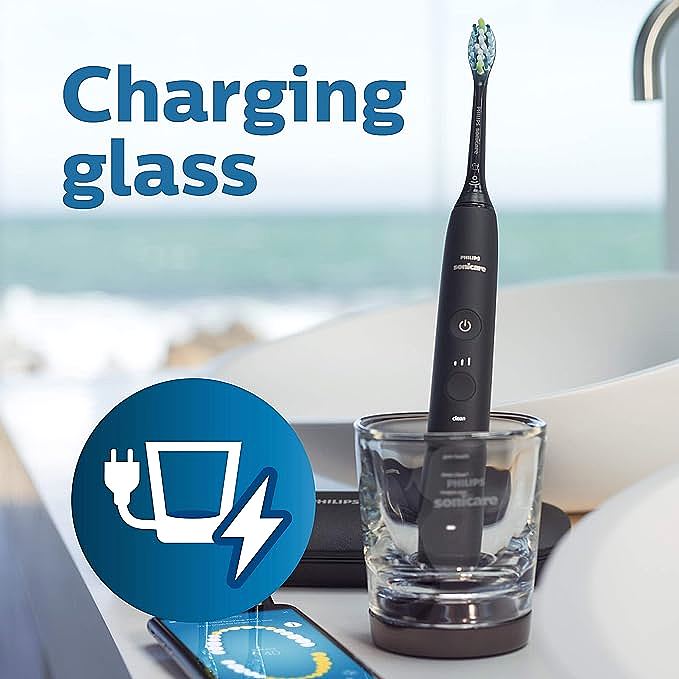
Adherence to a hygiene routine is heavily influenced by the friction of the experience. The DiamondClean series addresses this through inductive glass charging—eliminating the need to plug in cords—and a premium travel case. While seemingly aesthetic choices, these features remove barriers to usage. A device that is always charged and easy to pack ensures that the therapy continues uninterrupted, which is essential for managing chronic conditions like gingivitis.
Conclusion: Investing in Biological Maintenance
Viewing an electric toothbrush strictly as a cleaning utensil misses the broader picture. Devices like the Philips Sonicare DiamondClean Smart 9300 are better understood as medical instruments for biological maintenance. By harnessing the physics of fluid dynamics and the corrective power of sensor technology, they offer a level of biofilm management that manual dexterity simply cannot achieve. In the long-term economics of healthcare, the cost of such precision tools is often a fraction of the cost of restorative dentistry.
Philips Sonicare DiamondClean Smart 9300 (HX9903/11 )
Related Essays

Beyond the Bristles: The Fluid Dynamics of Sonic Oral Hygiene and the Physics of Biofilm Disruption
Beyond Mechanical Scrubbing: The Fluid Dynamics of Biofilm Disruption and the Science of Micro-Bubble Cavitation
The 400ml Sweet Spot: Balancing Hydrodynamics and Ergonomics in Oral Care

The Quantified Smile: Decoding Maglev Physics and Smart Sensors in Modern Dental Care

The Synergy of Integration: Mastering Biofilm with Hydrodynamic and Sonic Modalities
Fluid Dynamics Personalized: Mastering Home Oral Hygiene with Adaptive Water Flossing Technology
Hydrodynamics in Your Hand: The Science of Pulsed Water and Periodontal Health
The Feedback Loop: How Smart Sensors and Sonic Tech Decode Oral Health

The Prophylaxis Paradigm: Why Rotary Polishing Is the Gold Standard for Gingival Health
