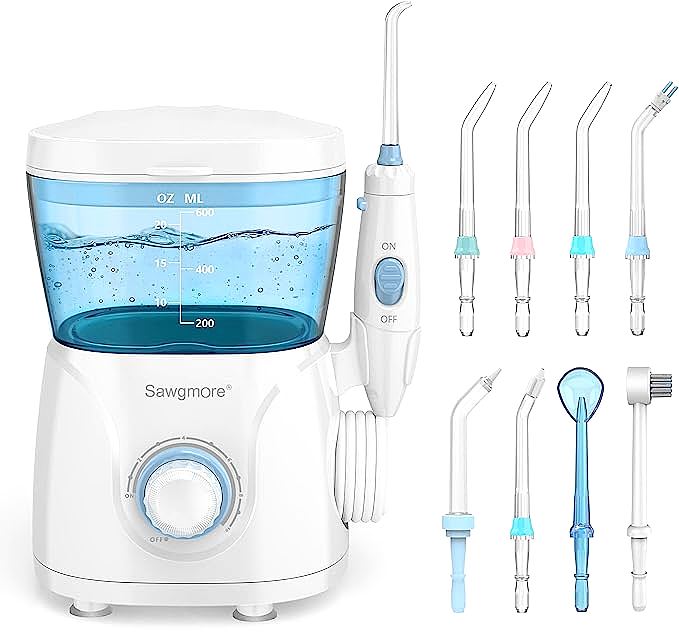
The Physics of a Healthier Smile: Decoding Panasonic's Ultrasonic Cavitation Technology

Panasonic EW-DJ75-W Electric Dental Flosser
In the realm of consumer electronics, "innovation" often implies wireless connectivity, app integration, or miniaturization. Yet, in the specific discipline of oral hygiene, true advancement sometimes requires a return to fundamental physics. The Panasonic EW-DJ75-W, a stationary "Jet Washer," represents a divergent path from the trend of pocket-sized gadgets. It posits that effective periodontal care requires power, stability, and a sophisticated understanding of fluid dynamics—specifically, the phenomenon of ultrasonic cavitation.
To understand why this device earns its place on the countertop, we must look beyond its white plastic shell and into the microscopic interactions occurring within its water stream. This is not merely a "water pick"; it is a hydrodynamic engine designed to disrupt the biological fortress of dental plaque.

The Science of Micro-Implosions: Weaponizing Bubbles
Standard water flossers rely on the principle of kinetic impact—essentially, hitting debris with a stream of water to dislodge it. While effective for large food particles, this method can struggle against the sticky, cohesive nature of bacterial biofilm (plaque).
Panasonic’s engineers introduced a game-changing variable: Ultrasonic Technology. The proprietary nozzle of the EW-DJ75-W features a tapered constriction that accelerates the water flow. This acceleration, combined with the pump's pulsation (approx. 1,600 pulses per minute), generates millions of microscopic vapor bubbles within the stream.
This is where physics takes over. When these microbubbles impact the hard surface of a tooth or the soft tissue of the gum, they burst. This phenomenon, known as cavitation, generates localized shockwaves. * Biofilm Disruption: The energy released by these micro-implosions is sufficient to peel away the extracellular matrix of the plaque biofilm, effectively "scrubbing" the tooth surface without physical abrasion. * Gentle Power: Because the cleaning energy comes from bubble collapse rather than just raw water pressure, the system can be remarkably effective while remaining gentle on sensitive gum tissue.
The Periodontal Imperative: Cleaning the "Invisible" Pockets
The true battlefield of oral health is not the tooth surface, but the gingival sulcus and periodontal pockets—the spaces between the tooth and gum where anaerobic bacteria thrive.
A toothbrush cannot reach deeper than 1-2mm into these pockets. String floss cuts through contact points but doesn't flush out the pockets. The EW-DJ75-W utilizes its ultrasonic stream to deliver hydrodynamic shear stress deep into these pockets. The shockwaves travel through the fluid, flushing out floating bacteria and toxins that cause inflammation and bone loss. For patients with gingivitis or implants, this deep-cleaning capability is not a luxury; it is a therapeutic necessity.

The Argument for the Stationary Form Factor
In an age of "on-the-go" everything, a corded, large-tank device might seem anachronistic. However, from an engineering standpoint, the stationary design is a deliberate choice prioritizing performance over portability.
1. Hydraulic Consistency: Generating continuous ultrasonic cavitation requires a powerful, consistent pump. Battery-operated units often experience a drop in pressure as the charge depletes. The AC-powered EW-DJ75-W delivers unwavering power from the first second to the last.
2. Volume as Utility: The 600ml reservoir allows for a thorough, uninterrupted cleaning session (approx. 3 minutes). Effective periodontal irrigation requires time—time to trace the gumline, pause at interdental spaces, and flush pockets. A small handheld tank often forces a "rush job," compromising the clinical outcome.
3. Monozukuri (Craftsmanship): The device reflects the Japanese philosophy of Monozukuri—making things with a dedication to excellence. The non-slip magnetic handle, the precise 10-step pressure dial, and the dishwasher-safe tank are not flashy features; they are ergonomic refinements that acknowledge the reality of daily use.
Conclusion: An Investment in Preventative Medicine
The Panasonic EW-DJ75-W is unapologetically a specialized tool. It does not try to be a travel accessory. Instead, it focuses on being the most effective instrument for mechanical biofilm control available for home use.
By harnessing the energy of ultrasonic cavitation, it offers a level of clean that transcends simple rinsing. It addresses the biological reality of plaque adhesion and the anatomical challenge of periodontal pockets. For those serious about preserving their oral health—not just whitening their smile—this device represents a shift from passive hygiene to active, hydrodynamic therapy.
Panasonic EW-DJ75-W Electric Dental Flosser
Related Essays

Hydrodynamic Cavitation in Oral Care: The Physics of Panasonic's "Ultrasonic" Nozzle - Case Study: EW-DJ55