Beyond the Buzz: The Physics of 40,000 VPM and the Democratization of Sonic Oral Care
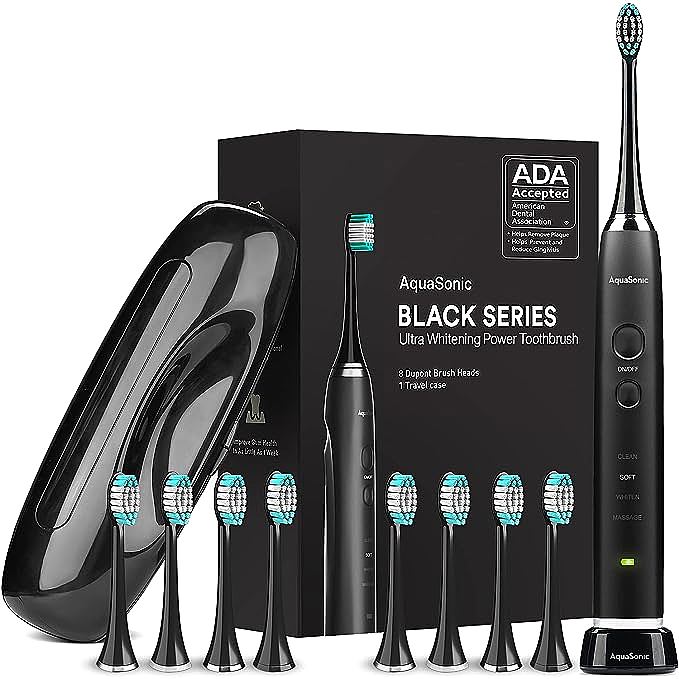
Aquasonic SCTB Black Series Ultra Whitening Toothbrush
The landscape of personal oral hygiene has undergone a quiet but significant shift over the last decade. What was once considered premium medical technology—high-frequency sonic cleaning—has effectively been commoditized. We have moved past the era where advanced dental tools were the exclusive domain of luxury brands. Today, the focus for the informed consumer is no longer just "affordability," but understanding the mechanics of the machinery they introduce into their daily routine.
The transition from manual abrasion to sonic technology represents a fundamental change in how we manage oral biofilms. To understand this shift, we can examine the Aquasonic SCTB Black Series as a relevant case study. It represents a class of devices that bring clinical-grade specifications—specifically the 40,000 vibrations per minute (VPM) benchmark—into the mass market. But what does that number actually mean for your gingival health?
The Mechanics of Sonic Hygiene: Frequency and Fluid Dynamics
To evaluate any sonic toothbrush, one must first understand the distinction between mechanical scrubbing and non-contact cleaning. Manual brushes and older rotating electric models rely primarily on physical friction to remove plaque. Sonic technology, conversely, leverages high-frequency vibrations to create a secondary cleaning effect known as fluid dynamics.
When a motor operates at 40,000 VPM, as seen in the Aquasonic Black Series, it does more than just wiggle the bristles. This frequency creates significant turbulence in the mixture of toothpaste, water, and saliva. * Cavitation: The rapid oscillation generates microscopic bubbles that implode with force, disrupting plaque colonies (biofilms) even in areas the bristles do not physically touch, such as deep interproximal spaces (between teeth) and sub-gingival pockets. * Fluid Shearing: The vibrations drive fluids through tight gaps, flushing out debris that static bristles often miss.
This explains a common user misconception. Those accustomed to manual brushing often feel that sonic brushes "just vibrate" without cleaning. This usually stems from applying excessive pressure or "scrubbing" with the device. The correct protocol is passive: holding the bristles at a 45-degree angle and allowing the frequency—not the friction—to do the heavy lifting.
The Softness Paradox: Why "Whiter" Doesn't Mean "Harder"
There is a persistent myth that stiffer bristles equal a better clean. In the context of sonic technology, the opposite is true. Because the motor provides the kinetic energy (the 40,000 VPM), the bristles act merely as the conduit.
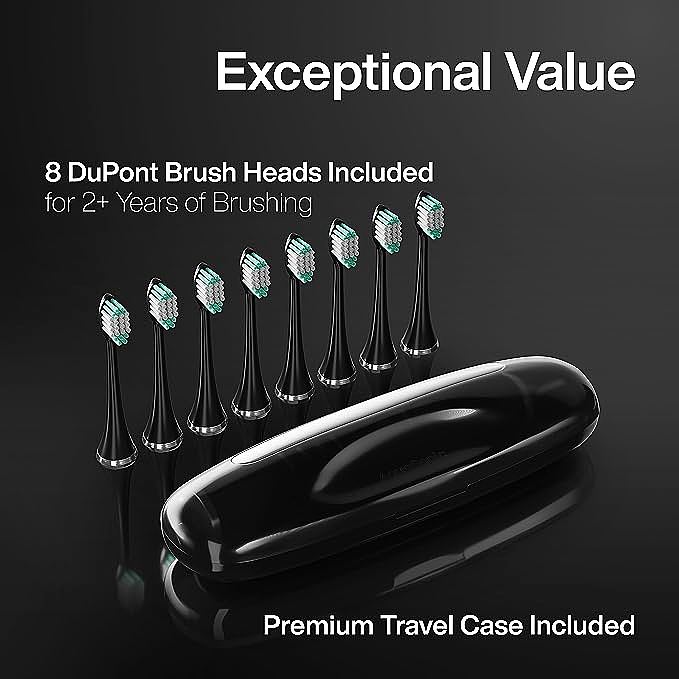
The industry standard, adhered to by Aquasonic through their use of DuPont engineered bristles, emphasizes soft, end-rounded filaments. Stiff bristles vibrating at sonic speeds would effectively act as a sander, causing gingival recession and enamel abrasion. The "Soft" and "Massage" modes found on modern devices are not merely comfort settings; they are functional necessities for varying tissue densities. * Massage Mode: Typically uses a pulsing rhythm to stimulate gingival microcirculation without aggravating the tissue. * Whiten Mode: Often uses a higher frequency to utilize the aforementioned fluid dynamics to lift surface stains (extrinsic staining) from coffee or tea, rather than grinding them off.
Material Science and Long-Term Ownership
When analyzing the longevity of modern dental electronics, we must address the physical construction. A common design language in this sector is the "soft-touch" matte finish. While aesthetically pleasing and providing necessary grip in a wet environment, this material—often a thermoplastic elastomer (TPE) or rubberized coating—is susceptible to hydrolysis over time.
High humidity and contact with oils can cause these coatings to degrade or become "sticky" after years of use. This is a trade-off found across the industry, from cameras to toothbrushes. * Maintenance Insight: To mitigate this, it is crucial to rinse the handle thoroughly and, more importantly, dry it after use. Storing any device with a soft-touch coating in a damp, unventilated travel case accelerates this degradation.
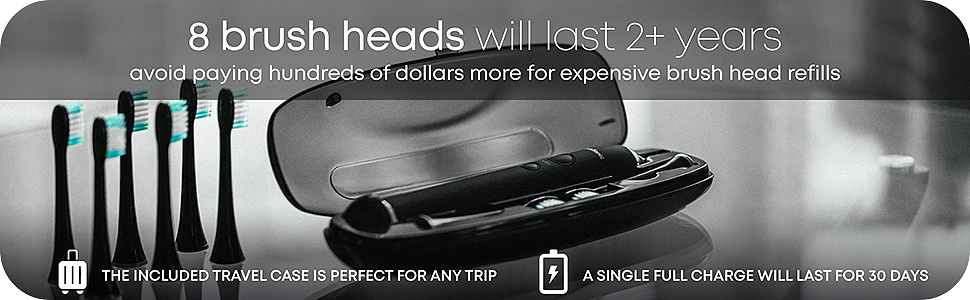
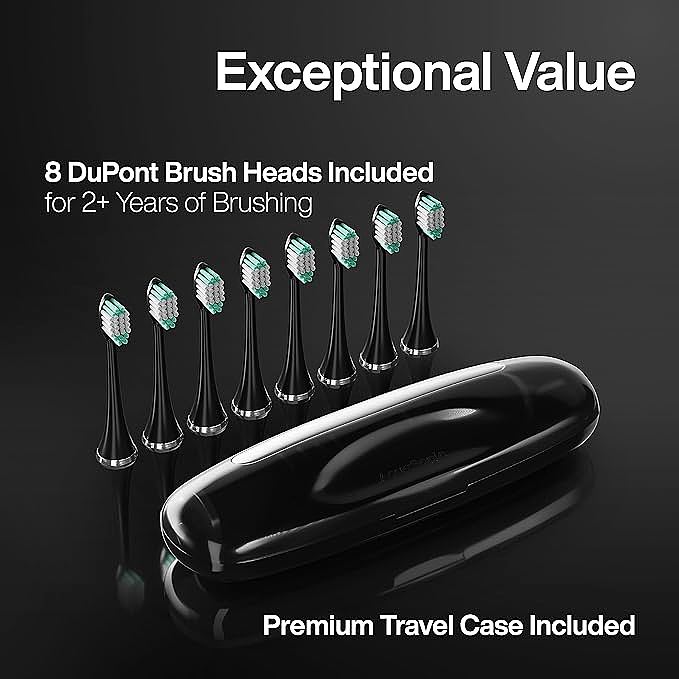
The inclusion of a travel case with the Aquasonic Black Series encourages portability, but users should ensure the device is dry before long-term storage to preserve the tactile finish.
Energy Density and The Lithium Advantage
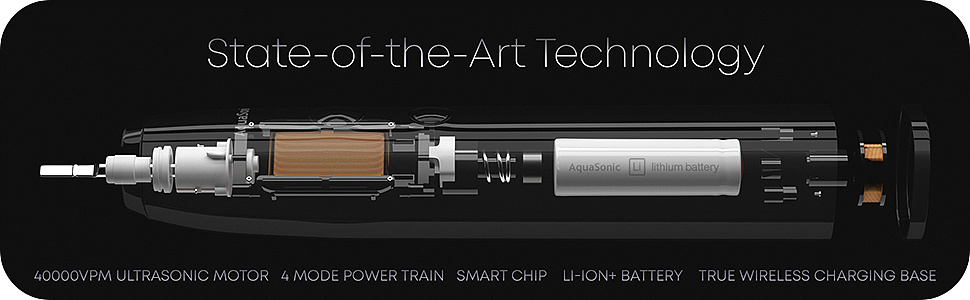
The shift from Nickel-Metal Hydride (NiMH) to Lithium-Ion (Li-ion) batteries in oral care mirrors the evolution in consumer electronics. Li-ion cells, like those powering the Aquasonic, offer a flatter discharge curve. This means the motor maintains its peak 40,000 VPM output until the battery is nearly depleted, rather than gradually losing power and cleaning efficacy as the charge drops.
While wireless charging adds convenience and improves waterproofing (IPX7 rating) by sealing the unit, it does introduce charging latency. A full "top-up" cycle can take longer than direct-contact charging, but the trade-off is a hermetically sealed unit less prone to water ingress failure—a common death sentence for bathroom electronics.
Compliance: The Hidden Variable in Efficacy
Ultimately, the most sophisticated tool is useless without consistent application. The "Smart Timer" feature—standard on the Aquasonic and similar clinical-grade devices—is perhaps more critical than the motor speed. The 2-minute timer with 30-second quadrant intervals enforces the Bass Method of brushing, ensuring that users do not subconsciously neglect difficult-to-reach areas like the lingual (tongue-side) surfaces of the molars.
Earning the ADA (American Dental Association) Seal of Acceptance is not a participation trophy; it validates that a device has statistically demonstrated the ability to remove plaque and reduce gingivitis in controlled clinical trials. When a budget-friendly device like the Aquasonic Black Series achieves this, it signals that high-level oral care is no longer a question of budget, but of discipline.
Conclusion: An Era of Accessibility
The democratization of technology means that "professional" results are now accessible at home. The Aquasonic Black Series illustrates that the barrier to entry for sonic oral care has been lowered significantly. By understanding the physics of cavitation, the necessity of soft bristles, and the importance of battery chemistry, consumers can look past the marketing buzzwords and focus on what matters: a consistent, scientifically sound oral hygiene routine.
Aquasonic SCTB Black Series Ultra Whitening Toothbrush
Related Essays
The Sonic Shift: Understanding 42,000 VPM and the Sensory Adaptation to High-Frequency Hygiene
Beyond the Buzz: How Sonic Toothbrush Technology Redefines a Deeper Clean
Beyond Brushing: How a Cordless Water Flosser Elevates Your Oral Hygiene
The Engineering of a Cleaner Smile: An In-Depth Analysis of the Waterpik ION Cordless Water Flosser

Waterpik WF-09 Radiance: A Deep Dive into the Science of Water Flossing for Superior Oral Health
Sonic Science: How 40,000 VPM Transforms Oral Health
Fluid Dynamics in Orthodontics: Mastering Non-Contact Cleaning with Precision Irrigation

Hydrodynamic Hygiene: Mastering Oral Biofilm Control with Portable Precision
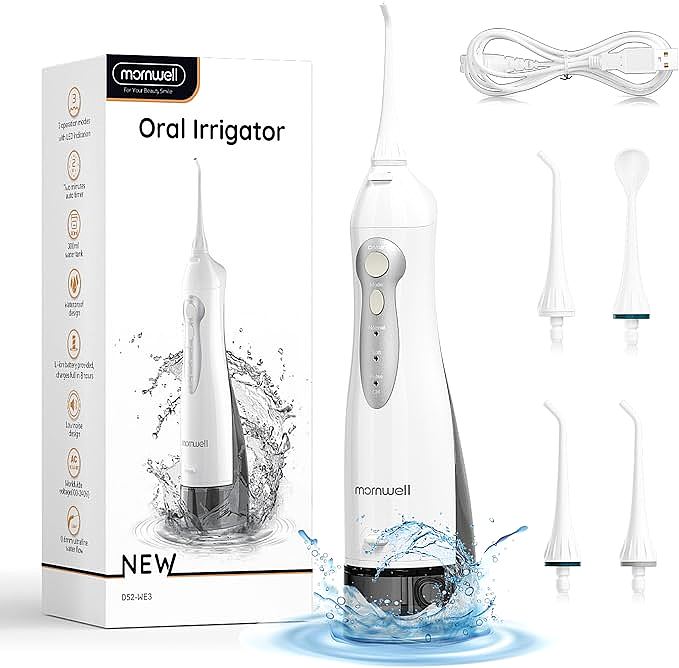
The Science of Hydrokinetic Hygiene: Decoding Pulsation, Pressure, and Periodontal Health
