Beyond Brushing: The Science of Ultrasonic Biofilm Disruption and At-Home Calculus Management

Morkare C10m Plaque Remover for Teeth
In the realm of oral hygiene, there exists a persistent adversary that even the most diligent brushing often fails to defeat: dental calculus. While the daily ritual of brushing and flossing is non-negotiable for disrupting early plaque, the mineralization of this bacterial film into hardened tartar creates a challenge that mechanical scrubbing simply cannot address. This reality has driven a surge in interest regarding professional-grade technologies adapted for personal use.
Understanding the mechanics of dental cleaning requires a shift in perspective—from simple surface scrubbing to the targeted disruption of the biofilm matrix. This article explores the science behind high-frequency ultrasonic tools, examining how they function, their safety protocols, and their role in a modern, preventative oral health strategy.
The Physics of Frequency: How 40kHz Changes the Game
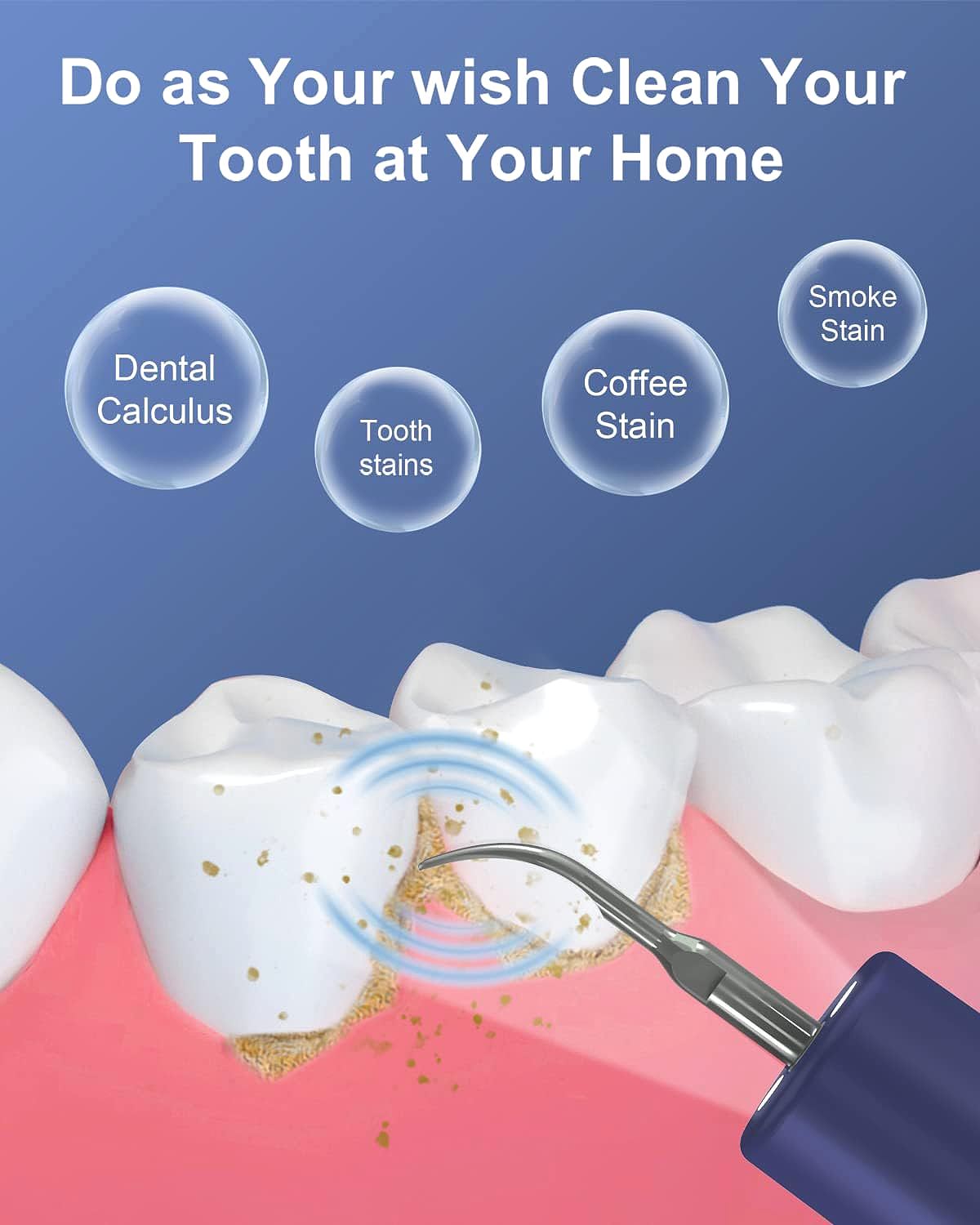
To understand why manual brushing fails against tartar, one must understand the nature of the bond. Tartar (calculus) is calcified plaque that adheres firmly to the enamel surface. A toothbrush bristle, operating at low manual speeds, lacks the kinetic energy to break this bond without potentially abrading the tooth structure.
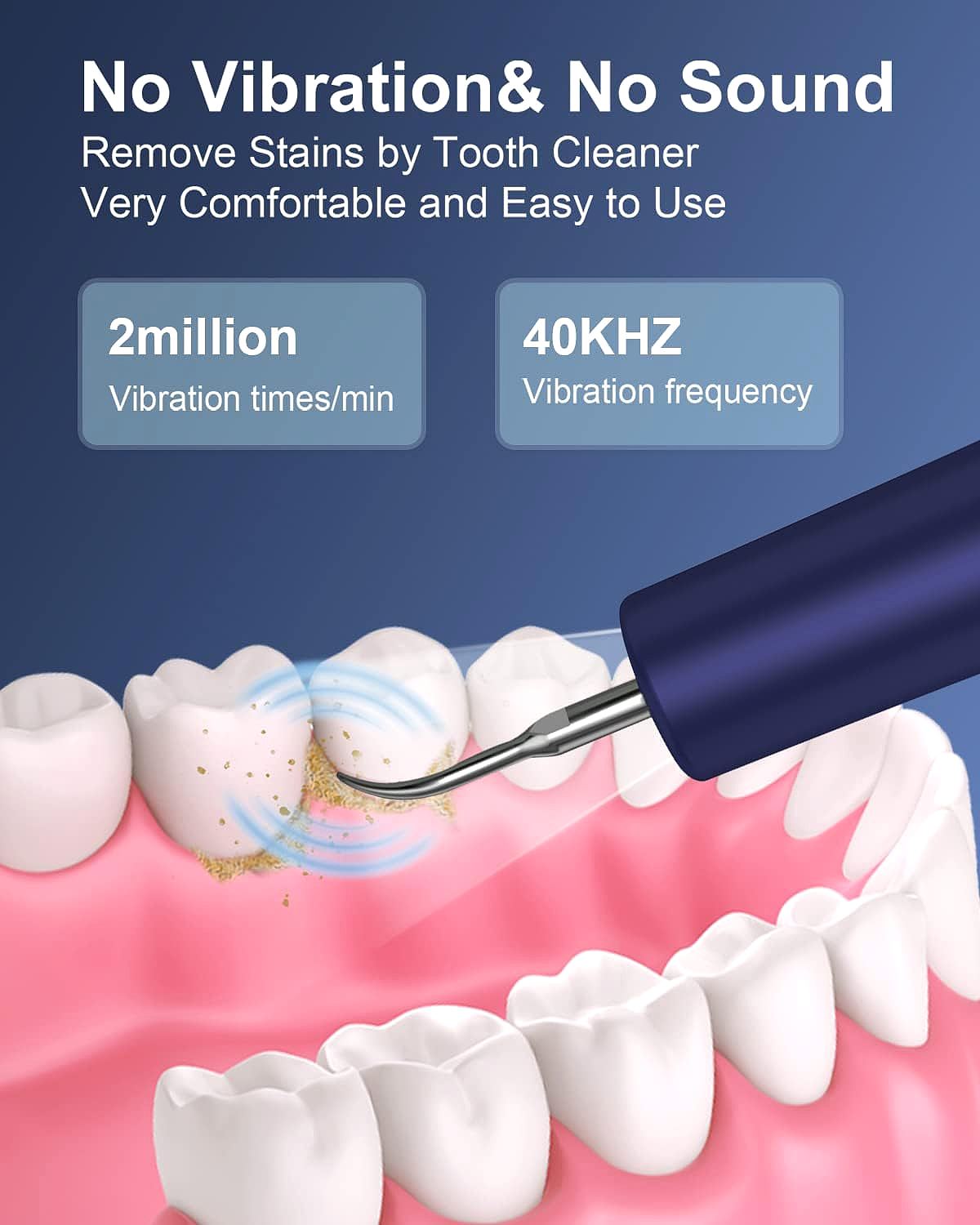
This is where ultrasonic technology differentiates itself. Devices engineered for this purpose, such as the Morkare C10m, operate on a principle of high-frequency vibration. Specifically, these tools utilize frequencies up to 40 kHz—or 40,000 cycles per second.
The efficacy lies in micro-vibration mechanics. When a metal tip vibrates at such high frequencies (often translating to millions of vibrations per minute), it does not rely on the user's hand pressure to "scrape" the tooth. Instead, the vibrational energy is transferred to the calculus deposit. This rapid oscillation creates microscopic instabilities within the tartar's structure, causing it to fracture and detach from the enamel surface. This process allows for the removal of stubborn extrinsic stains—such as those from coffee or tobacco—and hardened deposits without the need for aggressive manual force.
The Safety Paradox: Power vs. Preservation
A common and valid concern regarding high-powered dental tools is the safety of soft tissues. The gums (gingiva) are delicate and susceptible to trauma. How can a device powerful enough to shatter tartar be safe for the gums?
The answer lies in the difference between hard and soft tissue resonance.
Advanced ultrasonic scalers often incorporate intelligent recognition technology. The vibration of the cleaning tip is designed to be effective against hard surfaces (teeth/calculus) but is dampened or halted upon contact with soft surfaces (gums).
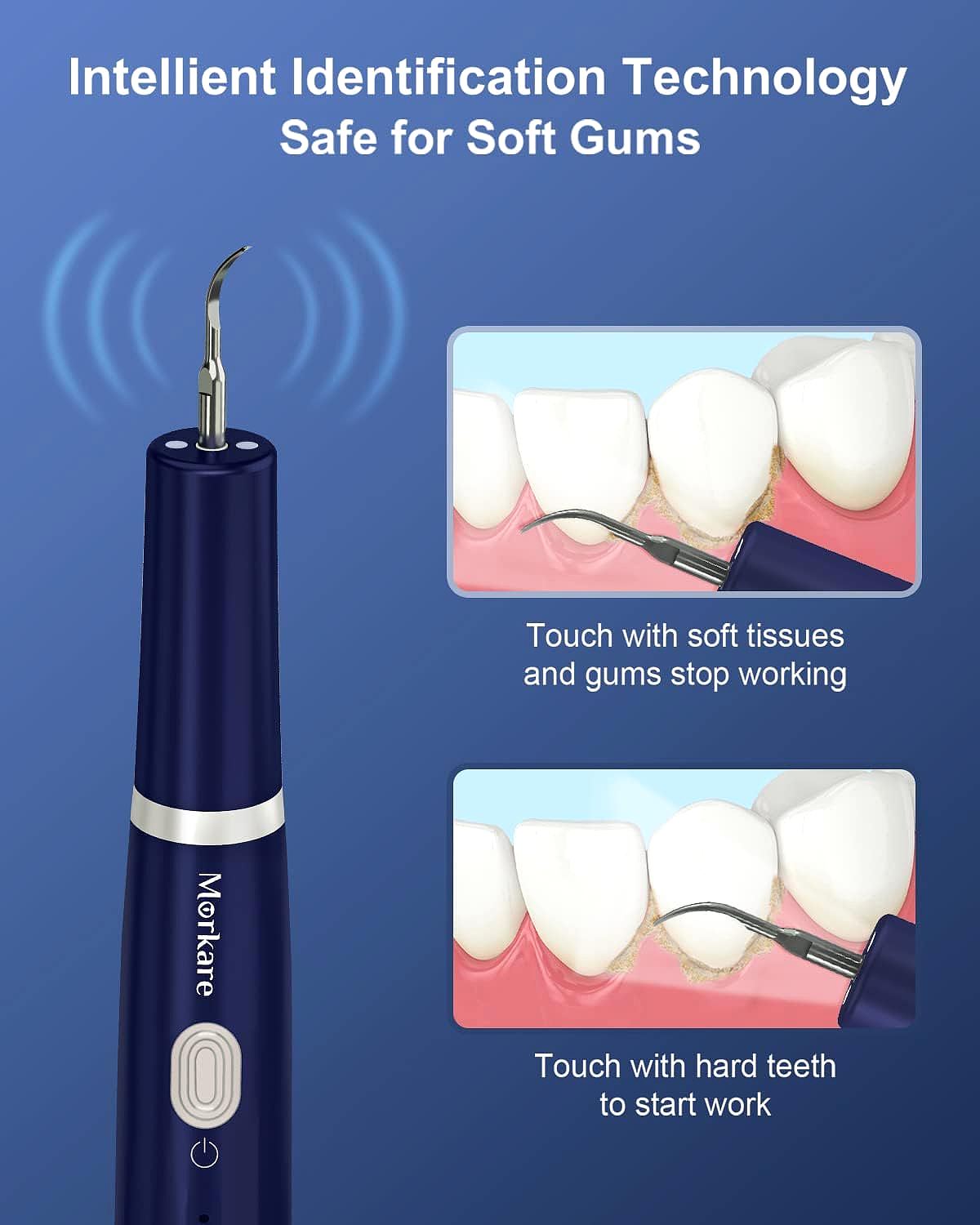
Taking the Morkare C10m as a technical example, it utilizes a sensor mechanism that stops vibration when it detects gum tissue. This is not merely a feature of convenience; it is a critical safety redundancy designed to prevent iatrogenic injury (injury caused by the treatment itself). For the user, this translates to a significant reduction in anxiety, allowing for a focused cleaning session without the constant fear of accidental laceration.
Visibility: The Prerequisite for Precision
In dentistry, the axiom "you cannot clean what you cannot see" holds absolute truth. Professional dental operatories are equipped with high-intensity overhead lights for this very reason. In a home bathroom setting, shadows and poor angles often obscure the lingual (tongue-side) surfaces of the teeth, where calculus accumulation is most rapid due to the proximity of salivary glands.
To bridge this gap, effective home tools must integrate visibility aids. The inclusion of auxiliary lighting, such as LED illumination directly on the device head, is essential for targeting specific areas rather than blindly navigating the mouth.
Furthermore, the use of a mouth mirror—a standard tool in any dentist's tray—allows the user to inspect the posterior teeth and the backs of the lower incisors. Combined with specialized tips (like pointed heads for interdental spaces and flat heads for facial surfaces), these visual aids transform a blind routine into a precise maintenance procedure.
Integrating Technology into a Holistic Routine
It is imperative to clarify the role of ultrasonic cleaners in the broader context of oral health. These devices are adjuncts, not replacements. They occupy the space between daily brushing and professional prophylaxis.
- Daily Maintenance: Brushing and flossing remain the first line of defense against plaque formation.
- Interim Management: Ultrasonic tools like the Morkare unit serve to manage rapid calculus buildup and extrinsic staining that occurs between dental visits.
- Professional Care: Deep sub-gingival cleaning and comprehensive exams by a licensed professional are irreplaceable for diagnosing periodontal disease.
Practical Considerations for Home Usage
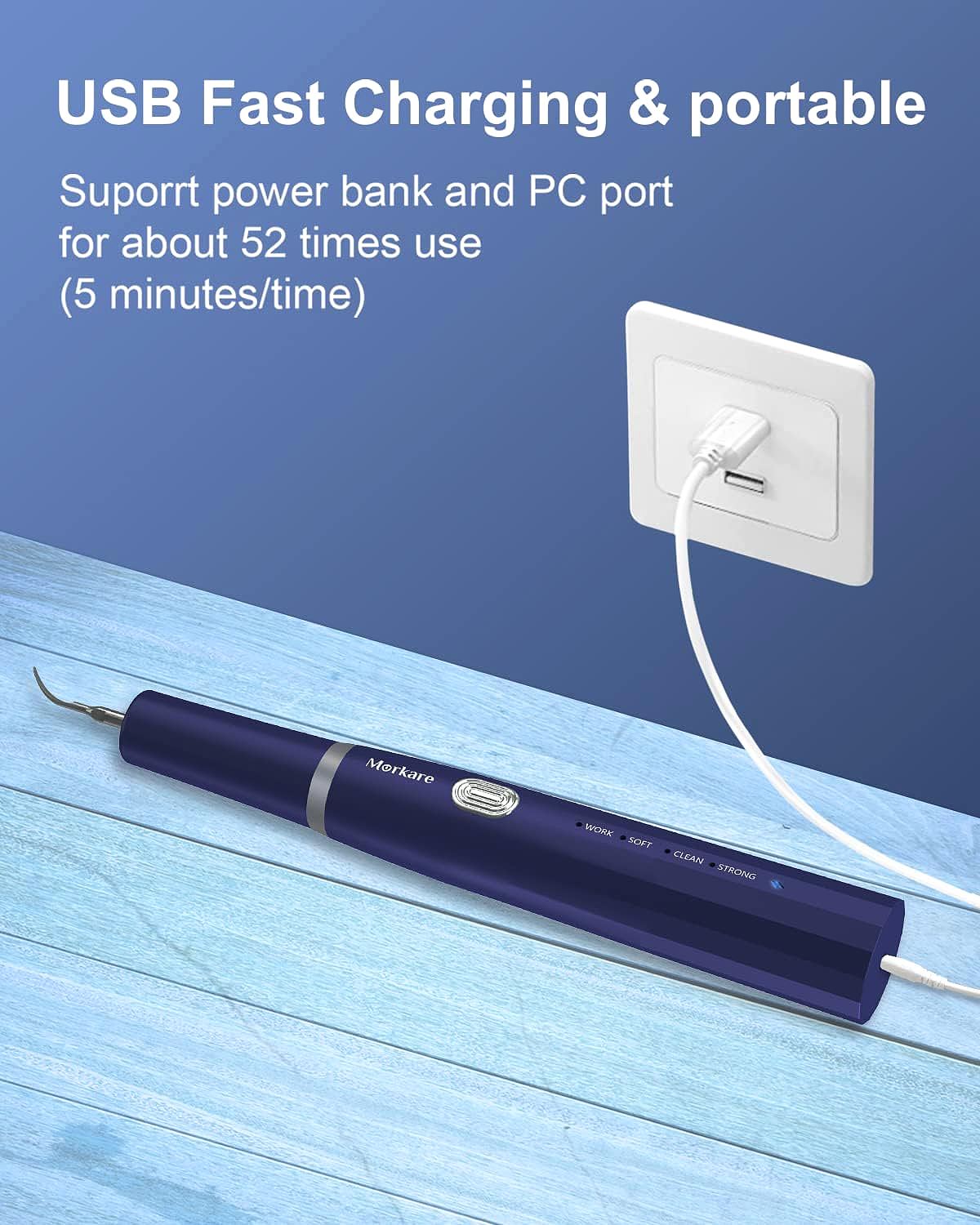
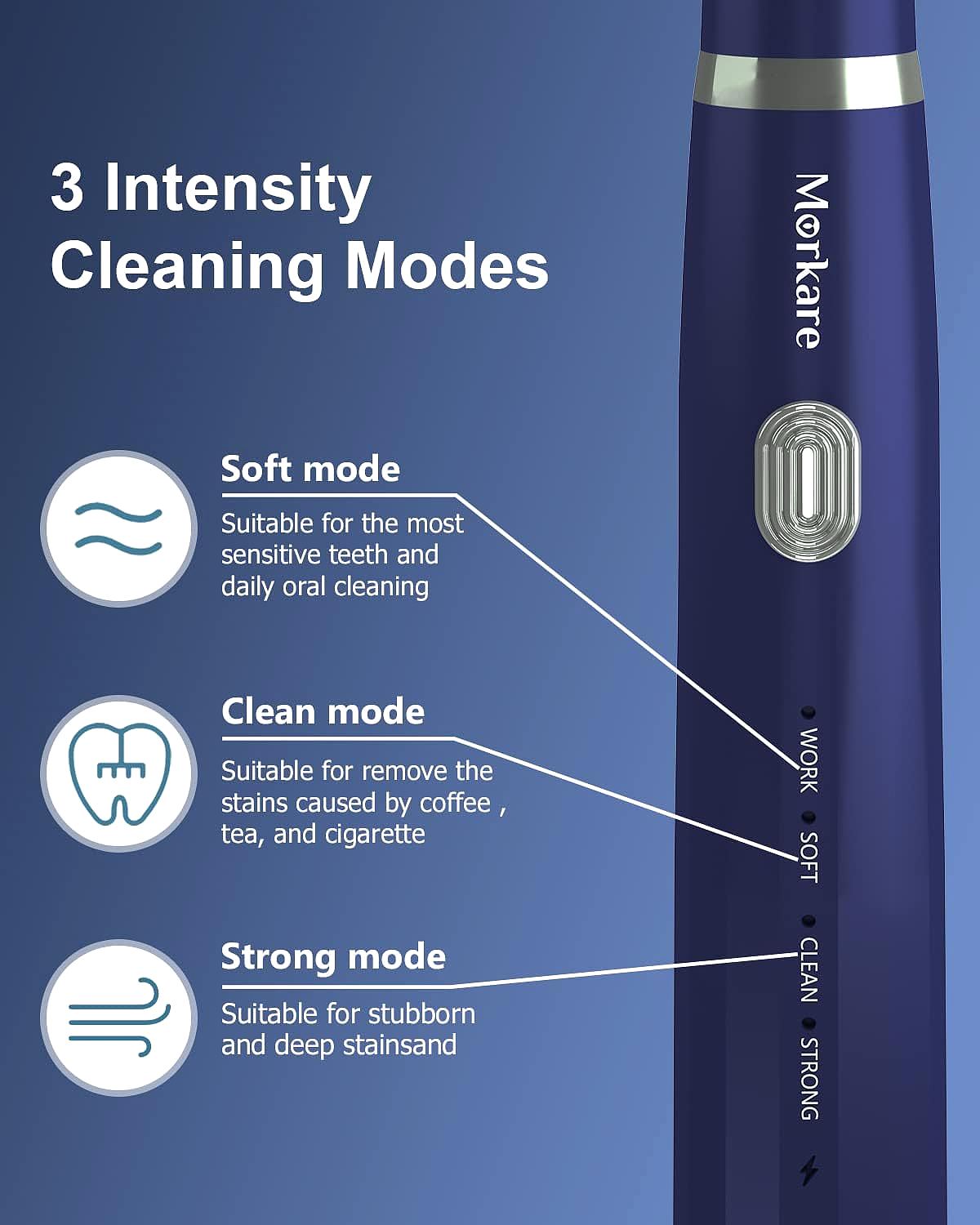
For those integrating this technology, durability and hygiene are key logistical factors. The oral environment is naturally wet, necessitating devices with robust ingress protection. An IPX7 waterproof rating ensures the device can be thoroughly rinsed, preventing bacterial colonization on the handle itself. Additionally, modern USB rechargeability addresses the need for portability, making consistent care possible even during travel.
Conclusion
The democratization of dental technology allows individuals to take a more proactive role in their oral health. By leveraging the physics of 40kHz ultrasonic vibration, we can effectively disrupt the biofilm matrix and manage calculus buildup with a level of precision previously unavailable at home. However, the most powerful tool remains knowledge: understanding how to use these devices safely, respecting the biology of the gums, and maintaining a partnership with dental professionals ensures a smile that is not just visually bright, but systemically healthy.
Morkare C10m Plaque Remover for Teeth
Related Essays

Beyond Brushing: How Bio-Feedback and Micro-Vibrations Redefine Gum Health

Beyond Friction: The Physics of True Ultrasonic Cleaning and the End of "Brushing"

The War in Your Mouth: How Waterpik's Hydrodynamic and Sonic Tech Defeats Plaque Biofilm

Beyond the Bristles: The Hydrodynamic Science of a Deeper Clean