Fluid Mechanics in Handheld Irrigation: Gravity, Pressure, and the Physics of Omnidirectional Cleaning
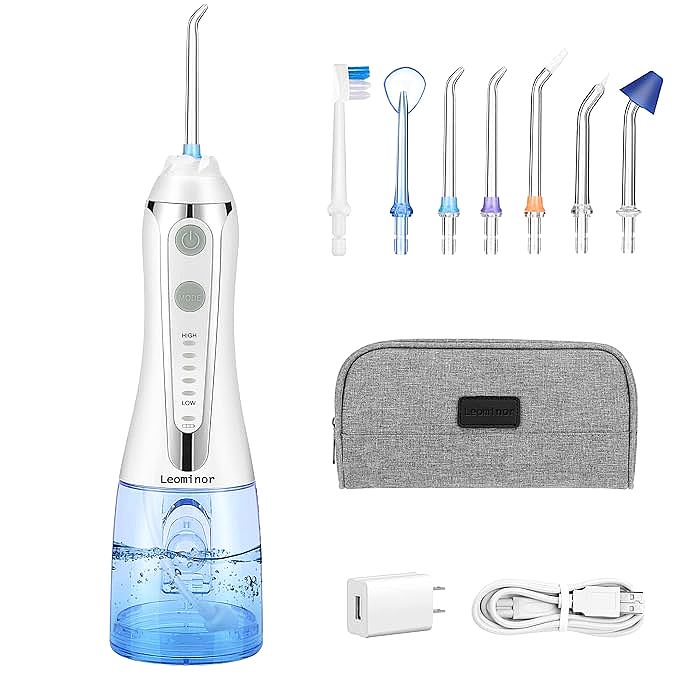
Leominor Cordless Water Dental Flosser
The transition of oral irrigation from countertop units to handheld devices introduced a fundamental engineering problem: orientation. A stationary tank sits flat, and gravity feeds the pump reliably. A handheld device, however, is a dynamic object. It tilts, twists, and inverts as the user navigates the complex geography of the mouth. In early designs, this movement often led to "air suction"—the pump intake becoming exposed, causing a loss of pressure and flow.
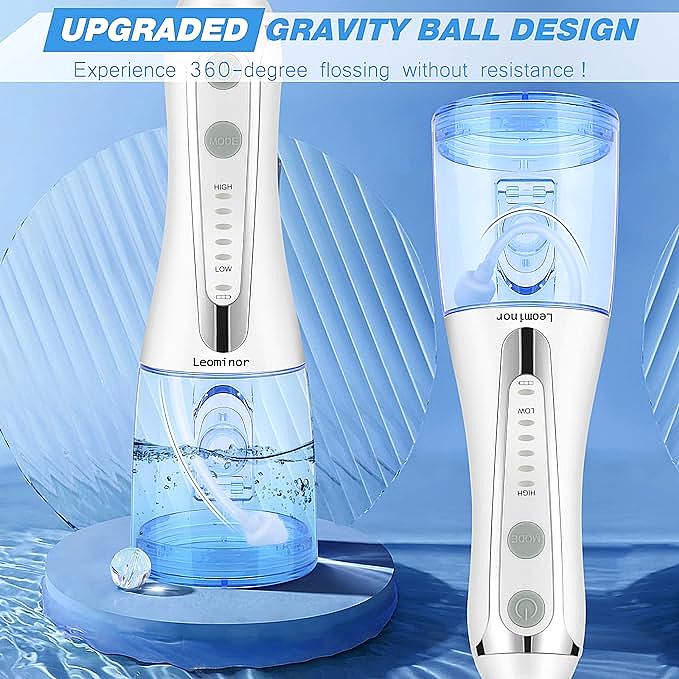
Solving this required a rethinking of fluid intake systems. The Leominor Cordless Water Flosser exemplifies the solution through its integration of a Gravity Ball intake system. This, combined with a high-pressure pump capable of delivering 130 PSI, represents a maturation in portable hydraulic engineering. This article explores the physics of orientation-independent fluid dynamics and the biological implications of wide-spectrum pressure control.
The Physics of Orientation: Solving the Suction Problem
In a standard fluid reservoir, the liquid settles at the bottom due to gravity. If the intake tube is rigid and fixed, tilting the device past a certain angle (e.g., to reach the lingual surfaces of the upper molars) moves the liquid away from the intake. The pump then sucks air, breaking the hydraulic seal and interrupting the cleaning stream.
The Gravity Ball Mechanism
The Leominor system employs a flexible intake tube weighted with a "Gravity Ball." * Vector Alignment: Gravity acts equally on the water and the weighted ball. As the user tilts the device, the water flows to the lowest point of the reservoir. Simultaneously, the weighted ball drags the flexible intake tube to that exact same lowest point. * Continuous Intake: This mechanical synchronization ensures that the intake nozzle remains submerged in the fluid regardless of the device's orientation—upright, sideways, or even inverted. * Cavitation Prevention: By maintaining a constant fluid supply, the system prevents pump cavitation—the formation of air bubbles within the pump chamber that can cause noise, vibration, and mechanical damage. This allows for a continuous, uninterrupted stream, which is critical for maintaining the rhythmic pulsation required for effective biofilm disruption.
The Pressure Spectrum: From Massage to Blasting
The efficacy of a water flosser is governed by the kinetic energy of the water jet. This energy is a function of pressure (PSI) and flow rate. The Leominor device offers a remarkably wide pressure range: 40 PSI to 130 PSI. This spectrum is not arbitrary; it maps to specific biological thresholds.
The Low End (40-60 PSI): Soft Tissue Safety
The gingival sulcus (gum pocket) is lined with delicate epithelial tissue. High-pressure jets can cause micro-trauma or even drive bacteria deeper into the pocket (bacteremia). * Hemodynamic Stimulation: At 40 PSI, the jet pressure is sufficient to flush out loose debris but low enough to avoid tissue damage. It acts as a hydraulic massage, compressing and releasing the gum tissue. This stimulates micro-circulation, increasing blood flow and oxygenation to the periodontal tissues, which aids in healing and reduces inflammation.
The High End (110-130 PSI): Shear Stress and Hard Tissue
Removing adherent plaque biofilm from enamel or orthodontic brackets requires significantly higher energy. * Shear Force Generation: At 130 PSI, the water jet hits the surface with high velocity. Upon impact, the water spreads laterally, creating intense wall shear stress. This force exceeds the adhesive strength of the biofilm matrix, peeling it away from the tooth structure. * Interdental Penetration: High pressure is also required to force water through tight interdental contacts. The 130 PSI stream can punch through the resistance of saliva and food particles packed between teeth, ensuring a thorough flush of the contact area.
The Mechanics of Pulsation: 1400 Cycles of Energy
Static pressure alone is less effective than dynamic pressure. The Leominor motor generates 1200-1400 pulses per minute. This pulsation is a key variable in cleaning efficiency. * The Compression-Decompression Cycle: Each pulse represents a rapid cycle of compression and release. When the water packet hits the debris, it compresses it. As the pressure momentarily drops between pulses, the debris rebounds. This cyclical loading fatigues the attachment bonds of the plaque, causing it to fracture and detach more easily than under a constant stream. * Debris Evacuation: The intervals between pulses also allow for the evacuation of dislodged material. The "pause" (milliseconds long) lets the waste water flow away, clearing the path for the next high-energy pulse to strike the surface directly.
Memory and Customization: The Digital Interface
The integration of a Memory Function in the control logic addresses the user experience of multi-mode devices. * Cognitive Load Reduction: With 5 distinct modes, scrolling to find the preferred setting every time is a friction point. The memory chip stores the last used state, allowing the user to pick up exactly where they left off. This seamlessness encourages consistent use, which is the most important factor in long-term oral health outcomes.
Conclusion: Engineering Freedom of Movement
The Leominor Cordless Water Flosser represents a thoughtful application of physics to solve the practical problems of oral care. By using gravity to solve the intake problem and variable pressure to address biological diversity, it transforms the water flosser from a static appliance into a dynamic, handheld tool. It allows the user to navigate the complex 3D space of the mouth without fighting against the limitations of the machine, ensuring that the hydrokinetic energy is delivered exactly where it is needed, regardless of the angle of attack.