Fluid Dynamics in Your Pocket: Decoding the YaFex AR-W-F1's Hygienic Engineering
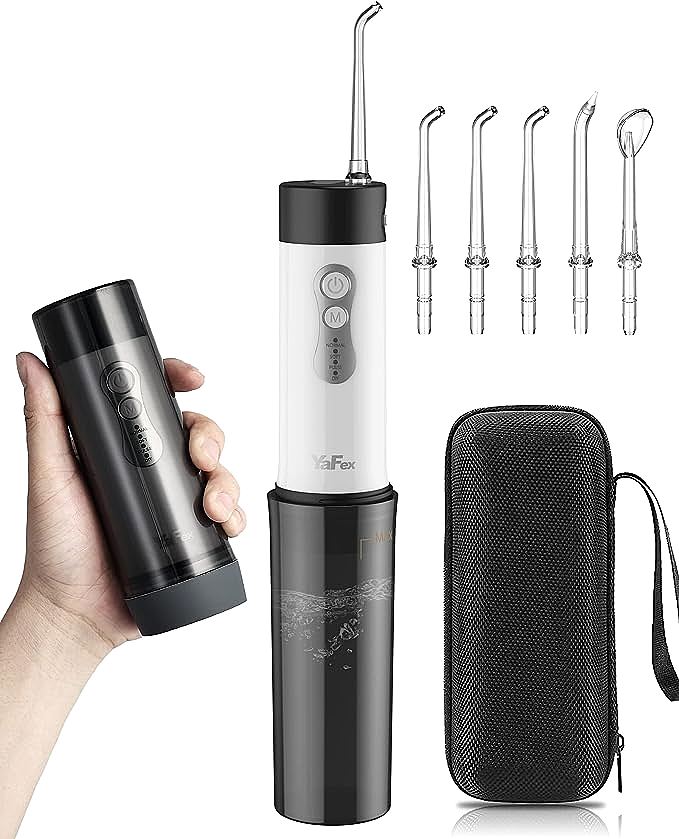
YaFex AR-W-F1 Water Dental Flosser
The market for "travel" dental devices is often a landscape of compromise: weaker motors, smaller tanks, and questionable durability, all justified by the need for compactness. However, the YaFex AR-W-F1 presents an interesting case study in engineering that challenges this norm. It suggests that portability does not require a sacrifice in hydrodynamic performance or, more importantly, device hygiene.
To understand why this compact unit has garnered attention from discerning travelers, we must look beyond its collapsible shell and examine the specific choices made in material science and pulse mechanics. This is not just a miniature pump; it is a calculated attempt to maintain clinical-grade oral hygiene in uncontrolled environments.
The Hygiene of Materials: The Stainless Steel Advantage
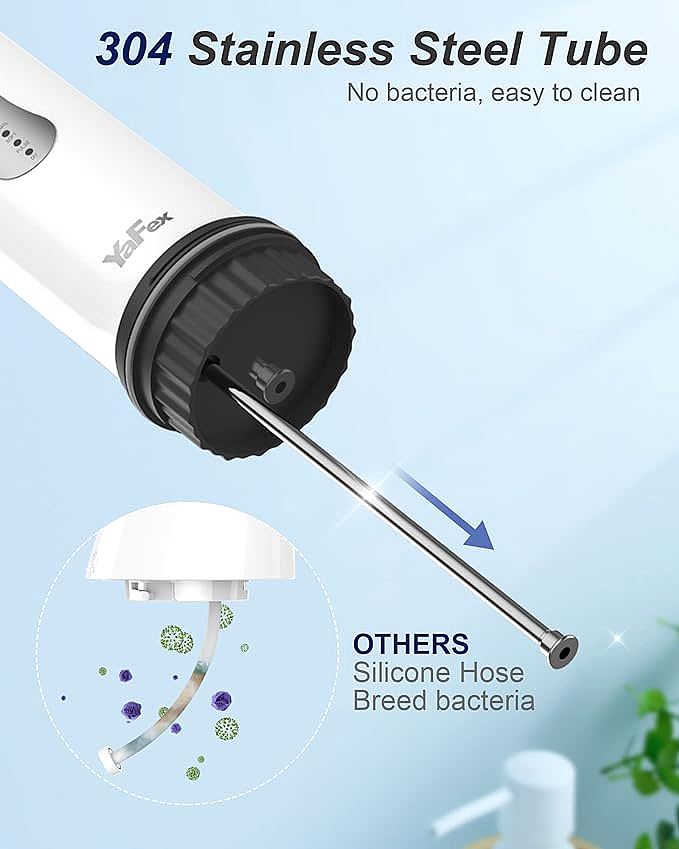
Perhaps the most subtle yet scientifically significant feature of the AR-W-F1 is its stainless steel water intake tube. In the vast majority of portable flossers, water is drawn through a flexible silicone or PVC hose, often weighted with a "gravity ball" to allow use at any angle. While convenient, these soft polymers are microscopic sponges. Their surface energy and porosity can promote biofilm adhesion, creating a breeding ground for bacteria inside the very device meant to clean your mouth—a phenomenon well-documented in water distribution studies.
YaFex’s decision to use a rigid, telescopic stainless steel tube is a triumph of hygiene over convenience. Stainless steel (likely 304 food-grade) offers a non-porous, high-energy surface that is inherently resistant to biofilm formation. It is easier to rinse, dries faster, and does not degrade into a sticky residue over time. For the traveler relying on questionable hotel tap water or unable to fully dry the unit before packing, this material choice acts as a passive defense system against internal contamination.
The Frequency Debate: Why 1600 PPM Matters
Standard countertop units typically operate at around 1200-1400 pulses per minute (PPM). The YaFex AR-W-F1 pushes this boundary to 1600 PPM. Is this just "spec sheet padding"? Not necessarily.
In the physics of biofilm disruption, frequency correlates with the density of shear stress events. A higher pulse rate creates a more rapid sequence of compression and decompression cycles against the tooth surface. This high-frequency bombardment is particularly effective against soft plaque (materia alba), the uncalcified bacterial matrix that accumulates daily. By delivering more impacts per second, the device maximizes the hydrodynamic scouring action within the limited run-time of a small reservoir. It compensates for the lower absolute water volume by increasing the "work density" of the stream.
Clinical Customization: The "DIY" Mode as Precision Medicine
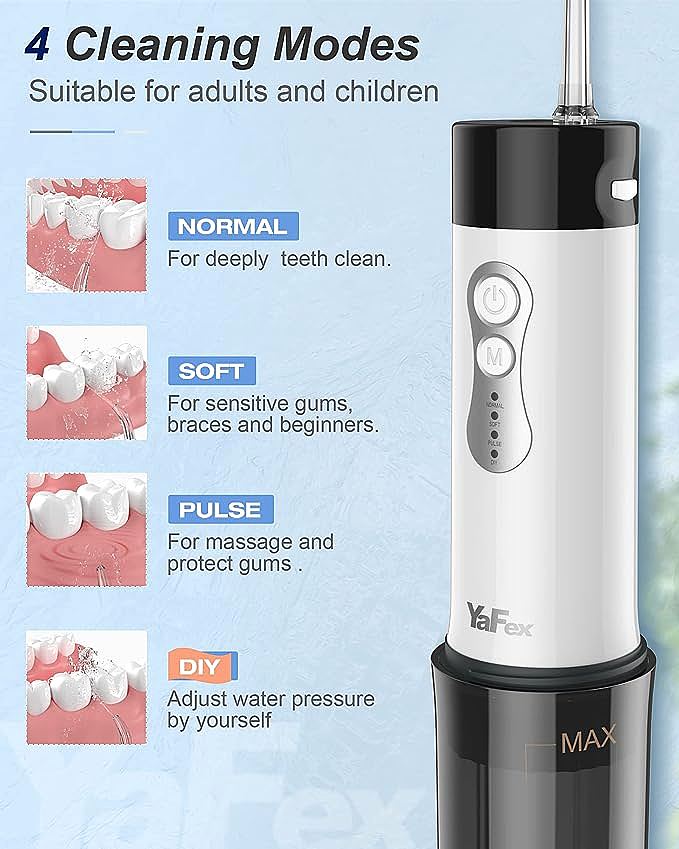
Most portable units offer binary choices: "High" (often too harsh) or "Low" (often ineffective). This one-size-fits-all approach ignores the biological reality of gingival phenotypes. Users with thin, scalloped gums may experience trauma at 90 PSI, while those with thick, fibrotic tissue need that pressure to achieve sulcular penetration.
The YaFex DIY Mode is not a gimmick; it is a tool for pressure titration. It allows the user to ramp the pressure precisely to their personal "bleeding threshold"—the point where cleaning is maximal but trauma is zero. This capability turns the device from a blunt instrument into a customizable periodontal tool, allowing users to manage conditions like gingivitis or peri-implant mucositis with appropriate, non-destructive force.
The Mechanics of Collapsibility
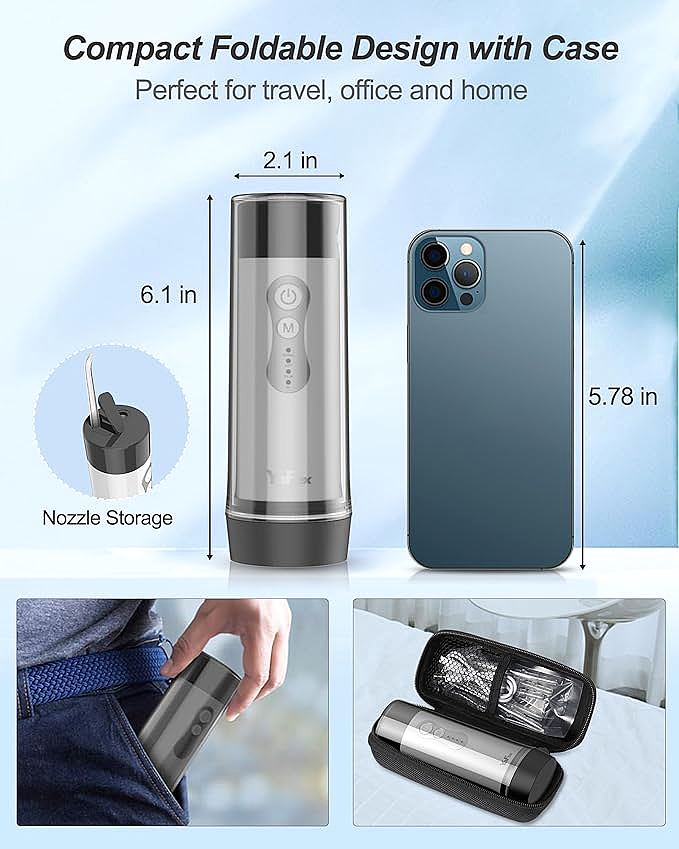
The "telescopic" water tank design addresses the classic volume-to-size paradox. By allowing the pump unit to nest inside the reservoir, the device reduces its footprint by half for transport. This requires high-tolerance manufacturing to ensure the O-ring seals remain watertight despite repeated friction from opening and closing.
The integration of nozzle storage into the body further reinforces the "sterile chain" concept. By keeping the tip enclosed within the unit rather than loose in a bag, it minimizes exposure to environmental pathogens—a critical consideration when your "bathroom counter" might be an airport restroom or a campsite rock.
Conclusion: A Tool for the Microbiology-Conscious
The YaFex AR-W-F1 is defined less by what it adds, and more by what it avoids: it avoids the bacterial risks of silicone tubes, the inefficiency of low-frequency pumps, and the trauma of fixed pressure settings.
It is a device engineered for continuity of care. It ensures that the mechanical disruption of biofilm—the cornerstone of oral health—does not pause simply because you are away from home. For the traveler who understands that plaque begins to calcify in as little as 24 hours, this device offers a scientifically sound method to maintain the oral microbiome equilibrium, anywhere on the map.