The Velocity Variable: Why 3000 PPM Changes the Hydrodynamic Equation
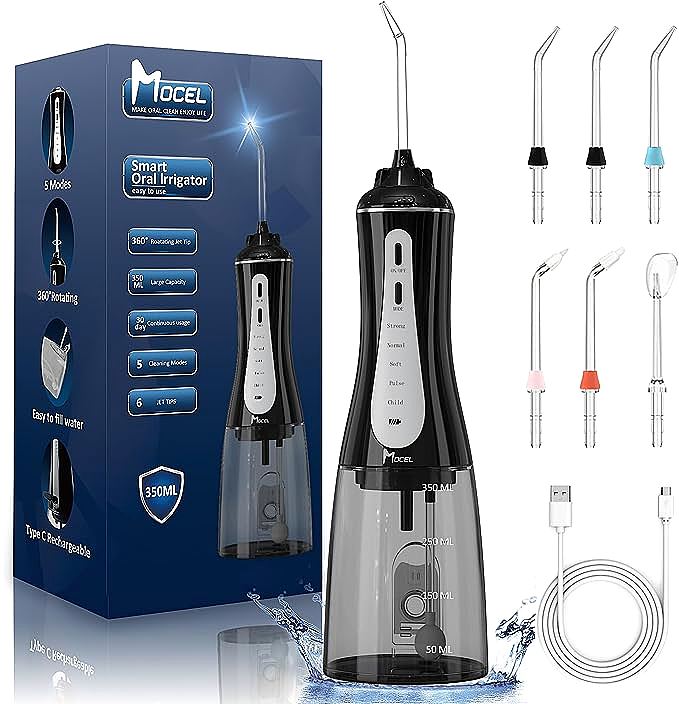
MOCEL Water Dental Flosser Oral Irrigator
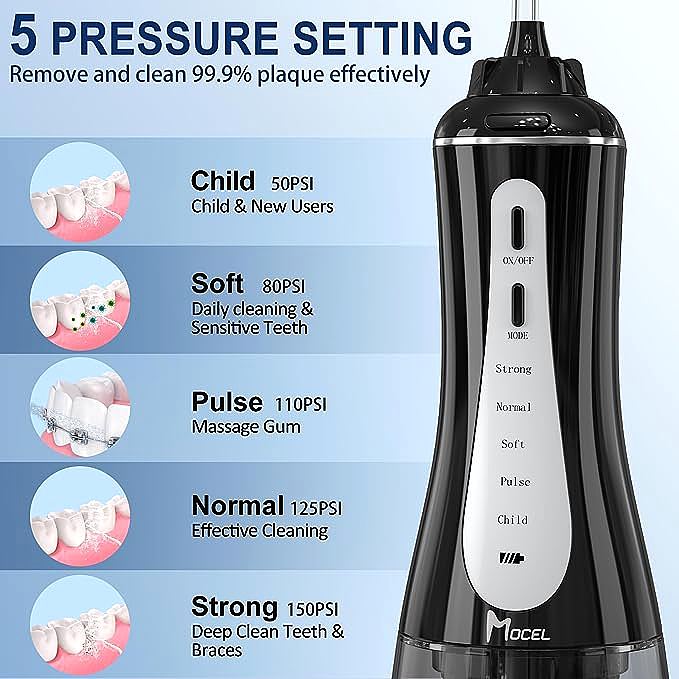
In the competitive landscape of oral irrigators, most manufacturers compete on a single metric: Pressure (PSI). The assumption is linear—more pressure equals more cleaning. However, this is a biomechanical oversimplification. While pressure is necessary to penetrate the periodontal pocket, it is the Pulse Frequency (measured in pulses per minute, or PPM) that dictates the efficiency of biofilm detachment.
Standard market models typically operate between 1400 and 1800 PPM. The MOCEL Water Dental Flosser, however, introduces a specification outlier: a variable frequency range of 2200 to 3000 pulses per minute. This shift from "Standard Frequency" to "Ultra-High Frequency" fundamentally alters the fluid dynamics at play within the oral cavity. It moves the mechanism of action from simple "hydraulic flushing" to what can be described as Micro-Impact Resonance.
The Physics of Micro-Impact Resonance
Why does a 3000 PPM frequency matter? To understand this, we must look at the structural integrity of plaque. Biofilm is not merely "stuck" to the tooth; it is anchored by an extracellular polymeric substance (EPS) matrix. Breaking this bond requires Shear Stress.
At 1400 PPM, the water jet acts like a rhythmic hammer. It is effective, but there are significant gaps between impacts. At 3000 PPM (as found in MOCEL's upper modes), the impacts become so rapid that they create a continuous, vibrating wave of pressure.
1. Denser Impact Field: The time interval between pulses is drastically reduced. This prevents the gingival tissue from fully "rebounding" between pulses, maintaining a constant state of mild distension that allows for deeper subgingival access.
2. Cavitation Density: Higher frequency increases the rate of micro-bubble formation and collapse (cavitation). The energy released by these collapsing bubbles is what destroys the cell walls of bacteria, independent of the water pressure itself.
By decoupling frequency from pressure, MOCEL allows for effective cleaning even at lower PSI settings, as the speed of the water (velocity) and the rate of impact compensate for the reduced force.
The Capacity Necessity: The 350ml Equation
Engineering a device with high-frequency capabilities creates a secondary problem: Flow Rate Consumption. A motor driving water at 3000 beats per minute inevitably consumes water faster than a standard motor. This renders the industry-standard 200ml tank obsolete.
The MOCEL’s 350ml reservoir is not an arbitrary design choice for "convenience"; it is a functional requirement of its engine. * The 90-Second Threshold: To clean a full arch (upper and lower, buccal and lingual surfaces) effectively, clinical studies suggest a minimum dwell time of 2-3 seconds per interdental space. * Flow Rate Math: At 150 PSI and 3000 PPM, a standard 200ml tank would be depleted in under 45 seconds, forcing the user to abort the cleaning cycle halfway through.
The 350ml capacity bridges this gap, ensuring that the "High-Velocity Protocol" can be executed without interruption. It validates the device not as a "travel gadget" but as a legitimate handheld substitute for countertop units, providing the hydrodynamic volume necessary for a therapeutic clean.
MOCEL Water Dental Flosser Oral Irrigator
Related Essays
The Hydrodynamics of Biofilm Control: Why Pulse Frequency Matters More Than Pressure
Biofilm Mechanics: Why 1300 Pulses Per Minute is Not a Marketing Gimmick
The Hydrokinetic Revolution: A Deep Dive Into How Water Flossers Transform Oral Health
H2ofloss HF-P11 : The Hydrodynamic Science Behind a Deeper Clean

YIRENZUI Water Flosser: A Deep Dive into Oral Health and the Benefits of Water Flossing

Waterpik Ultra Plus & Cordless Plus Water Flosser Combo: Revolutionize Your Oral Hygiene

The Unseen Battle in Your Mouth: A Deep Dive into the Philips Sonicare 7000 System's Technology

The Enduring Power of Simplicity: Why the Philips Sonicare Essence Still Matters

Beyond the Bristles: The Hydrodynamic Science of a Deeper Clean
