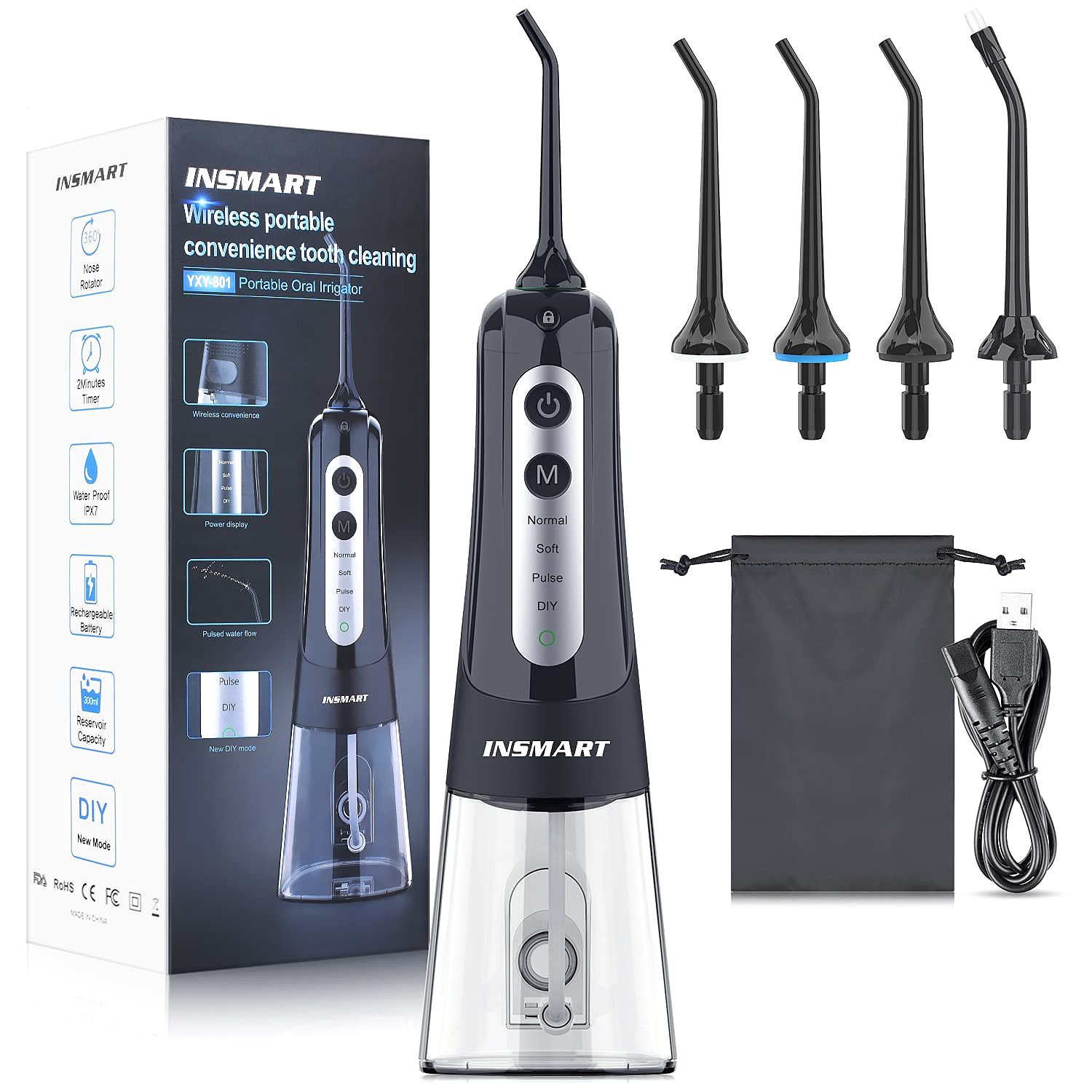
Mastering Hydrodynamics: The Engineering Behind Cordless Oral Irrigation
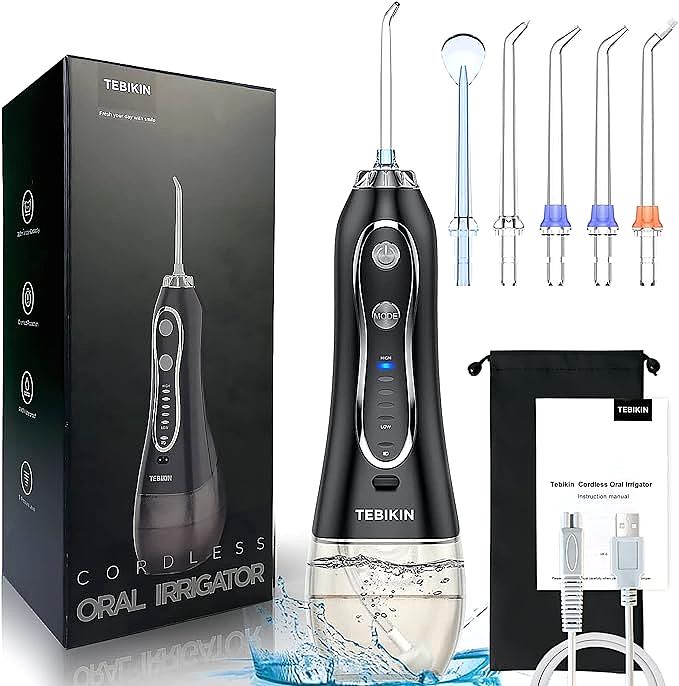
TEBIKIN HF-6 Portable Cordless Water Dental Flosser
The transition from traditional string floss to water irrigation is often described not as a change in habit, but as a change in physics. String floss relies on mechanical friction—shearing force applied directly to the tooth surface. Water flossing, or oral irrigation, relies on hydrokinetics: the energy of moving water. It uses pulsation and pressure to create a compression-decompression phase that flushes out debris and bacteria from areas solids simply cannot reach.
However, for many users, the introduction to this technology is wet, messy, and chaotic. The complaint "water goes everywhere" is a common refrain in user reviews for portable units. This suggests that while the technology has miniaturized, the user protocol has not been effectively communicated. Devices like the TEBIKIN HF-6 represent the current evolution of this hardware, incorporating features like gravity-weighted intakes and wide-range pressure settings to solve the inherent challenges of handheld hydrodynamics.
The PSI Spectrum: Translating Pressure to Therapy
One of the most critical specifications in any oral irrigator is its pressure range, measured in Pounds Per Square Inch (PSI). A common misconception is that "higher is always better." In reality, oral tissue requires a nuanced approach.
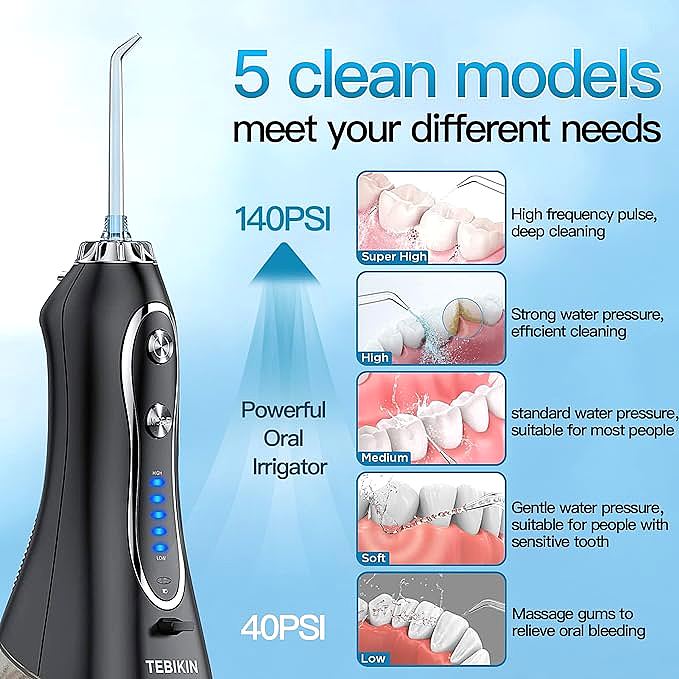
The TEBIKIN HF-6 offers a spectrum of 40 to 140 PSI. This wide variance is not accidental; it serves distinct biological functions:
- The Low Range (40-60 PSI): This is the therapeutic zone. At these pressures, the water jet provides gingival stimulation—massaging the gums to increase blood circulation without causing trauma. It is also the essential entry point for new users. Starting at high pressure often leads to bleeding and discouragement, a primary cause of device abandonment.
- The High Range (120-140 PSI): This is the extraction zone. This level of force creates a shear stress sufficient to dislodge tenacious food particles and disruption biofilm adhesion. However, this power requires a "calloused" gum line, achieved only after weeks of consistent use at lower settings.
The ability to modulate this pressure through 5 distinct modes allows the user to ramp up intensity in correlation with their gum health improvement, a principle known as progressive adaptation.
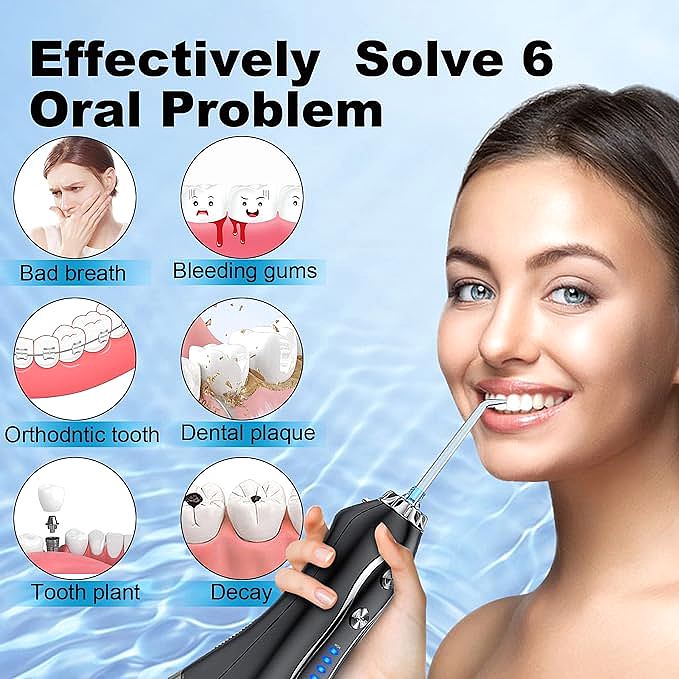
Solving the Orientation Problem: The Gravity Ball
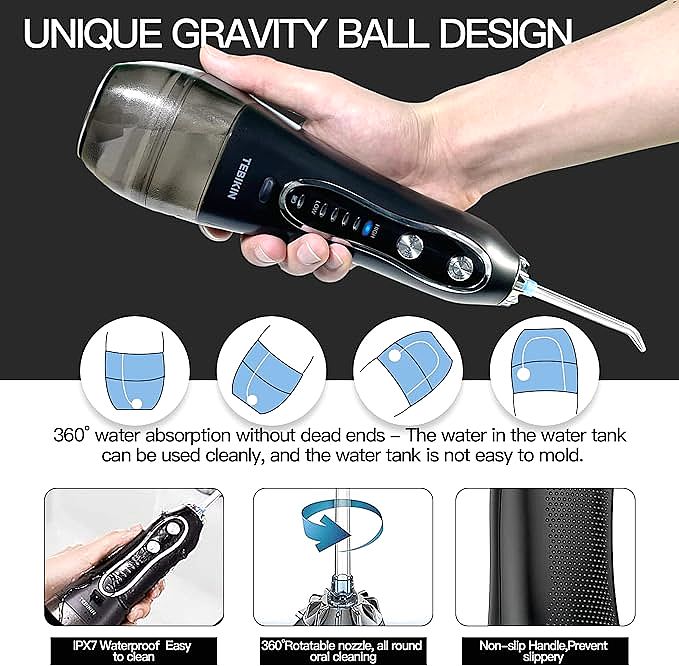
A fundamental flaw in early portable irrigators was the fixed intake tube. As you tilted the device to clean the lingual (tongue-side) surfaces of your teeth or the back molars, the water level would shift away from the intake, causing the motor to suck air and the jet to sputter. This interruption disrupts the cleaning rhythm and efficiency.
Engineering's solution to this fluid dynamics problem is the Gravity Ball. By weighing the end of the intake hose, the TEBIKIN system ensures that the intake port naturally falls to the lowest point of the 300ml reservoir, regardless of the device's angle. This "omni-directional" flow capability is critical. Effective cleaning requires the nozzle to be perpendicular (90 degrees) to the tooth surface. Without a gravity intake, achieving this angle on upper molars would often result in a loss of water pressure. This small mechanical addition fundamentally changes the usability of the device, allowing for continuous, uninterrupted irrigation in any orientation.
The Protocol of "Closed-Loop" Cleaning
The mess associated with water flossing is almost exclusively a technique error. The intuitive approach—watching oneself in the mirror with mouth wide open—is incorrect for this tool. The proper protocol involves a "closed-loop" system where the mouth acts as a containment chamber.
- Tactile Navigation: The user must learn to navigate by feel, not sight. The nozzle tip should trace the gumline.
- The Drainage Seal: The lips should remain almost entirely closed around the nozzle, leaving only a small gap for water to passively drain into the sink.
- Body Mechanics: Leaning over the sink is mandatory. This posture utilizes gravity to ensure the waste water exits the mouth directly into the basin, rather than running down the user's arm.
Mastering this technique transforms the experience from a chaotic splashing event into a clean, controlled clinical procedure.
Specialized Attachments: Beyond the Standard Jet
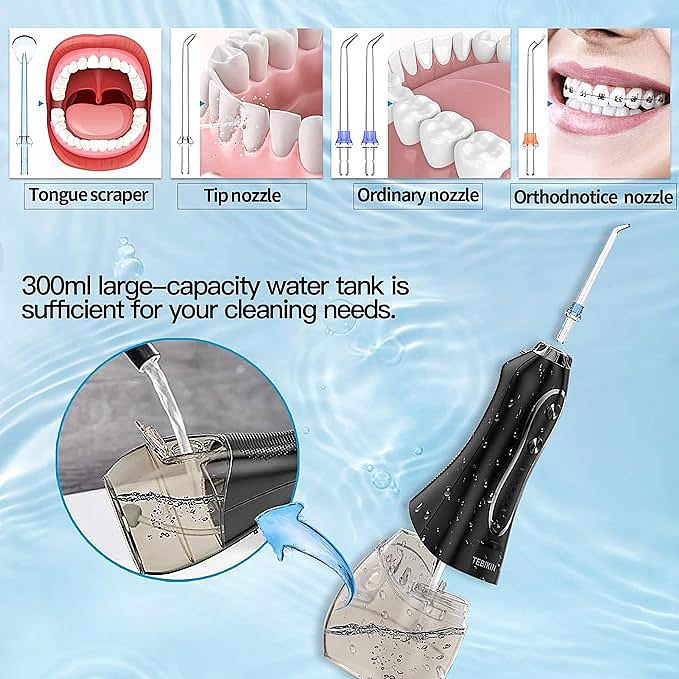
Fluid dynamics can be further manipulated by the shape of the nozzle orifice. While the standard jet tip is suitable for general use, specialized conditions require altered flow patterns. * Orthodontics: Braces present a physical barrier to string floss. An orthodontic tip often includes tapered bristles that work in concert with the water stream to mechanically scrub brackets while the water flushes away the debris. * Periodontal Pockets: For those with gum disease, a standard high-pressure jet can be dangerous if directed into a pocket. A periodontal tip usually has a finer opening designed to deliver water at lower pressures, gently flushing the sub-gingival area without causing tissue detachment.
Hygiene and Maintenance
Portable irrigators introduce moisture into enclosed spaces, creating a potential breeding ground for mold if ignored—a concern raised in some critical reviews. The IPX7 waterproof rating of the TEBIKIN unit allows for thorough washing, but internal maintenance is user-dependent. The reservoir must be drained and air-dried after every use. Running a diluted vinegar solution through the unit monthly is a standard best practice to remove mineral deposits (scale) and prevent microbial growth in the internal tubing.
Conclusion: A Tool, Not a Toy
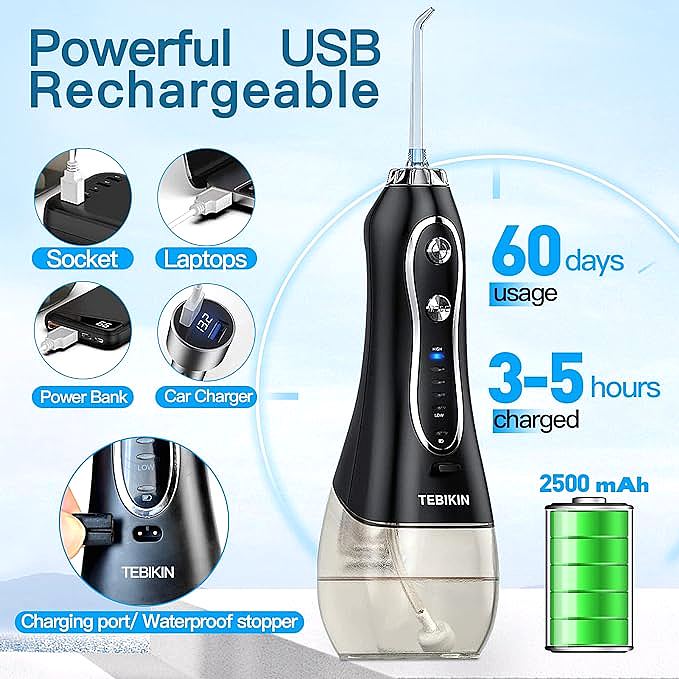
The portable water flosser has evolved from a travel novelty into a serious instrument for oral hygiene. With substantial battery capacities (like the 2500mAh unit found here) providing consistent torque, and engineered solutions like gravity intakes solving orientation issues, these devices offer a legitimate alternative to traditional flossing. However, their effectiveness is inextricably linked to the user's willingness to master the technique. It is a power tool for the mouth; used with skill, it offers a level of cleanliness that manual methods struggle to match.
TEBIKIN HF-6 Portable Cordless Water Dental Flosser
Related Essays
Nicwell W01 Review: Does This $30 Flosser Beat the $80 Giants?

Hydrodynamic Hygiene: Mastering Oral Biofilm Control with Portable Precision
Fluid Dynamics Personalized: Mastering Home Oral Hygiene with Adaptive Water Flossing Technology
Frictionless Hygiene: How High-Frequency Pulsation and Compliance Design Redefine Oral Care
The Engineering of a Cleaner Smile: An In-Depth Analysis of the Waterpik ION Cordless Water Flosser

YIRENZUI Cordless Water Flosser: An Engineer's Deep Dive Beyond the Specs
The OLASOM JWR01 Water Flosser: A Deep Dive into Portable Oral Hydrodynamics