The Physics of Featherlight: Engineering the 4.1g Lanteso S21
Update on Jan. 3, 2026, 10:03 a.m.
In the arms race of consumer electronics, “More” is usually the metric of success. More megapixels, more battery, more features. But in the world of wearable technology, specifically devices we insert into our bodies, the ultimate metric is “Less.” Less weight, less bulk, less intrusion.
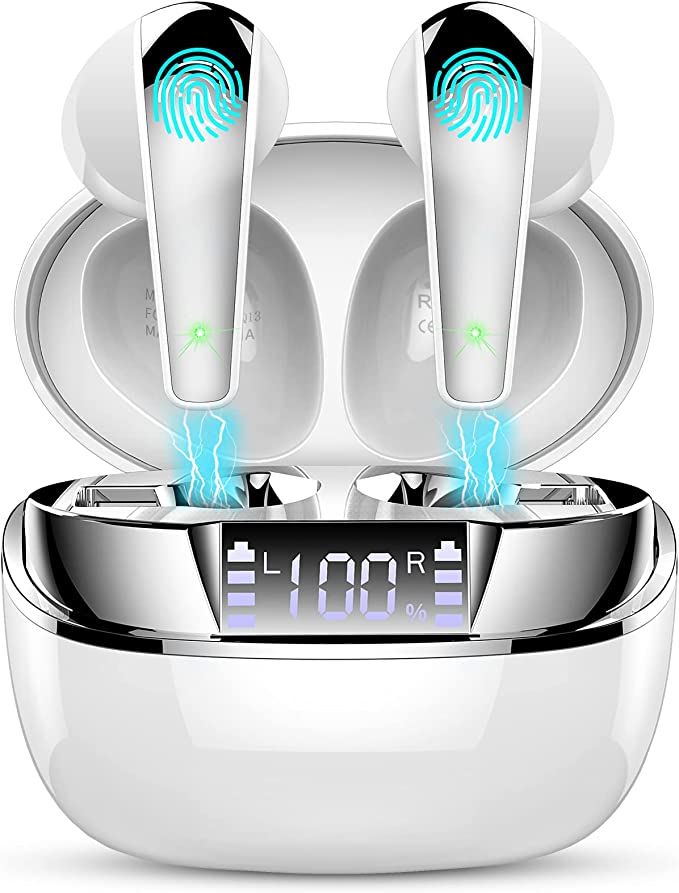
The Lanteso S21 Wireless Earbuds are a manifesto of “Less.” Weighing in at a mere 4.1 grams per earbud, they approach the theoretical limit of perceptible weight. This isn’t just a spec; it’s a transformative feature. When an object becomes light enough, it ceases to be an external accessory and begins to feel like a part of the user’s biology.
This article deconstructs the engineering behind this featherlight design. We will explore the physics of gravity and inertia in ergonomics, the acoustic challenges of shrinking a speaker to 6mm, and how Bluetooth 5.2 enables this miniaturization without sacrificing performance.
Stratum I: The Physics of Weightlessness (4.1g Ergonomics)
Why does 4.1 grams matter? To put it in perspective, a standard sheet of A4 paper weighs about 5 grams. The S21 is lighter than paper.
In headphone ergonomics, comfort is defined by the battle between Gravity and Friction.
The Inertia Equation
When you run, jump, or turn your head quickly, your earbuds want to stay put (Newton’s First Law). This resistance to motion is Inertia, and it is directly proportional to mass. * Heavy Earbuds (7g+): Generate significant inertial force. When you turn your head, the earbud “lags” behind, pulling against the ear canal. This constant micro-tugging causes cartilage fatigue and soreness. * The S21 (4.1g): Generates negligible inertia. The force required to keep it in place is minimal. The friction provided by the silicone tip is more than sufficient to counteract gravity and movement.
This Low-Mass Design eliminates the need for aggressive ear hooks or wings (like those found on heavier sport buds). The S21 stays in place simply because it is too light to fall out. This allows for a “zero-pressure” fit, making them ideal for long sessions or even sleeping—a use case where bulky buds fail miserably.
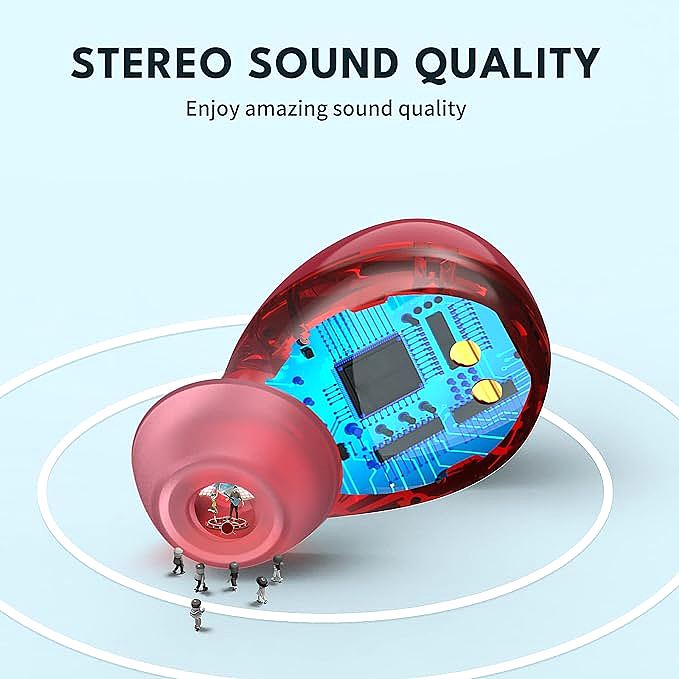
Stratum II: The Micro-Acoustics (6mm Drivers)
Shrinking the housing creates a problem: Where do you put the speaker?
The S21 uses a 6mm Dynamic Driver. In the audiophile world, bigger is usually better for bass. A 6mm driver faces a physical disadvantage in moving air compared to a 10mm or 13mm driver.
The Sealed Chamber Solution
To overcome this, Lanteso relies on Pneumatic Coupling.
Because the S21 is so small and light, it can be inserted deeper into the ear canal without discomfort. This deep insertion creates a tighter seal.
* The Physics: A perfect seal turns the ear canal into a pressurized chamber. In this closed system, even a tiny 6mm diaphragm can pressurize the air enough to create significant low-frequency energy (bass).
* The Result: The S21 delivers “HD sound quality with deep bass” not by moving a lot of air outside, but by efficiently pressurizing the small volume of air inside your ear. This is why fit is critical. A loose fit breaks the seal, and the bass evaporates.
Stratum III: The Wireless Umbilical (Bluetooth 5.2)
Miniaturization puts extreme pressure on the battery. A 4.1g earbud can only hold a tiny battery (likely 30-40mAh). How do you get 4 hours of playtime from a battery the size of a lentil?
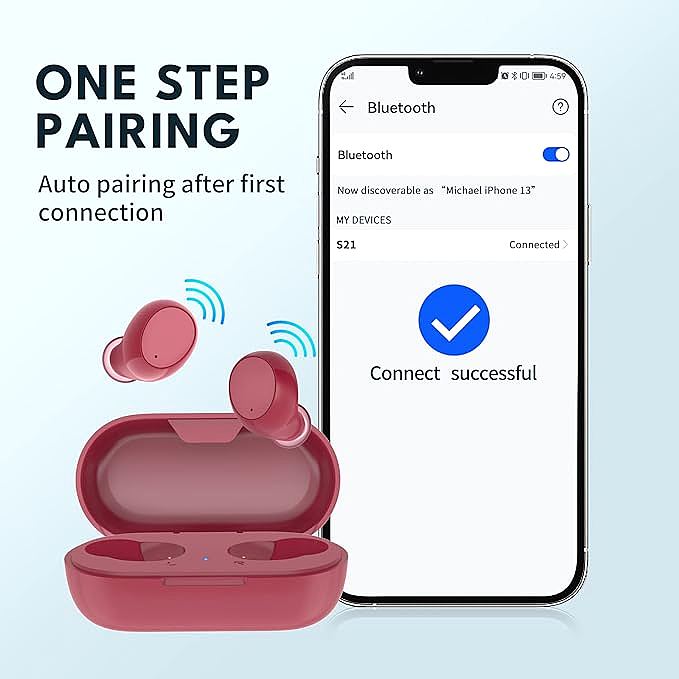
The answer is Bluetooth 5.2.
The Efficiency of LE Audio
Bluetooth 5.2 is built on the Low Energy (LE) architecture.
* Power Management: It allows the radio to transmit data in highly efficient bursts, sleeping for microseconds in between.
* Signal Stability: It uses improved algorithms to maintain a connection even with weaker signal strength.
This efficiency reduces the power draw of the radio, leaving more juice for the amplifier and the DSP. It is the invisible infrastructure that makes the “Mini” form factor viable. Without BT 5.2, an earbud this small would die in 90 minutes.
Stratum IV: The Material Engineering of Touch
The S21 features Smart Touch Control. Implementing touch sensors on a surface area smaller than a dime is a UX challenge. * Capacitive Sensing: The outer shell acts as a capacitor plate. When your finger (a conductor) touches it, the capacitance changes, triggering a command. * Sensitivity Tuning: The challenge is balancing sensitivity. Too sensitive, and your hair triggers it. Too dull, and you hurt your ear tapping it. The S21 seems to aim for a “deliberate tap” threshold to prevent accidental triggers, a crucial consideration for a device that sits so flush with the ear.
Conclusion: The Invisible Future
The Lanteso S21 is a preview of the future of wearables: Invisibility.
Technology is trending towards disappearance. We want the music, not the speaker. We want the connection, not the cable.
By pushing the boundaries of weight and size, Lanteso has created a device that removes the friction between the user and the audio. It is not a statement piece to be shown off; it is a utility to be used, forgotten, and enjoyed.