Audio in the Deep: The Engineering Challenges of Waterproof Sound and Wireless Physics
Update on Jan. 3, 2026, 9:10 a.m.
Creating electronics that survive underwater is difficult. Creating electronics that transmit sound underwater is even harder. But creating electronics that transmit wireless signals underwater? That is physically impossible for consumer devices.
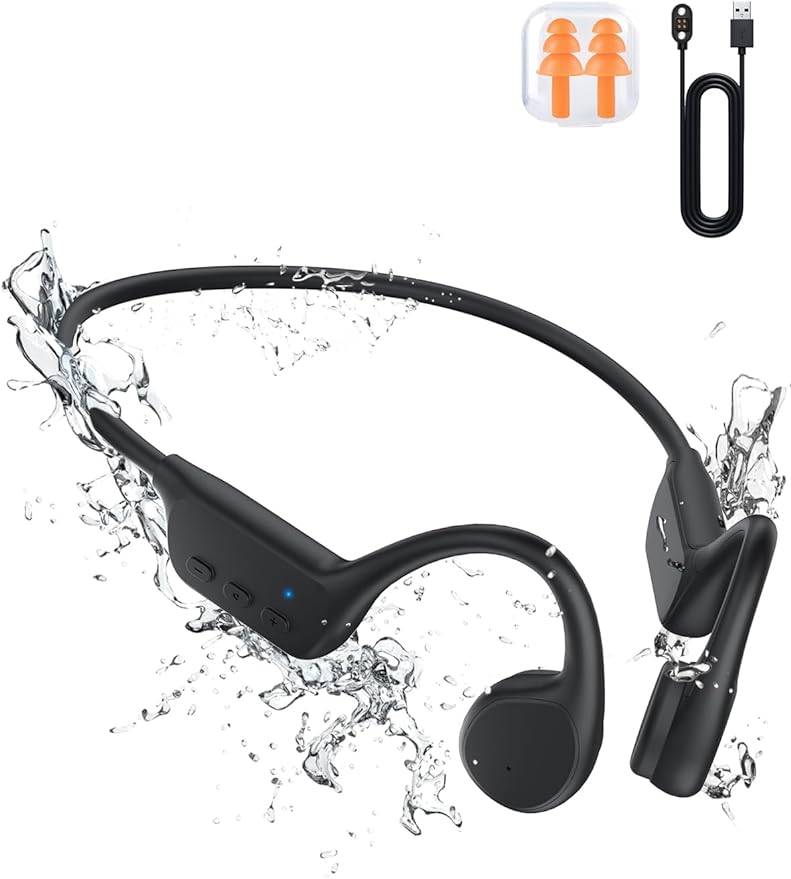
This engineering reality creates a unique niche for products like the Smedz X9 Bone Conduction Headphones. While they are marketed as “Bluetooth Headphones,” their defining feature for swimmers is actually their Built-in 8GB Memory. This is not a retro throwback to the iPod Shuffle era; it is a solution to the immutable laws of electromagnetism.
This article dives into the “Physics of the Deep.” We will explore why water kills Bluetooth, the rigorous engineering required for an IP68 rating, and why local storage remains the only viable solution for the amphibious athlete.
The Microwave Problem: Why Bluetooth Drowns
Bluetooth operates in the 2.4 GHz frequency band. This is the same frequency band used by microwave ovens. Why do microwaves use 2.4 GHz? Because water molecules absorb energy at this frequency extremely efficiently. The electromagnetic wave causes the polar water molecules to rotate, generating heat (dielectric heating).
Signal Attenuation
In the context of communication, this absorption is catastrophic. When a 2.4 GHz Bluetooth signal enters water, its energy is absorbed by the water molecules almost instantly.
* Attenuation Rate: The signal strength drops by half every few centimeters.
* The Faraday Cage Effect: Water is also conductive (especially pool water with chlorine or salt). A conductive medium blocks radio waves.
This means that if your phone is on the pool deck and you dive in, the music stops the moment your head (and the receiver) goes underwater. Even keeping the phone in a swim cap often fails due to the water layer interfering with the antenna tuning.
The MP3 Solution
The Smedz X9 circumvents this physics problem by eliminating the transmission entirely. By integrating 8GB of NAND Flash Memory directly into the headset, the audio data travels millimeters on a circuit board rather than meters through the air. The “MP3 Player Mode” is not a bonus feature; it is the only way to have uninterrupted audio while swimming.
IP68: The Science of Ingress Protection
The Smedz X9 claims an IP68 rating. This is an engineering standard defined by the IEC 60529. * 6 (Solids): Dust Tight. No ingress of dust; complete protection against contact. * 8 (Liquids): Immersion beyond 1 meter. The manufacturer specifies the exact depth and time (typically continuous immersion).
Sealing the Unsealable
Headphones typically have holes for air to move the driver. Bone conduction headphones, however, are Solid State on the outside. Because they transmit vibration through the housing rather than air, there are no speaker grilles to seal. * Overmolding: The plastic housing is likely created using overmolding techniques, where soft silicone or rubber is molded directly over the hard plastic chassis, creating a seamless, chemical bond that water cannot penetrate. * Magnetic Charging: The user reviews mention a “proprietary charger.” This is a magnetic pogo-pin connector. Standard USB-C ports are gaping holes for water. Magnetic contacts allow the device to be fully sealed, with no physical ingress points for the charging circuit. The trade-off is the risk of losing the specialized cable, but the gain is structural integrity against hydrostatic pressure.

The Physics of Underwater Acoustics
Hearing underwater is a surreal experience. Our ears are adapted for air (acoustic impedance ~415 Rayls). Water has an acoustic impedance of ~1.5 million Rayls.
* Air Conduction Failure: When you are underwater, air conduction barely works. The impedance mismatch means 99.9% of sound energy reflects off the surface of the water or the air bubble in your ear canal.
* Bone Conduction Dominance: Human tissue is mostly water. Its acoustic impedance is very similar to water. Therefore, sound waves in water transfer efficiently into the skull.
When wearing the Smedz X9 underwater, the skull vibrates not just from the transducer, but the water itself acts as a coupler. This is why bone conduction often sounds better and fuller underwater than in air. The water provides the “back-pressure” and mass loading that the transducers lack in open air, enhancing bass response naturally.
Corrosion and Durability: The Hidden Enemy
Waterproof is not corrosion-proof. * Electrolysis: The charging contacts are exposed metal. If the headphones are wet when charged, or if current leaks while submerged, rapid electrolysis (corrosion) occurs, destroying the gold plating. This explains user reviews about “charger not working.” * Maintenance: The “Rinse and Dry” protocol is not optional. Chlorine and salt accelerate oxidation. The Smedz X9’s longevity depends entirely on the user’s discipline in removing these corrosive agents after every swim.
Conclusion: The Amphibious Compromise
The Smedz X9 is a device defined by the hostile environments it inhabits. Its design choices—bone conduction, sealed chassis, magnetic charging, local storage—are all responses to the physics of water.
It accepts the limitations of Bluetooth (it doesn’t work in water) and provides a workaround (MP3). It accepts the limitations of air conduction (it fails underwater) and provides a solution (Bone Conduction). It is a piece of Amphibious Engineering, bridging the gap between the dry land of digital streaming and the silent, disconnected world of the deep.